Iran World Cup uncertainty deepens after minister rules out 2026 participation

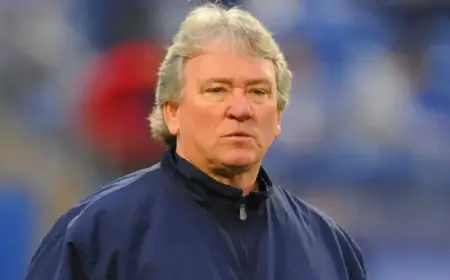
Iran World Cup participation for 2026 was ruled out by Iran’s sports minister, Ahmad Donyamali, who said the national football team cannot take part after the United States killed Iran’s leader Ayatollah Ali Khamenei. The statement pulls the tournament into a direct collision between Iran’s security claims and FIFA’s insistence that the team remains eligible to compete in the United States, Canada and Mexico.
Ahmad Donyamali and Ayatollah Ali Khamenei
Donyamali said on Wednesday that Iran “under no circumstances” can participate because, in his words, the United States had “assassinated our leader. ” He framed the decision as both moral and practical, saying “our children are not safe” and that “such conditions for participation do not exist. ” The wording matters: it is not merely a complaint about logistics or visas, but a political and security-based rejection tied explicitly to the killing of Khamenei.
The minister’s remarks also linked the decision to a wider conflict. The United States and Israel launched airstrikes on Iran nearly two weeks ago, killing the Islamic Republic’s supreme leader and triggering a region-wide conflict in the Gulf. Donyamali said “they have forced two wars on us over eight or nine months and have killed and martyred thousands of our people, ” using that narrative to argue that an international sporting presence is no longer possible.
The pattern suggests Iran’s position is being presented domestically as a matter of national safety and sovereignty, rather than a negotiable sporting question. By describing participation as fundamentally impossible, Donyamali raises the stakes for any reversal: changing course would require Iran’s leadership to justify why conditions have improved, or why the earlier safety claims no longer apply.
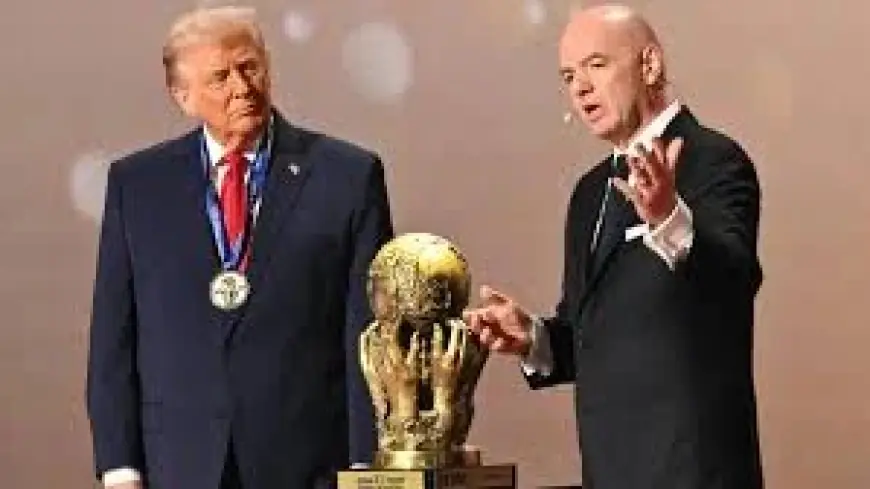
Gianni Infantino, Donald Trump, and Iran World Cup access
Donyamali’s comments followed public remarks by FIFA president Gianni Infantino that Donald Trump had said Iran were “welcome” to play at the upcoming World Cup, even as war continues in the Middle East. Infantino said that during a meeting with Trump about preparations for the competition, “we also spoke about the current situation in Iran, ” and he later wrote that Trump reiterated the Iranian team is “of course, welcome to compete in the tournament in the United States. ”
That contrast leaves FIFA with an immediate messaging problem. On one side sits a host-country assurance of access and welcome; on the other sits a participating nation’s minister saying the team will not come and arguing the conditions for participation do not exist. Yet the two positions are not identical issues. Infantino’s comments address whether Iran can enter and compete; Donyamali’s statement addresses whether Iran will choose to do so given the killing of Khamenei and claims that players would not be safe.
Trump’s own posture has also been publicly mixed. Last week he said “I really don’t care” whether Iran take part in the 48-nation tournament. The figures point to a situation where access, eligibility, and willingness are being treated as separate tracks—making it harder to predict whether the Iran World Cup dispute moves toward resolution or becomes a test of FIFA’s ability to keep politics from reshaping the lineup.
2026 fixtures and FIFA withdrawal penalties
The context also includes specific competitive details that turn the dispute into more than rhetoric. Iran are scheduled to play group games against New Zealand and Belgium in Inglewood, California, and Egypt in Seattle. A potential knockout meeting with the United States is also mapped out: if the US and Iran finish second in their respective groups, they would meet on 3 July in Dallas.
Those scheduled matches make Iran’s non-participation a structural problem for tournament planning. Replacing a team affects opponents, venues, and competitive balance. FIFA’s World Cup regulations also add a financial and disciplinary layer: any team that withdraws “no later than 30 days before the first match” will be fined at least 250, 000 Swiss francs (£239, 000) by FIFA’s disciplinary committee. The regulations also state that disciplinary sanctions “may include the expulsion of the participating member association concerned from subsequent FIFA competitions and/or the replacement of the participating member association with another member association. ”
Still, the regulations as described do not resolve the core tension Donyamali raised—safety and political legitimacy after the killing of Khamenei—because they focus on consequences of withdrawal rather than the conditions that lead a team to withdraw. That difference is likely to shape what happens next: FIFA can cite penalties and replacement mechanisms, while Iran can frame the issue as one where sanctions do not address the underlying conflict.
The next unresolved question is whether Iran’s football authorities will formally withdraw under FIFA’s rules, triggering at least a 250, 000 Swiss franc fine and possible further sanctions, or whether FIFA will treat Donyamali’s statement as political positioning short of a formal decision that would activate disciplinary steps.