Truck Driver crackdown on English tests squeezes freight capacity

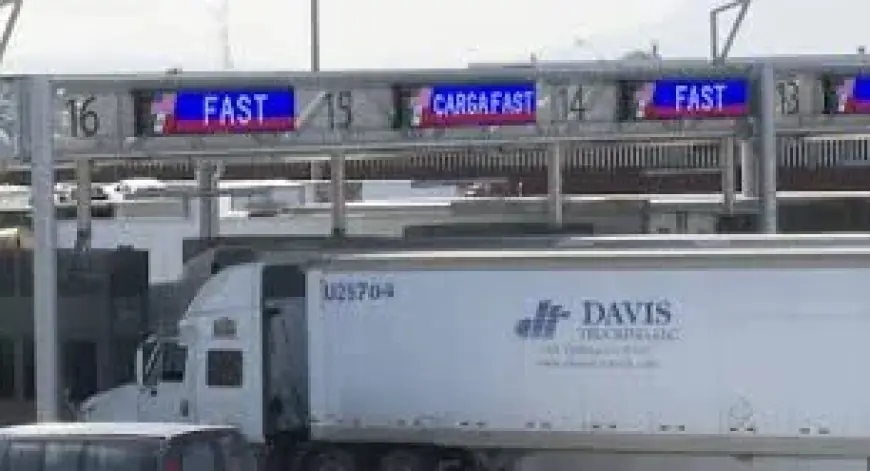
An ICE enforcement crackdown tied to English proficiency requirements is forcing immigrant participation in truck driving off US roads, with an estimated 9, 500 drivers taken out of service in recent months for failing language tests alone. The shift is already reverberating through freight pricing, as fewer drivers move loads across corridors that carry the bulk of the country’s goods by weight.
ICE targets freight corridors
Enforcement has focused on places where commercial trucking concentrates: truck stops, weigh stations, and the roads themselves. Road freight accounts for 70% of all cargo by weight in the US, so pulling drivers out of circulation quickly becomes a system-wide constraint rather than a localized disruption. The pattern suggests the crackdown is functioning not only as an immigration tool but also as a capacity shock to the freight market, because it removes legally active labor from the same network that handles most domestic cargo movement.
Industry analysts described the impact as potentially pushing drivers out of entire regions, with specific concern about the Midwest, which hosts transport arteries linking the east coast with the south and western regions of the country. In practical terms, that concentrates risk around the corridors that connect major markets, making it harder for carriers to reposition trucks and drivers where demand spikes.
Ohio’s Ahiska Turk businesses
The human and business effects show up in places like south-west Ohio, where the Ahiska Turk community centered on Dayton has built dozens of trucking businesses. Ibragim Chakhalidze described how his father, who moved to Ohio in 2013 after coming to the US from south-east Russia through a government refugee program, set up a trucking company near the junction of I-70 and I-75—two major road freight arteries. Chakhalidze said trucking had long been part of his family’s livelihood, but after 13 years in the industry he left the trucking world several months ago.
His account ties the crackdown to a specific choke point: staffing. “It was getting tougher and tougher. It’s very tough to find somebody to do trucking, ” he said, adding that he sold his truck because he could not find a driver and that “a lot of people have sold their trucks. ” The figures point to a feedback loop: taking drivers off the road intensifies shortages, and shortages then push small operators to exit or shrink, reducing capacity further.
That contraction matters beyond individual owners because the Dayton-area trucking buildout took place in a region “devastated by the fallout of the Great Recession, ” as described in the account. When those businesses pull back, the loss is not just one driver’s job; it can be a retrenchment of a local industry cluster built over years.
Sean Duffy closes 550 schools
The crackdown has been paired with regulatory actions that also touch the supply of new drivers. Last month, transportation secretary Sean Duffy announced the shutting down of 550 commercial driving schools. That decision lands at a moment when the enforcement effort is already reducing the available workforce, and it raises questions about whether the policy mix prioritizes rapid exclusion over replacing capacity through training pipelines. The pattern suggests the labor market is being tightened from two sides at once: drivers being removed for English proficiency failures, and potential entrants facing fewer training institutions.
Supporters of the enforcement emphasis have framed English proficiency as a safety matter, yet the available safety data cited alongside the policy move points in a different direction: fatalities involving large trucks declined in 2023 and in the first half of 2024, the most recent period with available data. That does not settle the safety debate, but it complicates the argument for sweeping restrictions as an urgent response to worsening outcomes.
Workforce stakes are also measurable. An estimated 17% of commercial semi-truck drivers in the US are foreign-born, and trucking is described as especially attractive to immigrants from blue-collar backgrounds. Jennie Murray, president and CEO of the National Immigration Forum, warned that “broad restrictions on immigrant drivers risk harmful profiling and deepening severe labor shortages, ” while calling for “rigorous training, vetting and compliance” rather than limiting “legally authorized drivers” viewed as essential to the economy.
For now, the central unresolved question is how enforcement tied to English proficiency requirements will be balanced against freight reliability. The context cites difficulty recovering freight and vehicles after drivers are detained, with loads sometimes valued at millions of dollars per load, implying that detentions can strand high-value cargo and equipment in addition to shrinking the driver pool. If the removal of an estimated 9, 500 drivers continues while training capacity is reduced, the data suggests freight costs will remain under upward pressure, especially on routes running through the Midwest’s main transport arteries.