Kneecap member freed after government loses appeal over terror charge

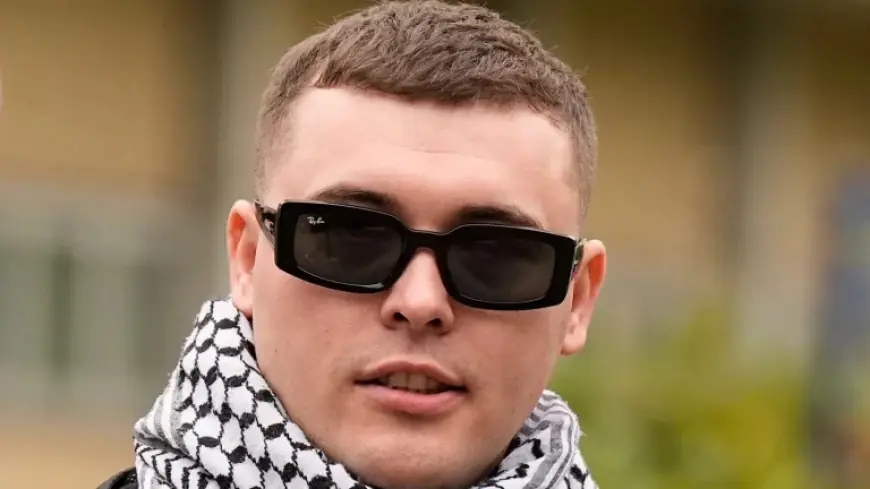
Liam Óg Ó hAnnaidh, who performs as Mo Chara, learned that he will not face a new terror trial after a High Court ruling rejected a prosecution appeal. The decision ends a legal effort tied to an alleged incident at a London gig and leaves the kneecap member’s charge dismissed on timing grounds rather than on the substance of the allegation.
Kneecap member Liam Óg Ó hAnnaidh and the London allegation
Liam Óg Ó hAnnaidh was first charged in May 2025 (ET) after an accusation that he displayed a flag in support of Hezbollah at a gig at the O2 Forum in Kentish Town, London, on 21 November 2024 (ET). The allegation related to actions at that concert and formed the basis of a terrorism offence brought later by prosecutors. His stage name, Mo Chara, and his role in the Irish language trio Kneecap were central to public attention as the legal process unfolded.
Over the years Kneecap have drawn attention for provocative lyrics and merchandise, and their rise inspired a semi-fictionalised film featuring an Oscar-nominated actor. For Ó hAnnaidh personally, the charge led to multiple court appearances, including early hearings in June and a key hearing in August in which defence lawyers challenged the timing and authority for bringing the prosecution.
High Court ruling by Lord Justice Edis and Mr Justice Linden
Judges at the High Court in London — Lord Justice Edis and Mr Justice Linden — published a judgment that rejected the Crown Prosecution Service appeal and agreed with the chief magistrate’s earlier view on timing. The judgment stated it agreed that the charge had been brought outside the six-month time limit that governs summary-only offences alleged on that date.
The High Court judgment noted that the written charge had been issued on 21 May (ET) but that permission from the Attorney General was not given until 22 May (ET), a day after the charge was laid. The judges concluded that the initial written charge was invalid because the necessary consent had not been obtained at the time it was issued, leaving the magistrate without jurisdiction to try the summary offence alleged to have occurred on 21 November 2024 (ET).
Chief Magistrate Paul Goldspring’s ruling and the prosecutorial timeline
Chief Magistrate Paul Goldspring dismissed the case last September, describing the charge as unlawful and saying he had no jurisdiction to try it at Woolwich Crown Court. That ruling turned on a legal technicality: prosecutors had not obtained timely permission to bring a terror offence charge, and when permission was granted it fell outside the six-month period for bringing such proceedings for the alleged November 2024 incident.
Prosecutors appealed the magistrate’s decision, prompting the High Court to consider whether the proceedings had been instituted properly when the first written charge was issued on 21 May (ET). The High Court found the magistrate had been right to hold that he lacked jurisdiction because the valid charge was not in place within the statutory timeframe, and so no fresh summary trial could lawfully proceed.
released through his lawyers, Ó hAnnaidh said the process had never been about him and framed it as related to political speech; he also said he and his bandmates would not be silent. That comment followed the High Court’s remote delivery of its ruling and came after his second hearing, when defence lawyers had argued the prosecution’s failure to obtain consent in time rendered the charge unlawful.
For Liam Óg Ó hAnnaidh, the immediate legal consequence is now clear: after the High Court rejected the CPS appeal he will not face a new terror trial. The judgment was published by the two judges and resolves the procedural question that had kept the case active, returning the focus to the dismissed charge and the role of prosecutorial permissions in cases arising from the 21 November 2024 (ET) concert.