Kilauea Volcano Erupts, Launching 1,000-Foot Lava Fountains and Ash Alerts

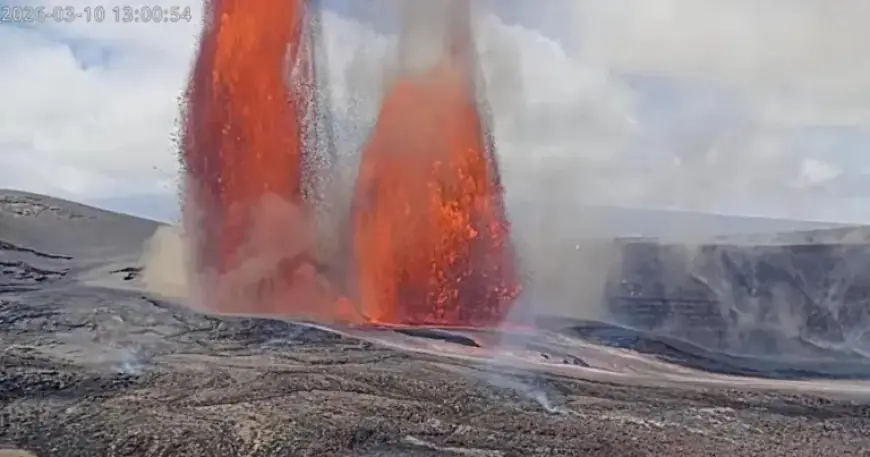
Kilauea Volcano on Hawaii’s Big Island has erupted spectacularly, launching lava fountains reaching heights of up to 1,000 feet. This event occurred on Tuesday, prompting significant alerts and temporary closures in the surrounding areas due to volcanic ash and tephra falling from the sky.
Kilauea’s Recent Eruption
The latest eruption marks the 43rd episode since Kilauea began its current cycle of activity in December 2024. This ongoing volcanic phenomenon has captivated both residents and visitors, showcasing periodic bursts of lava a year later.
Significant Events
- The eruption began on March 10, 2026.
- Previous eruptions in November dispensed nearly 11 million cubic yards of lava.
- Historically, lava flows from Kilauea can fill an Olympic-sized swimming pool every 5.5 seconds.
During the most recent fountaining event, live feeds displayed the vivid red lava and billowing smoke emanating from the volcano, though the duration of this episode remains uncertain. Past episodes have varied significantly in length, lasting anywhere from just a few hours to several days.
Impact on the Community
The eruption posed challenges for neighboring communities. Falling tephra, along with ash, prompted temporary closures at Hawaii Volcanoes National Park and a partial shutdown of Highway 11, a critical route around the island. With these areas impacted, Hawaii County officials opened a shelter in a district gymnasium for those affected by road closures and tephra fallout. However, initial reports indicated that no residents had utilized the shelter shortly after its opening, according to county spokesperson Tom Callis.
Health and Safety Alerts
The National Weather Service has issued an ashfall warning for areas extending from Hawaii Volcanoes National Park toward the southeast and southwest. Experts anticipate more than a quarter-inch of ash accumulation in these regions.
- Volcanic tephra can irritate the eyes, skin, and respiratory system.
- It may also obstruct water collection systems widely used on the Big Island.
In previous fountaining episodes, ash accumulation became heavy enough to require assistance from civil defense workers to clean residential areas. Kilauea remains one of the most active volcanoes in the world, continuously presenting both awe-inspiring natural displays and challenges for those living in its vicinity.