TSA Wait Times Stay Elevated as DHS Shutdown Hits Spring Break Travel at MSY and Beyond

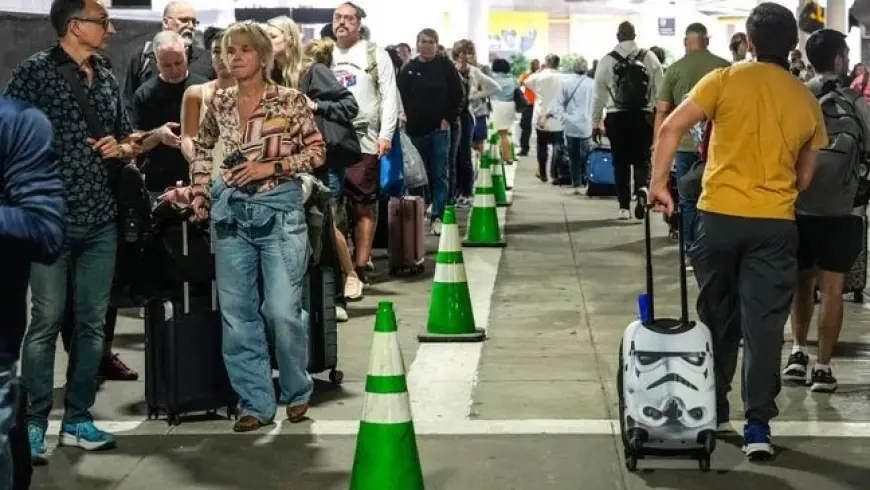
Spring break travelers are heading into one of the busiest airport stretches of the season with a mixed picture at U.S. checkpoints: TSA PreCheck remains available, Global Entry has resumed after a temporary suspension, but security lines at several airports are still running longer than normal as the partial Department of Homeland Security shutdown drags on.
The disruption has been especially visible at Louis Armstrong New Orleans International Airport, where officials warned this week that wait times could reach two hours and urged passengers to arrive at least three hours before departure. With spring break traffic building through late March, the shutdown is no longer a political story confined to Washington. It is now a live travel problem for families, students and business travelers trying to get through security on time.
Long Lines Are Spreading Into Peak Spring Break Travel
The immediate issue is staffing pressure. TSA officers are still working during the shutdown, but many have now gone without regular pay, raising concerns about absenteeism and reduced checkpoint capacity just as passenger volume climbs.
That has already translated into visible delays at airports in New Orleans, Houston and several other major markets. At MSY, airport alerts over the weekend said the shortage of available screening staff was leading to longer-than-average lines, with the heaviest congestion expected to continue through the week.
The broader travel calendar makes the problem more serious. Airlines are moving into the heart of the spring break rush, and even moderate staffing gaps can quickly turn into hour-plus waits when morning departure banks pile up. That means travelers who normally budget 90 minutes may now need substantially more cushion, especially for checked bags and standard screening.
What the Shutdown Means for TSA and DHS Operations
This shutdown affects the Department of Homeland Security rather than the entire federal government, but that still reaches deep into the travel system because TSA, Customs and Border Protection, and several trusted traveler programs all sit inside DHS.
TSA checkpoints have stayed open, avoiding the more extreme outcome of widespread closures. But keeping lanes technically open is not the same as keeping them fully staffed. The longer the funding lapse lasts, the more pressure builds on frontline screening and support operations.
One of the clearest signs of that strain came when Global Entry processing was suspended late last month. The program resumed at 5 a.m. ET on Wednesday, March 11, restoring a major fast-track option for eligible international travelers. Even so, the restart does not solve the domestic checkpoint bottleneck that many spring break passengers are encountering before they ever reach the gate.
TSA PreCheck Is Still Running, but It Is Not a Complete Fix
For travelers searching whether TSA PreCheck is shut down, the answer remains no. PreCheck lanes are still operating, and they continue to offer the fastest path through domestic security at many airports.
That matters because some of the early confusion around the shutdown had travelers worried that all expedited screening programs could be suspended. Instead, PreCheck stayed in place while Global Entry went dark and then came back online.
Still, PreCheck is only part of the answer. It cannot eliminate congestion caused by staffing shortages, and it does nothing for travelers who have not enrolled. In a busy airport, standard screening lines can still stretch well beyond the usual range even when expedited lanes are moving.
For families flying out during school break windows, that distinction is critical. A traveler with PreCheck may get through in a fraction of the time, while everyone else in the same terminal could face a much slower queue.
Mobile Passport Control Is Getting New Attention
As international travelers look for alternatives, Mobile Passport Control is drawing renewed interest. The app allows eligible passengers returning to the United States to submit passport and customs information on a phone before inspection, often shortening the process at participating airports.
It is not a replacement for TSA PreCheck because it works on arrival rather than departure, and it does not cover domestic security screening. But it has become more relevant during the shutdown because it offers another way to reduce airport friction when customs halls are under strain.
For travelers without Global Entry, Mobile Passport Control may now be the most practical backup option on international returns, especially while staffing levels remain uneven.
MSY and Other Airports Are Telling Travelers to Build in More Time
At New Orleans, the guidance has been straightforward: arrive early and expect delays. That advice is increasingly being echoed elsewhere as airports try to avoid missed flights during the spring travel surge.
The key point for passengers is that wait-time data may be less reliable than usual and conditions can change quickly by terminal and departure bank. A checkpoint that looks manageable at one hour can become severely backed up the next if staffing tightens or multiple flights begin checking in at once.
For now, the headline for travelers is not that airport screening has broken down nationwide. It is that the system is operating with less margin than normal at exactly the wrong moment in the calendar. Global Entry is back, TSA PreCheck is still active, and Mobile Passport Control remains available, but none of those tools fully erase the pressure the DHS shutdown is putting on spring break travel. At MSY and other busy airports, early arrival has shifted from routine advice to the safest assumption.