Iea oil release plan vs. 2022 Ukraine response: what the comparison reveals

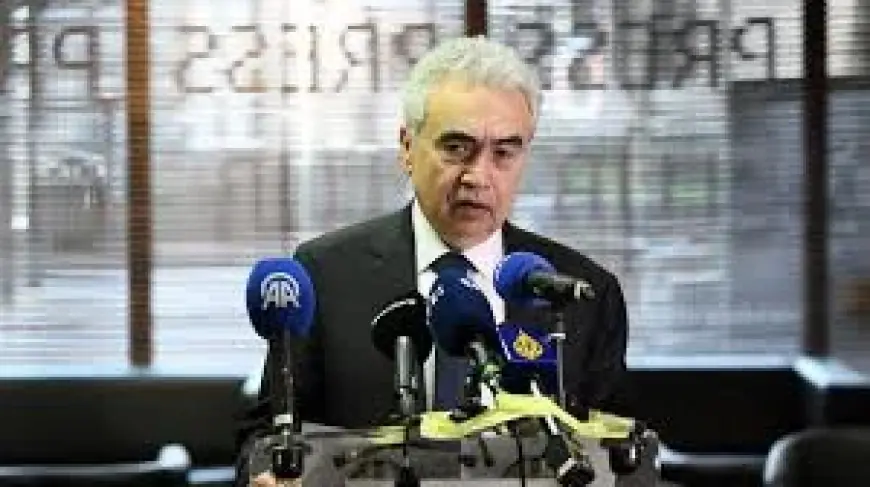
The iea is pressing for what it describes as its biggest-ever collective intervention in the oil market, after the US-Israel war with Iran disrupted flows through the Strait of Hormuz and sent prices surging. The same tool was used after Russia’s full-scale invasion of Ukraine in early 2022. Placing the two moments side by side answers a narrower question: what does “bigger than 2022” actually mean for supply, speed, and limits?
International Energy Agency (IEA) and the proposed 400 million barrel release
G7 nations said they would support a collective release of oil from their reserves to tackle soaring prices since the start of the US-Israel war with Iran, after meeting with the International Energy Agency (IEA). Germany’s economy minister Katherina Reiche said the IEA has asked its 32 members to release 400 million barrels of oil, and she framed Germany’s participation as adherence to the IEA principle of “mutual solidarity. ”
A key procedural constraint sits alongside the headline volume: all 32 members would need to agree for a release to go ahead. Even before that unanimity is confirmed, Austria and Japan publicly confirmed they will release oil from their stockpiles. Reports also indicated the IEA would confirm a 400 million barrel release from members’ reserves on Wednesday afternoon, though no specific time was provided in the material.
Early 2022 Ukraine intervention as the reference point for scale
The comparison point embedded in Reiche’s statement is the release “following Russia’s full-scale invasion of Ukraine in early 2022. ” The current request—400 million barrels—is described as more than double the amount released in that earlier intervention. That makes the Ukraine-related action the immediate benchmark for what counts as “historic” in this system: a prior large, collective drawdown that the current crisis is now set to exceed by a wide margin.
Yet the 2022 reference does more than establish a before-and-after timeline. It also signals how the IEA frames legitimacy and coordination: the mechanism depends on members acting together, not on a single country moving first. That same collective logic now underpins the push for a record release as the conflict affects both production in the region and oil export routes.
Strait of Hormuz disruption vs. the limits of reserves and refining capacity
On the crisis side of the ledger, the context is unusually concentrated: oil exports through the Strait of Hormuz—which carries a fifth of global oil supplies—have virtually stopped, and production in the region has slumped. Prices jumped after the conflict started and later stabilised after reports that oil could be released, even as the move was described as a short-term solution.
On the capability side, the same facts that make the iea request look enormous also narrow what it can achieve. Even a 400 million barrel release would equate to around three or four days’ worth of global supply, or roughly a fortnight’s worth of what would normally be shipped out of the Strait of Hormuz. In other words, the proposed volume is record-setting within the IEA’s history, but modest when measured against the scale of global consumption and the specific chokepoint disruption that triggered the plan.
| Comparison point | Current US-Israel war with Iran disruption | Early 2022 Ukraine intervention reference |
|---|---|---|
| Planned release volume | 400 million barrels requested by the IEA | Less than half of 400 million barrels (implied by “more than double”) |
| Trigger described | Strait of Hormuz exports virtually stop; regional production slumps | Russia’s full-scale invasion of Ukraine in early 2022 |
| Decision structure | All 32 IEA members must agree for it to go ahead | Release occurred after the 2022 invasion (collective action implied) |
| Scale vs. global flows | About 3–4 days of global supply; about a fortnight of normal Strait shipments | Smaller than the current plan; no supply-equivalent given |
| Operational constraint | Oil is dispersed; release is not an instant flood; refining capacity shortage noted | Same system of reserves and distribution implied |
| Repeatability | Once released, reserves are reduced and cannot be released again in the same way | The earlier release sets a precedent, but does not remove the depletion risk |
How the barrels reach the market is another practical difference between a headline number and real-world relief. The reserves are not stored in a single location; producers such as Shell and BP keep stocks at terminals and refineries around the UK and can earmark stocks held elsewhere as part of reserve requirements. When oil is released, producers make more available for refineries to order rather than unleashing a sudden surge of physical shipments. Energy analysts also warned there is a shortage of refining capacity, an additional bottleneck that can blunt the price and supply impact even when crude is “available. ”
There is also the one-way nature of the tool. Nick Butler, a former head of strategy at BP, summed up the constraint: once reserves are released, they are no longer there. That reality applies no matter which crisis prompted the drawdown, which means the record size being discussed now carries a larger opportunity cost than the smaller early-2022 benchmark.
Finding (analysis): Compared with the early 2022 Ukraine-related intervention, the current iea push is designed to be larger and more forceful as a signal, but its capacity to offset a Strait of Hormuz shock is structurally capped by scale, logistics, and the fact that reserves can only be spent once. The next confirmed test is whether all 32 members agree and whether the IEA confirms the 400 million barrel release on Wednesday afternoon; if unanimity holds while refining constraints persist, the comparison suggests the intervention will steady markets temporarily without matching the underlying disruption.