Tornado Watch Vs Warning: National Weather Service Urges Faster Action as Severe Storms Spread East

As severe thunderstorms sweep across parts of the Ohio Valley and Deep South on Wednesday, the National Weather Service is stressing a distinction that can save lives: a tornado watch means conditions are favorable for tornadoes to form, while a tornado warning means a tornado is imminent or already occurring and immediate shelter is needed.
The difference may sound simple, but during fast-moving spring storm systems it often determines how much time people have to act. With damaging winds and possible spin-up tornadoes in the forecast across several states on March 11, the agency’s latest messaging is focused on getting people to move earlier, not later.
A Tornado Watch Means The Atmosphere Is Ready
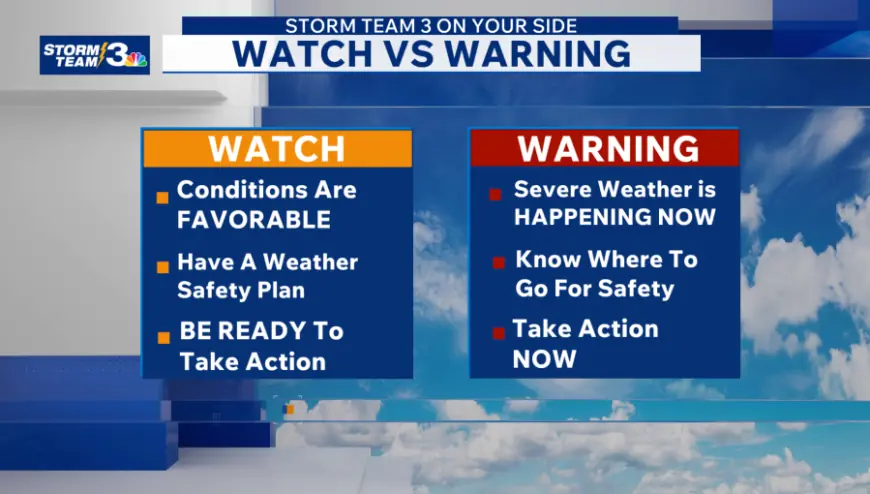
A tornado watch is issued for a broad area, often covering multiple counties and sometimes parts of several states, when weather conditions are favorable for tornadoes and severe thunderstorms over the next several hours.
That does not mean a tornado has been spotted. It means the ingredients are in place: instability, wind shear, moisture and a storm pattern capable of producing rotating thunderstorms. In practical terms, a watch is the stage when residents should review their safety plan, charge their phones, monitor alerts and make sure they know where to go if a warning is issued.
On an active severe-weather day, a watch is often the first sign that the threat is no longer theoretical. It is a call to prepare, not a signal to panic.
A Tornado Warning Means Take Shelter Now
A tornado warning is much more urgent. It is issued for a smaller area when a tornado has been indicated by radar or reported by trained spotters, law enforcement or the public. Once a warning is in effect, the National Weather Service wants people in the path to move immediately to a safe location.
The recommended shelter is a basement or an interior room on the lowest floor of a sturdy building, away from windows. Mobile homes and vehicles are not safe places to stay during a tornado warning.
The warning stage is not the time to begin looking outside for confirmation. That delay can be dangerous, especially when storms are moving quickly or when rain wraps around the circulation and hides the tornado from view.
Why The Difference Matters More During Fast-Moving Storms
The current storm setup on Wednesday is a good example of why the watch-versus-warning distinction matters. National Weather Service briefings in parts of Kentucky and the Ohio Valley warned that damaging winds are the primary threat, with spin-up tornadoes also possible as storm lines race east.
Those line-embedded tornadoes can develop quickly and leave very little reaction time. In that environment, waiting until a warning arrives to think about shelter can cost precious minutes. A watch gives households, schools and businesses the lead time to prepare before the weather becomes dangerous.
That is especially important during work hours and overnight events, when people may be traveling, in large buildings, or asleep. Fast decisions are easier when the plan has already been made.
How To Respond When A Watch Or Warning Is Issued
The National Weather Service’s safety guidance can be boiled down to two different actions.
During a tornado watch:
-
Stay weather-aware
-
Keep alerts on
-
Review your safe place
-
Be ready to move quickly
During a tornado warning:
-
Go to shelter immediately
-
Protect your head and neck
-
Stay away from windows
-
Do not try to outrun the storm in a vehicle unless no sturdy shelter is available
That split in response is the core of the system. A watch is about readiness. A warning is about action.
Why Officials Keep Repeating The Message
Forecasters repeat the watch-versus-warning message so often because confusion still causes dangerous delays. Many people hear the two terms and treat them as roughly interchangeable, or assume a watch is less serious because skies may still be calm where they are.
But watches can be issued hours before the first storm reaches a community, and warnings can follow quickly once storms intensify. In a severe-weather outbreak, that progression can unfold over a single afternoon.
The agency’s broader goal is to move people from passive awareness to decisive action. That means understanding that a watch is not background noise and a warning is not a suggestion. One tells you the risk is building. The other tells you the threat is at your door.
With severe storms active again on Wednesday, that distinction is more than weather vocabulary. It is the difference between being prepared when the warning arrives and being caught by surprise when time runs out.