Anfernee Jennings release plan highlights cap savings and mixed role signals

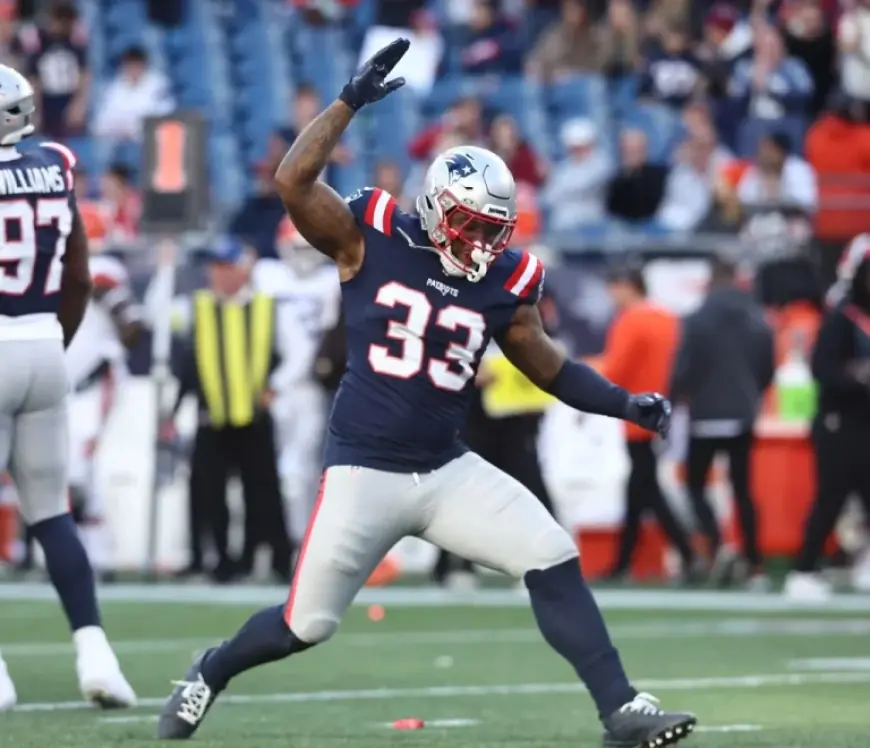
The New England Patriots plan to move on from anfernee jennings after six seasons, with the release slated for Wednesday and timed to the start of the new league year at 4: 00 p. m. ET. Yet the record in the provided context points to a tension: the team is cutting a recent starter and recognized run defender while simultaneously facing a thinning edge group and an expressed need for more pass-rush impact.
Anfernee Jennings and the Patriots release timing at 4: 00 p. m. ET
The confirmed surface fact is straightforward in the context: the Patriots will release outside linebacker Anfernee Jennings on Wednesday, and the move is expected to be processed at 4: 00 p. m. ET, the start of the new league year. Two separate figures in the context define the financial framing. One account states Jennings was entering the final year of his contract with a $4. 87 million salary cap hit, while another states the release will clear or save the Patriots over $3. 8 million in cap space.
The context also documents Jennings’ tenure and production in New England in multiple ways. He joined as a third-round pick in 2020 out of Alabama. One statistical line credits him with 75 games and 40 starts, while another places his total at 79 combined regular season and playoff games. The production totals differ as well: one summary gives 217 tackles and 7. 5 sacks, while another lists 233 tackles and 9. 5 sacks, and each also notes two forced fumbles and two fumble recoveries.
Those inconsistencies do not change the core confirmed point: Jennings has been a long-tenured contributor, and his release is being handled as a cap-management decision at a specific roster deadline. What remains unclear is why the context contains different totals for games played and key stats; the context does not confirm which set reflects the team’s internal accounting, nor whether one set includes postseason figures while another does not.
Mike Vrabel, Jerod Mayo, and a role change that clashes with past usage
The second layer in the context is the described arc of Jennings’ role under three coaching regimes. He is described as one of the few remaining players who played under Bill Belichick, Jerod Mayo, and Mike Vrabel. His early career is presented as more limited: he was primarily used as a role player and began as an off-ball linebacker, then missed the 2021 season due to injury, and moved to outside linebacker in 2022.
From there, the context documents a period of expanded responsibility. One account says he took a developmental step when Pro Bowl linebacker Matthew Judon missed most of the 2023 season due to injury, moving Jennings into a starting role and describing him as one of the top run-defending outside linebackers in football. Another describes his best years as 2023 and 2024, when he started 30 games as an early-down run stuffer.
That makes the final phase of the timeline the investigative pressure point. The context states that after Mayo, Vrabel took over the following year and Jennings’ role changed. Even with increased workload “as the year went on, ” his defensive playing time share ended at 32%, described as his lowest since 2022. The documented tension is that the Patriots are releasing a player characterized in the context as an early-down starter and strong run defender, while the same context describes a usage pattern under Vrabel that appears to reduce him to a more limited snap share.
The context does not confirm the internal reasoning for that reduction or whether it was driven by scheme fit, personnel changes, or performance. Still, the facts establish a gap between the described value of his 2023 and 2024 seasons and the diminished share cited under Vrabel.
K’Lavon Chaisson, Harold Landry, and the Patriots’ edge depth after Wednesday
The release does not occur in isolation within the context. Jennings is described as the second edge player to leave the Patriots on Wednesday, with K’Lavon Chaisson’s departure to the Washington Commanders reported minutes earlier in one account, and described elsewhere as an agreement to sign with the Commanders on Wednesday morning. The context also states the Patriots will look different on the edges in 2026, leaving Dre’Mont Jones and Harold Landry as top options on the depth chart.
One account goes further and lists the remaining defensive end and outside linebacker group as Harold Landry, Dre’Mont Jones, Elijah Ponder, Bradyn Swinson, and Jesse Luketa. In the same context, the team’s roster problem is spelled out: the Patriots will need to add more help on the edge through free agency or the draft, and while Landry and Jones are potential starters, the team needs more “juice” in pass-rushing situations. That same context adds that Landry missed time late in 2025 with a knee injury and “can’t be counted on to stay healthy all season. ”
This is where the financial explanation meets the roster reality. Clearing over $3. 8 million in cap space provides flexibility, but the context also documents the immediate cost: two edge exits in the same morning and an acknowledged need for additional edge talent. The context does not confirm whether the Patriots view Jennings as replaceable because of Vrabel’s scheme preferences, because of his playing-time share, or because of other options that are not detailed.
What can be confirmed is the decision’s shape: a cap-saving release at the league-year trigger, paired with a depth chart that the context itself describes as needing additions. If the Patriots’ subsequent edge additions match the stated need for pass-rush impact, it would establish whether the release of anfernee jennings was primarily a scheme-and-usage decision, or a broader reallocation of resources tied to the new league year at 4: 00 p. m. ET.