Klavon Chaisson deal talks put Commanders’ pass rush in focus

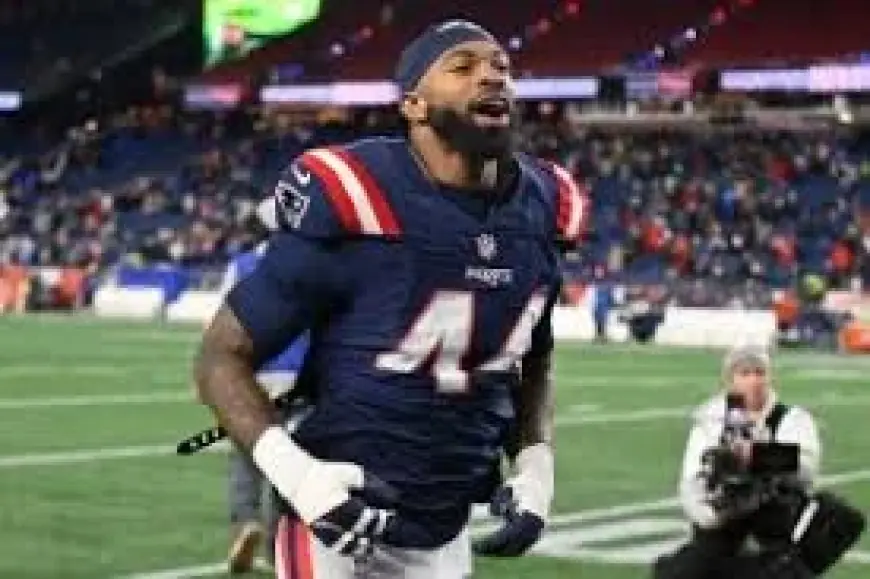
klavon chaisson is drawing fresh attention in Washington after agreeing to terms on a one-year deal following a breakout 2025 season with the New England Patriots. The development matters less for the contract length than for what it signals: the Washington Commanders are still actively building their edge group even after already moving in free agency for another prominent pass rusher.
Chaisson’s recent surge is clearly documented. He produced a career-high 7. 5 sacks and 59 pressures for New England in 2025, then elevated that impact in the postseason with 20 pressures across four playoff games during a run to the Super Bowl. For a player whose first four NFL seasons in Jacksonville never exceeded two sacks in a year, the shift is stark. The pattern suggests Washington is chasing momentum and a specific skill set—pressure creation—rather than a name alone.
K’Lavon Chaisson and Washington’s edge plans
Washington’s interest in K’Lavon Chaisson comes in a very particular roster-building window. One day after agreeing to terms with Chargers edge rusher Odafe Oweh on a four-year, $100 million contract, the Commanders were still described as shopping among pass-rushing options in free agency, with Chaisson identified as “one name to watch. ” That sequencing implies Washington’s Oweh move is not being treated as a finish line; it is being treated as a foundation.
Several details in the current edge picture help explain the continued pursuit. Von Miller, identified as last year’s sack leader, is a free agent and will be 37 this year. Dorance Armstrong tore his ACL in Week 7 of last season, and while he is expected back in 2026, that timeline leaves a gap in the short term. Oweh “immediately slots in” as Washington’s top pass rusher, but the roster context points to why the team would still be exploring more pressure help rather than assuming one major signing solves the full problem.
Patriots production reshaped Chaisson’s value
Chaisson’s career arc is central to why he has re-entered the conversation at this level. After being selected 20th overall in the 2020 NFL Draft, his early years with the Jacksonville Jaguars were described as disappointing; he never exceeded two sacks in any of his first four seasons. The Jaguars did not pick up his fifth-year option, and he moved to the Las Vegas Raiders for 2024, recording five sacks. In Las Vegas, his role was described as part-time, yet he still logged 32 tackles, seven tackles for loss, and five sacks in 15 games.
New England’s bet in free agency was that the Raiders season was a turning point, and the regular-season results validated that bet: 16 games, 31 tackles, 10 tackles for loss, and 7. 5 sacks, along with a 15. 2% pressure rate. Then came the postseason leap—12 tackles, four tackles for loss, three sacks, 10 quarterback hits, and one forced fumble. The figures point to a player whose value is now tied to disruption volume, not simply sack totals, and that tends to be what teams target when they are trying to change games on passing downs.
Still, the profile is not presented as flawless. Chaisson was described as a better pass rusher than run defender, with the possibility that his playing time could be limited to passing situations. He is also described as “a bit undersized” at 255 pounds, even as his speed and “quick twitch” are highlighted as the traits that let him get after quarterbacks. Those details matter in Washington because they suggest any role would need to be defined carefully—maximizing obvious passing situations, pairing him with other edge options, and ensuring the unit doesn’t become too specialized to hold up across game scripts.
Odafe Oweh signing sets the ceiling
Washington’s agreement with Odafe Oweh at four years and $100 million instantly frames any additional edge move, including one involving klavon chaisson. Oweh is positioned as the team’s top pass rusher, but the team’s continued market activity signals a desire to build waves rather than rely on a single player. The analysis here is straightforward: when a team spends heavily at one edge spot and still pursues more, it is choosing redundancy in pressure creation—often a response to how quickly injuries, age curves, or rotational needs can erode a pass rush over a season.
There is also a potential downstream roster implication embedded in the current discussion. If Washington were to land Chaisson alongside Oweh, it was argued that doing so would “almost eliminate the possibility” of selecting a pass rusher at No. 7 overall in the 2026 NFL Draft. That claim is not a decision, but it shows what is now at stake: free agency activity that reshapes the top of a draft board, not just the bottom of a depth chart.
The next unresolved question is concrete: will Washington complete a signing with K’Lavon Chaisson after already agreeing to terms with Odafe Oweh on March 10, 2026? If Washington does add him, the data suggests the team is prioritizing pressure depth and draft flexibility at pick No. 7 over waiting for one solution to emerge from the 2026 draft.