Trumprx Gov vs Trump Rx: What the early rollout reveals

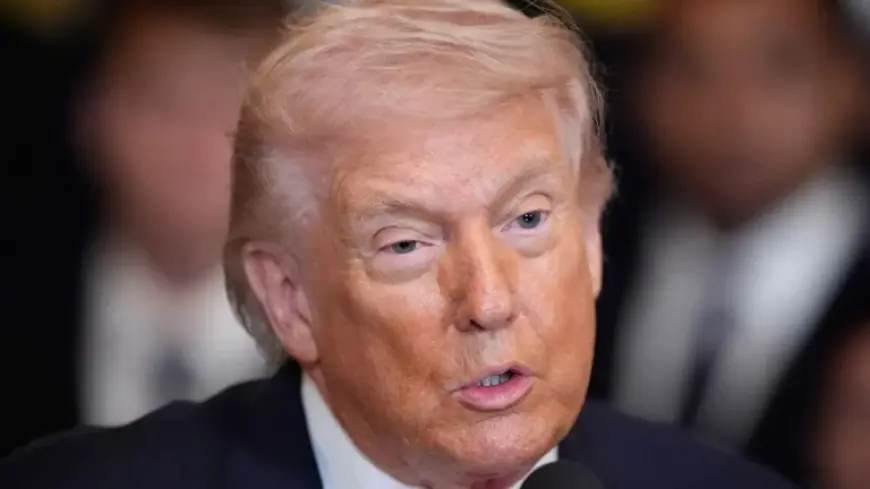
trumprx gov has become shorthand for a policy push President Donald Trump has promoted as a way to lower prescription drug prices through competition and direct access. At the same time, Trump Rx has appeared as a new direct-to-consumer program offering discounted medications online for people paying out of pocket. Placing the two side by side answers a specific question: is the public promise of broad drug-price relief matching the program’s on-the-ground design?
President Donald Trump’s TrumpRX pitch: competition, transparency, and “Most Favored Nation”
In Washington, Trump has framed lower prescription drug costs as a central priority, describing families forced to choose between filling a prescription and paying bills. The policy list presented alongside TrumpRX is broad: expanding generics and biosimilars, implementing price transparency rules described as historic, capping insulin costs for seniors, advancing TrumpRX to increase competition and direct access, and pursuing a “Most Favored Nation” policy aimed at ensuring Americans do not pay more for medications than patients in other developed countries.
The argument accompanying that package is structural: put patients “not middlemen” first. The framing also suggests speed and administrative follow-through matter. Trump’s team has pointed to a previous model of fast federal coordination with private-sector innovation, Operation Warp Speed, described as accelerating vaccine development and distribution while expanding options for patients and families. Still, the same account also warns that public trust can erode when autonomy gives way to coercion, citing universal COVID vaccine mandates as a turning point for confidence in institutions and recommendations.
Trump Rx’s cash-only design: more than 40 drugs, but limited reach
Trump Rx, described as a new direct-to-consumer prescription program, is already more concrete in one sense: it is an online offering of lower-cost medications with a defined eligibility constraint. Patients must pay out of pocket rather than using health insurance, even as the program lists more than 40 medications advertised at lower-than-traditional costs. President Trump’s team announced Trump Rx last month, signaling a fast start, but also setting up immediate scrutiny over who can benefit.
That constraint is central in the way patients describe their circumstances. Mark and Jenny Jeffery, who said Mark suffered a traumatic brain injury and needs what they described as high-priced medications, said that without insurance they would likely pay up to $800 a month for his prescriptions. Their interest in Trump Rx was tied directly to the possibility of lowering that burden, while also emphasizing that broader availability would matter most for “the most vulnerable” and those “financially challenged. ”
Economist Dr. Erwin Erhardt of the Lindner College of Business at the University of Cincinnati characterized efforts to reduce drug prices as “a good start, ” while also saying the current list is limited. He described a longer-term upward trend in drug prices, saying they rose 91 percent between roughly 2000 and 2020, with a forecast of a 5 percent annual rise through 2030. Erhardt also attributed rising prices to factors including higher research costs and a higher desire for profits by pharmaceutical companies, and said it can take up to 12 years to get a drug to market.
Trumprx Gov compared with Trump Rx: broad promises meet narrow mechanics
The most direct comparison between trumprx gov as a concept and Trump Rx as an offering is the gap between a system-wide ambition and a program with a defined, cash-only mechanism. Trump’s policy pitch centers on competition, transparency, and direct access, with tools that include generics and biosimilars, insulin caps for seniors, and the “Most Favored Nation” idea. Trump Rx, meanwhile, offers immediate price relief for a set of more than 40 medications, but requires patients to step outside insurance to participate.
Measured against the same criteria—access, affordability, and scope—the two approaches diverge:
| Criteria | TrumpRX policy pitch | Trump Rx program |
|---|---|---|
| Primary lever | Competition and direct access | Discounted online cash prices |
| Who can use it | Presented as patient-centered and broad | Only patients paying out of pocket |
| What is defined now | Multiple policy tools named | More than 40 medications listed |
| Stated affordability target | Families facing high drug costs; seniors insulin cap | People seeking lower-than-traditional costs without insurance |
| Stated limit | Needs sustained momentum through competition and access | Medication list described as limited; insurance not accepted |
Analysis: The table shows a classic implementation trade-off. The policy pitch describes relief that could be broad, while the program’s current mechanics narrow participation at the moment of purchase. That does not negate the possibility of lower prices for some patients; it does, however, constrain how easily the program can serve people who rely on insurance structures, even if those people face the same budget pressures the larger message highlights.
The comparison establishes a clear early finding: Trump’s drug-price agenda is being sold as a wide access-and-competition reset, but the initial Trump Rx execution visible so far looks targeted and conditional, delivering discounts only within a cash-only lane and with a list that is still limited. The next test will be the expected additional information from President Trump about the plan, which is anticipated to come from Thermo Fisher Scientific. If trumprx gov maintains its emphasis on expanded access while the program remains cash-only, the comparison suggests the messaging will continue to outrun who can realistically use the offering.