Abdul Samad vs Aliko Dangote: what 2026 gains reveal about Africa’s rich list

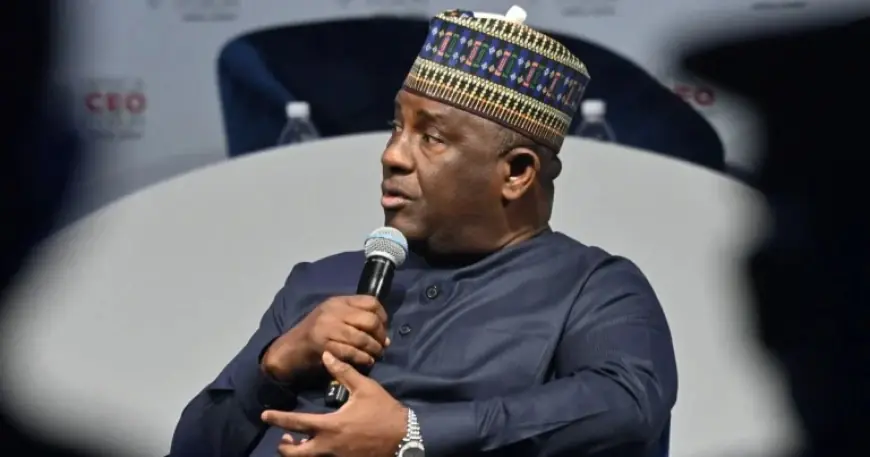
abdul samad sits in third place on the 2026 Africa rich list at $11. 2 billion, while Aliko Dangote holds the top spot at $28. 5 billion. Placing the two side by side answers a practical question the rankings alone do not: what matters more for movement on the list in 2026, sheer scale of wealth or the speed at which it changes?
Abdul Samad Rabiu’s rise: a jump to third and the year’s biggest gain
Abdulsamad Rabiu moved from sixth to third richest person in Africa on Forbes’ 2026 ranking of the continent’s wealthiest. His net worth rose to $11. 2 billion, described as the largest wealth gain in Africa this year: a 120% jump, or $6. 1 billion, from 2025. Globally, Rabiu ranks 284th richest, positioned just behind Johann Rupert at $16. 1 billion.
Rabiu is chairman and founder of BUA Group, a diversified conglomerate with interests in cement, sugar refining, agriculture, and real estate. His flagship asset, BUA Cement, drove much of his fortune, with shares rising 135% over the past year. That gain outpaced the Nigerian Stock Exchange, which climbed 81% amid record corporate profits and a government push for increased pension fund equity investments.
In January 2026, BUA Cement announced plans to expand capacity after Rabiu’s discussions with a Chinese construction partner. The proposed new production line in northern Nigeria would raise total annual output to 20 million tons. Separately, Rabiu is also described as known for philanthropy through the Abdul Samad Rabiu Initiative, and in December 2025 he distributed $20. 7 million in cash rewards to long-serving BUA Group employees.
Aliko Dangote’s position: the continent’s richest and a steadier driver
Aliko Dangote is listed as Africa’s richest man with an estimated net worth of $28. 5 billion on the latest Africa rich list. His fortune is described as significantly tied to Dangote Cement, and it benefited from a 69% surge in share value on the Nigerian Exchange since March 2025.
The 2026 ranking also links Dangote’s recent momentum to industrial expansion beyond cement. It points to an aggressive expansion into energy, described as the ongoing scaling of his mega-refinery project. Dangote recently finalized a $400 million agreement for specialized Chinese machinery, framed as signaling intent to dominate the downstream petroleum sector by 2029.
Where Rabiu’s 2026 story centers on the year’s sharpest jump, Dangote’s is presented as the continuation of a leadership position built on large publicly valued enterprises. The result is less about changing places on the list and more about maintaining the top rank while still posting notable equity-driven gains.
Rabiu versus Dangote in 2026: scale, speed, and what the list can verify
Measured by scale alone, Dangote remains far ahead at $28. 5 billion versus Rabiu at $11. 2 billion. Measured by speed of change, Rabiu leads: his net worth climbed 120% in a year, while Dangote’s context is described through a 69% share-value surge in Dangote Cement since March 2025 rather than a specific percentage increase in his net worth.
| Comparison point | Abdulsamad Rabiu | Aliko Dangote |
|---|---|---|
| Africa rank | Third | First |
| Net worth | $11. 2 billion | $28. 5 billion |
| Key public-market driver cited | BUA Cement shares up 135% (last 12 months) | Dangote Cement share value up 69% (since March 2025) |
| Change narrative | Moved from sixth to third; 120% net worth jump | Maintained No. 1; benefits from market gains and expansion |
| Sector emphasis described | Cement plus diversified BUA Group interests | Cement plus expansion into energy mega-refinery scaling |
Still, the comparison also highlights a shared structural feature: both fortunes are described in terms that can be valued publicly. Rabiu’s wealth rests heavily on BUA Cement and BUA Foods, both listed companies with clear market valuations, while Dangote’s is tied to Dangote Cement and other publicly valued enterprises. That matters because the rich list is described as relying heavily on verifiable information, including publicly available financial data, corporate filings, stock market valuations, and transparent ownership structures, with direct engagement and verification involving featured individuals.
That verification lens also explains an adjacent contrast inside the same 2026 discussion: while Nigerians accounted for four of the twenty-three individuals listed across Africa, there were no Igbos on the Forbes Africa rich list. The explanation offered is not that wealth is absent, but that many successful businesses can be privately held with limited disclosure structures, making objective valuation difficult, and that some wealthy individuals may not meet verification standards or may choose not to participate.
Analysis: Put together, Rabiu’s rapid climb and Dangote’s continued lead suggest the list in 2026 rewards two different things at once: being large enough to remain at the top, and being exposed to public-market revaluation powerful enough to change rank quickly. The common requirement is not simply ownership of big assets, but ownership structures and disclosures that allow those assets to be independently valued.
The next test of that finding is the next annual ranking referenced in the same framework that produced the 2026 list. If abdul samad maintains a large share-driven uplift while Dangote continues to pair cement gains with mega-refinery scaling toward 2029, the comparison suggests the top of the list will keep reflecting publicly measurable industrial expansion, while privately held fortunes with limited disclosure will remain harder to capture.