Bbc News Ni: Drowning finding vs. forehead swelling, what the inquest reveals

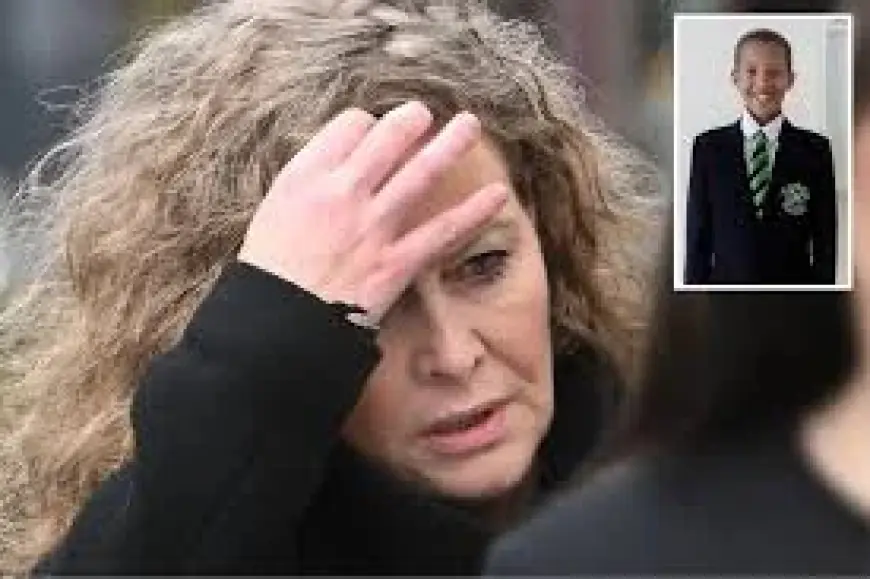
Noah Donohoe and Dr Marjorie Turner are at the center of new inquest testimony, and news ni coverage highlights two central threads: the pathologist’s conclusion that the schoolboy’s death was consistent with drowning, and the coroner’s presentation of significant forehead swelling and other injuries. The comparison asks which strand better explains how Noah came to be in the storm drain.
Dr Marjorie Turner on Noah Donohoe: drowning and the postmortem result
Dr Marjorie Turner carried out the postmortem examination and gave the inquest a clear statement that Noah’s death was consistent with drowning, and she recorded a negative result for drugs in his body. The pathologist also described Noah’s body as covered in silt and mud-like material when it was recovered from a storm drain almost a week after he went missing in June 2020, and said the death could have taken place within hours of his disappearance.
Mr Justice Rooney hearing: coroner evidence on Noah’s forehead and bruising
Mr Justice Rooney presided as the inquest heard that Noah had bruises and abrasions to his forehead, hands, knees and elbows, and that the forehead showed “significant” bruising. The coroner and witnesses discussed whether the forehead injury might have come from a fall from a bicycle before his disappearance, but Dr Turner said the mark was consistent with hitting that part of his head on a surface while inside the drain.
Professor Jack Crane and Nathanial Cary: expert agreement on third-party absence
Two other expert witnesses, the former State Pathologist Professor Jack Crane and forensic pathologist Nathanial Cary, gave evidence alongside Dr Turner and all three agreed there was no evidence of third-party involvement in Noah’s death. Professor Crane pointed to the possibility Noah became disorientated inside the “pitch black” drain, while Professor Cary described the environment as a “cold confused space, ” reinforcing an expert consensus about the circumstances rather than an alternative cause.
News Ni: how drowning finding and forehead swelling diverge in explaining Noah’s death
Viewed against the same criteria—observable injuries, toxicology, and expert interpretation—Dr Turner’s drowning finding and the coroner’s emphasis on forehead swelling diverge in what they explain. On observable injuries, the record shows bruises and abrasions including significant forehead bruising; on toxicology, the only specific fact recorded is a negative drugs result noted by Dr Turner; on expert interpretation, the drowning conclusion centers on the postmortem picture of silt and water exposure while the forehead swelling is interpreted as consistent with impact on a surface, possibly occurring within the drain.
Coverage in news ni has placed equal weight on the cause of death and the nature of the injuries, but the two strands answer different questions: Dr Turner addresses how Noah died, while the forehead evidence addresses what may have happened physically to him before or during that death. Both use the same concrete facts—the body’s condition when recovered from a storm drain almost a week after he went missing in June 2020, and the absence of drugs—but they resolve in different explanatory directions.
That divergence matters because it shapes what investigators and the coroner interpret as the sequence of events. Dr Turner said she did not believe Noah would have floated down the tunnel and thought he likely made his own way down, and she believed the boy “was dead for quite a period of time before he was found, ” likely closer to when he was last seen. The forehead bruising, by contrast, supports scenarios in which Noah sustained blunt impact to his head while in the drain, perhaps from multiple stumbles or falls described by Dr Turner.
Analysis: Placing the drowning determination alongside the coroner’s evidence of forehead swelling establishes that the forensic conclusion of how Noah died does not eliminate a separate, significant record of trauma that requires explanation. The inquest testimony from Dr Turner, Professor Crane and Nathanial Cary aligns on the absence of third-party involvement, but their accounts separate cause of death from the mechanics of injury.
Finding: The comparison establishes that the postmortem conclusion of drowning and the coroner’s evidence of forehead swelling are complementary but distinct—drowning explains the cause of death while the swelling documents physical trauma whose timing and mechanism remain a matter for the inquest to reconcile. The next confirmed event that will test this finding is the coroner’s ongoing inquest process in which all evidence, including the postmortem statements given on Tuesday, will be weighed and a formal conclusion will be reached. If Dr Turner’s timeline that Noah was likely dead closer to the time he was last seen is maintained, the comparison suggests the swelling is more plausibly explained by impact inside the drain rather than an external assault.