Western Conference Standings tighten as Lakers eye seeding, but priorities diverge

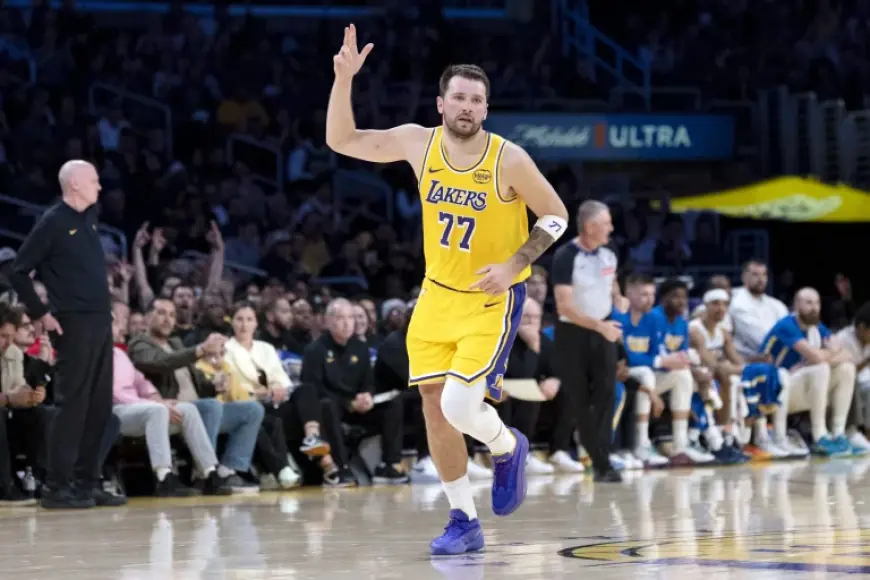
The Los Angeles Lakers sit in the middle of the western conference standings, with 18 games remaining and multiple paths still open in a crowded race. Yet the record presented across recent coverage highlights a tension: one narrative frames the stretch as a push for homecourt and climbing, while another argues health and chemistry matter more than geography, even as the team’s seeding hinges on a short run against direct competitors.
Los Angeles Lakers seeding picture: No. 5, congestion, and 18 games left
Confirmed positioning places the Lakers inside the conference bottleneck rather than safely above it. One account describes the race as “as tight as possible, ” stating teams are bunched with only three-and-a-half games separating the No. 3 seed and the No. 7 seed, and placing the Lakers at sixth in that snapshot with 18 games left. Another snapshot moves them up a spot: after beating the Pacers and Knicks over the weekend, the Lakers are listed at No. 5 in the West, helped by the Nuggets falling to Oklahoma City and New York.
The standings table provided in that second snapshot underscores how little separates the teams clustered around them: Wolves (40-24) in third, Rockets (39-24) in fourth, Lakers (39-25) in fifth, Nuggets (39-26) in sixth, and Suns (37-27) in seventh. A third account reinforces the same shape of the race while using a slightly different framing, describing seeds three through six as separated by a single game heading into action Monday night and noting the Lakers tied with Denver for fifth, Houston a half-game ahead, and Minnesota in third.
The context establishes a confirmed short horizon where results can swing positions quickly. Over the next nine days, the Lakers are set to face Minnesota on Tuesday, Denver on Saturday, and then two back-to-back road games in Houston. That run directly involves the teams immediately around them in the standings, raising the stakes of every head-to-head result.
Western Conference Standings Watch: homecourt chase versus a health-and-matchups argument
The context documents two simultaneous, not fully aligned framings of what the Lakers are playing for. One description explicitly positions the series as tracking games “as the Lakers look to secure home court and move up the standings, ” and calls the current stretch “the most important” of the season. In that framing, a win over the Wolves would put the Lakers “in a prime position to continue climbing up the rankings. ”
At the same time, another account presses a different claim: “matchups and health matter far more than geography, ” even while acknowledging the standard public line that “homecourt advantage matters. ” The gap is not in whether seeding matters—the context repeatedly notes how tightly packed the teams are—but in the priority presented as the guiding principle. That account describes the Lakers as being in their toughest stretch, with nine of the next 11 games against playoff teams and six of eight against teams “bunched up with them in the Western Conference standings. ” It also states the next nine days could decide whether the Lakers will have homecourt advantage in the first round, then immediately questions whether the Lakers “need or want” it.
Marcus Smart’s quote adds a third layer: awareness without emphasis. “It’s not something we’re focused on, but we’re definitely aware of, ” he said of the stretch, adding the team does not have the luxury to look ahead and must handle business one game at a time. The context does not confirm how widely that view is shared across the locker room, but it does document an internal message that downplays the pursuit of homecourt as an explicit focus while recognizing it is at stake.
Lakers vs. elite teams, schedule difficulty, and the thin margin around Phoenix
A second tension emerges between optimism about moving up and the constraints the context documents. One account argues the “only way” the Lakers move up to No. 4 or better is by beating a “bunch of teams with elite records, ” while also stating they have not shown they can do that consistently, citing a 5-12 record against teams with a. 600 winning percentage or better. That same account adds schedule pressure: it states the Lakers have the ninth-toughest remaining schedule, and that the teams they are competing against have easier schedules, except the Nuggets.
Still, the context also documents why a drop into the play-in is presented as less likely in that snapshot. It states only the Suns have a realistic chance of taking the No. 6 seed from the Lakers, and notes Phoenix going 5-5 over its last 10 games. Yet the context also includes a separate lens that treats Phoenix as actively fighting to avoid the play-in, while describing Indiana as “tanking” ahead of a Suns-Pacers matchup. What remains unclear is how these framing differences translate into a consistent, shared expectation, since one portion of the context emphasizes fan confidence the Lakers avoid the play-in, while another emphasizes nightly rooting interests around multiple games that can shift positions in the middle of the conference.
One more confirmed element ties the competing narratives together: the context highlights the importance of head-to-head games for tiebreakers, stating that if the Lakers win those matchups against key opponents, they will own tiebreakers they might need at the end. That puts added weight on the very same nine-day run against Minnesota, Denver, and Houston, even if the team publicly insists it cannot look ahead.
The immediate evidence threshold is concrete inside the context: if the Lakers win their next five games, they would sit alone in third place with homecourt advantage in the first round in their control. If that is confirmed in results, it would establish that a health-and-chemistry-first posture can coexist with a rapid climb in the western conference standings, rather than requiring the team to choose one priority at the expense of the other.