Warriors Game Today puts Steve Kerr’s shorter-season push on a sharper track

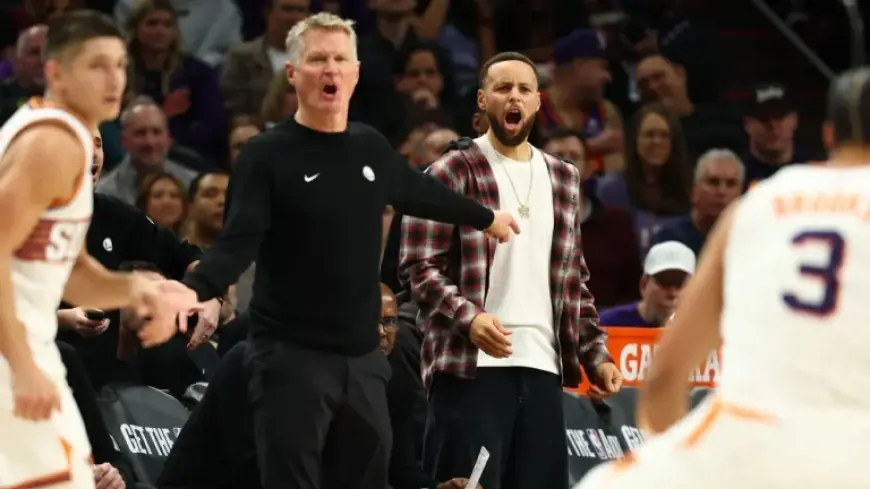
As the Warriors game today approaches against the Chicago Bulls, Steve Kerr has again put the NBA’s schedule length at the center of his public agenda. On Monday, the Golden State Warriors coach said the league should “take 10 games off the schedule, ” framing it as a path to a healthier, more competitive product even as he openly acknowledged the revenue hit that would come with it.
Steve Kerr’s 10-game proposal lands after a 129-126 Warriors loss
Kerr’s latest argument comes with an immediate on-court backdrop: Golden State’s 129-126 loss to the Utah Jazz on Monday night, a game played with what Kerr described as a depleted roster. The Warriors were without Stephen Curry, Jimmy Butler, Al Horford, Moses Moody and Kristaps Porzingis on Monday. The team has lost four of its past five games and, as described in the current discussion around the club, is in danger of missing the playoffs.
Inside that moment, Kerr laid out a specific number rather than a general preference. He said it was “obvious we need to play fewer games, ” and specified “we need to take 10 games off the schedule. ” Kerr tied the idea to competitiveness and health, repeating that he believes the league would be “more competitive and healthier” with fewer games than the current 82-game schedule.
He also connected the issue to day-to-day logistics that teams face. In November, Kerr cited how travel can swallow practice opportunities, saying during a road trip, “We literally haven’t had a single practice on this road trip. Not one. ” In his view, cutting games would create more space in the calendar for teams to be fresher and better prepared.
Warriors Game Today spotlights Kerr’s pace, travel, and revenue trade-offs
While Kerr’s call is about the number of games, the forces he points to are broader and measurable in the current season’s environment. He has previously emphasized the pace of play as a problem under an 82-game schedule, and he again linked today’s pace-and-space demands to the grind of the calendar. The context around his comments includes leaguewide markers that reinforce the “more demanding game” case: teams are averaging 115. 2 points per game, the highest since the 1969-70 season.
Player tracking indicators add another layer to the physical load Kerr is talking about. Players have combined to cover 37. 1 miles per game this season at an average speed of 4. 29 mph, described as the longest average distance and fastest average speed since player tracking began in the 2013-14 season. Kerr has long been vocal that rising pace affects injuries, and his current argument again ties health and availability to how the modern game is played and how frequently it is played.
Yet Kerr also treats the biggest obstacle as structural rather than philosophical. He repeatedly acknowledged the financial reality: fewer games means less revenue. Kerr said he understands why reducing games “will not be a popular opinion, ” and he described the core difficulty as getting “everyone” to accept “a little less money. ” Before Tuesday’s game, he reiterated the same point in plain terms: improving the product would require making less revenue, an agreement he characterized as difficult to reach.
Stephen A. Smith, Adam Silver, and the schedule debate’s next pressures
Kerr’s renewed push is now interacting with a louder public argument. On Tuesday morning’s episode of “First Take, ” Stephen A. Smith criticized the idea of shrinking the schedule, saying he was “incredibly disappointed” to hear Kerr advocate for a 72-game season. Smith went further, calling Kerr “hypocritical” and citing the NBA’s new $7 billion per season media-rights deal that took effect this season.
When informed he had sparked Smith’s reaction, Kerr said Tuesday before Golden State hosted the Bulls that he had not seen the segment, adding, “No, he was not kind to me?” Kerr’s response, though, returned to the point Smith challenged him on. Kerr emphasized he has been candid about the trade-offs and said again that revenue would take a hit, stating, “I know it’s a question of revenue. I’m not an idiot. ”
Kerr also placed his comments in a governance frame. He said his initial remarks stemmed from a question before the Warriors’ game Monday in Utah about what he would do “if he were in Adam Silver’s seat. ” Within that framing, Kerr grouped multiple issues under the same solution. He said limiting the schedule would improve “player health, ” “player availability, ” and “tanking, ” and argued quality of play would improve as well because teams “don’t practice much at all. ”
If the current trajectory continues… Kerr’s proposal is likely to stay tied to tangible season markers he and others can point to: the 115. 2 points-per-game environment, the 37. 1 miles per game at 4. 29 mph, and the real-world constraints he described on practice time during travel. In that setting, the debate may keep centering on whether quality and health gains can justify a shorter schedule, even with Kerr repeatedly acknowledging the revenue sacrifice that would be required.
Should the revenue argument dominate the conversation… the public dispute highlighted by Smith’s comments and the reference to the $7 billion per season media-rights deal could shift the pressure back onto the economics Kerr concedes are “the main issue. ” In that scenario, discussions around fewer games would face a higher bar: not just proving a better product, but overcoming the resistance Kerr anticipates from those focused on maximizing revenue.
The next confirmed milestone in this debate is already on the calendar: Kerr’s remarks Tuesday came before Golden State hosted the Bulls, keeping the schedule conversation in the spotlight around game day settings like the Warriors game today. What the context does not resolve is whether league decision-makers will engage Kerr’s specific “10 games” figure in any formal way, or whether the conversation remains a recurring public argument shaped by health, travel, and revenue realities.