Mickey Rourke eviction default cancels lease as fundraiser dispute raises questions

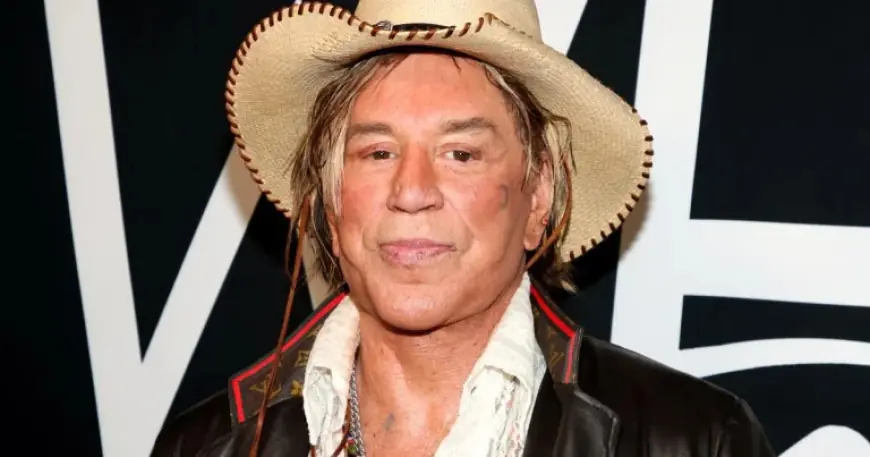
mickey rourke has been hit with a default eviction ruling in Los Angeles Superior Court that awards his landlord possession of a Beverly Grove home and terminates the rental agreement. Yet the record laid out in court documents and the actor’s own public statements point to a more complicated picture: a large rent balance alleged by the landlord, a refusal to accept more than $100, 000 raised by fans, and unresolved claims about property conditions that the court ruling itself does not address.
Mickey Rourke default ruling and the Los Angeles Superior Court timeline
A judge recently entered an eviction ruling against mickey rourke after a landlord-tenant dispute over a rental in Beverly Grove. On Monday, a judge issued a default eviction ruling in favor of the landlord, Eric Goldie, granting possession of the home and terminating the rental agreement, as reflected in documents filed in Los Angeles Superior Court.
The default posture is a central, confirmed fact in the case: the ruling means Rourke failed to take action to defend against the eviction complaint within the time allowed by law. The context does not confirm why he did not respond, what steps he may have taken outside the court record, or whether any attempted resolution occurred before the default.
Court documents also describe the lead-up. Rourke was served a three-day notice to pay rent or vacate the premises on Dec. 18 and did not comply. On Dec. 29, Goldie filed an eviction complaint alleging that Rourke owed $59, 100 in back rent on a $7, 000-a-month rental. The record, as described here, establishes the landlord’s allegation, the procedural deadlines, and the consequence of the default; it does not confirm any judicial finding on the underlying dispute beyond the default eviction ruling itself.
Eric Goldie’s $59, 100 back-rent claim and Rourke’s repair complaints
The case as documented contains two tracks that do not fully meet: the landlord’s back-rent allegation and Rourke’s stated reasons for withholding rent. The complaint filed on Dec. 29 alleges $59, 100 in unpaid rent. Separately, in a Jan. 5 video posted on Instagram, Rourke said he was in a “really bad situation” after new owners purchased the home he had been renting for years and would not fix anything.
Rourke described specific problems: “there’s mice, there’s rats, the floor is rotten, one bathtub there is no water, ” and he said, “I said I’m not paying rent” because of those conditions. Kimberly Hines, identified as his manager of nine years, also described serious issues, saying the Beverly Grove home had severe water damage and black mold, and she said she had arranged to move him out of the unit and into an apartment in Koreatown.
What remains unclear is whether those alleged conditions were raised in court in a way that could affect the eviction process. The context does not confirm any inspection results, repair requests, written notices, or a court determination about habitability. The default ruling, as described, reflects a missed opportunity to contest the complaint within the legal timeframe rather than an adjudication of the competing factual claims.
GoFundMe funds, Kimberly Hines’s role, and conflicting accounts of consent
The dispute expanded beyond the courthouse when Rourke’s management team set up a GoFundMe in January to help keep him in his home, listing his representative Kimberly Hines as the benefactor. Fans raised more than $100, 000 within three days from around 2, 700 donors, a level of support that sharply contrasts with the unpaid rent amount alleged in court filings.
Then came a second confirmed tension: Rourke rejected the fundraiser and publicly disavowed it. In the Jan. 5 Instagram video, he called the campaign “humiliating” and said he would rather shoot himself in a graphic manner than accept charity. He also said he did not know who started it, and he repeatedly urged donors to get their money back. The fundraiser was described as “since-shuttered, ” but the context does not confirm who shuttered it, what happened to the donated funds before closure, or how refunds were handled.
Hines offered a different account of how the fundraiser originated. She previously said it was not true that Rourke did not know who started it, and she said she and her assistant ran the idea past Rourke’s assistant and “everyone agreed it would be helpful. ” That documented contradiction leaves an open question: whether Rourke’s rejection was driven by a dispute over consent, a change of mind after the fundraiser went public, or another factor the context does not confirm.
Two other response gaps stand out in the record provided here:
- Hines did not immediately respond to a request for comment Tuesday.
- An attorney for Goldie did not immediately respond to a request for comment Tuesday.
The combined effect is a public narrative with multiple claims and stakeholders, but limited on-the-record clarification at the point the default ruling entered. For now, the confirmed facts remain the court filings, the default eviction ruling, the amounts alleged, and the statements made in Rourke’s video and by Hines.
The next piece of evidence that would resolve the central tension is documentation showing whether Rourke raised property-condition defenses or repair disputes in the eviction case before the deadline. If it is confirmed that such defenses were never filed, it would establish that the case turned on procedural default rather than a tested factual record about the home’s condition or the disputed rent.