Oilers Vs Avalanche lineup signals a high-event matchup trend in Denver

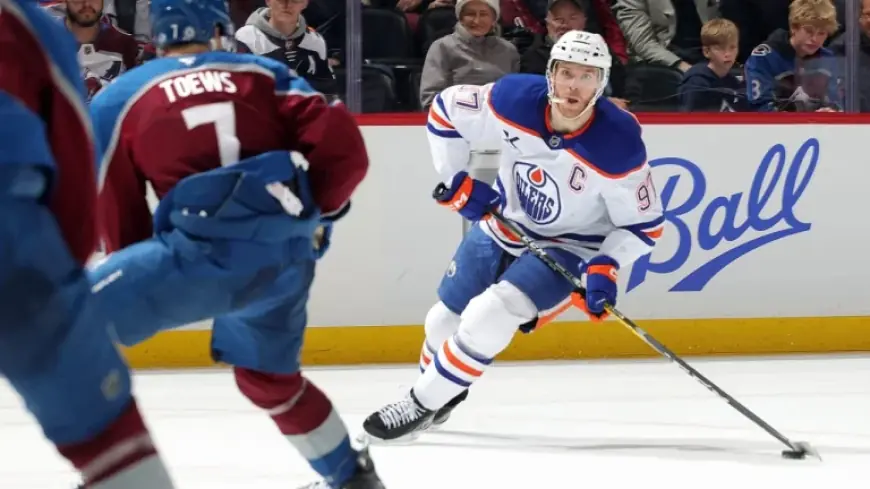
oilers vs avalanche arrives with Edmonton keeping a winning lineup intact and Colorado carrying a five-game winning streak into Ball Arena. The immediate signal is a game shaped by continuity on one bench and momentum on the other, with both teams’ current form pointing toward an up-tempo contest where special teams and defensive execution can swing outcomes.
Connor Ingram and Kris Knoblauch keep Edmonton’s lineup unchanged in Denver
Edmonton will start Connor Ingram for a second straight game in net on Tuesday night at Ball Arena against the Central Division-leading Colorado Avalanche. The Oilers are running back the same lineup they used in a 4-2 victory over the Vegas Golden Knights on Sunday, an explicit choice that leans into what worked as they try to collect consecutive wins on their road trip.
The schedule context in hand shows a compressed, difficult stretch: it began Friday at home against Carolina, then shifted to road games against Vegas, Colorado, and Dallas as part of a four-game trip. Within that run, Edmonton already banked “two massive points in the Pacific Division Playoff race” by winning in Vegas, and now faces Colorado with the same on-ice plan and personnel.
One personnel note sits at the center of Edmonton’s day-to-day watch list. Forward Adam Henrique is day-to-day after missing Sunday’s win over the Golden Knights, following an early exit from Friday’s 6-3 defeat to the Hurricanes when he finished with 7: 09 of ice time. With Henrique not available, Josh Samanski remains in the fourth-line center role in his place.
Colorado Avalanche ride a five-game streak as injuries keep Gabe Landeskog out
Colorado enters the matchup on a five-game winning streak after beating the Dallas Stars and Minnesota Wild shootout last week, and will try to make it six straight against an Edmonton group described as struggling defensively. The framing around the game points toward pace: the matchup is characterized as a potential “track meet, ” with the key separator being which club can limit goals against.
The Avalanche’s current lineup picture comes with clear absences. Gabe Landeskog is listed as OUT with a week-to-week designation after an injury described as occurring in an “uncomfortable” region of the body, and Artturi Lehkonen is also listed as OUT, with uncertainty described around what part of the upper body is involved. Even so, Colorado has “managed to stay afloat through the injuries” because of depth and “elite top end, ” and the club “still sits among the league leaders in scoring” while Nathan MacKinnon “remains near the top of the NHL scoring race. ”
Colorado’s recent home-ice note also matters for the near-term trajectory. The team “welcomed the return of Nazem Kadri the last time they were on home ice” and secured a win despite not having Landeskog or Lehkonen. That combination—winning through absences while reintegrating a key forward—creates a visible direction: Colorado is stacking results without waiting to be fully healthy.
oilers vs avalanche trends hinge on power plays, goals against, and repeatable signals
For Edmonton, the force shaping the conversation is a split identity: top-end offense versus leaky defending. Over the last ten games, the Oilers are described as 4-6, with defensive problems “in their own zone and between the pipes” contributing to a stretch where they “continue to give up more than 3 goals per game, ” placing them “in the bottom third of the league defensively. ” At the same time, Edmonton “sits among the NHL’s highest-scoring teams” and carries the league’s “most dangerous power play, ” converting on more than 32. 8 percent of opportunities in one accounting, and operating at a 32. 7% clip in another.
That special-teams strength intersects with a specific Colorado signal. The Avalanche penalty kill is described as “sloppy of late, ” allowing at least one goal in six of their last seven games. In the betting-focused framing, Connor McDavid is positioned as a focal point, with a featured angle built around his production and his league-leading 43 power-play points.
Based on the context data, several repeatable indicators point to a potentially high-scoring pattern:
- Edmonton’s power play is cited at more than 32. 8 percent, and also at 32. 7%.
- Colorado has allowed at least one penalty-kill goal in six of its last seven games.
- Edmonton’s last 10 games include an Over trend of 7-1-2.
- The Over has hit in three straight meetings between the Oilers and Avalanche.
Those numbers, paired with the “track meet” description, underline a direction of travel for this matchup: both sides have offensive engines, and the pressure lands on defensive structure and goaltending to prevent a game script that accelerates into trading chances.
If the current trajectory continues… and Edmonton’s defensive issues persist while Colorado continues stacking wins, the game environment is set up to reward whichever team can keep play out of its own end for longer stretches. The context specifically highlights Colorado’s ability during the winning streak to force opponents to spend time in their own zone, a lever that could expose Edmonton’s tendency to give back goals even when the offense produces.
Should a specific factor shift… and Colorado’s penalty kill tightens after a stretch of allowing at least one goal in six of seven games, Edmonton’s clearest edge—an NHL-best power play operating around 32. 7% to 32. 8%—could lose some of its leverage. In that case, the matchup becomes less about special teams opening the scoring and more about five-on-five execution against Colorado’s depth while Landeskog and Lehkonen remain out.
The next confirmed signal arrives with Edmonton’s Tuesday night game at Ball Arena, where Connor Ingram’s second straight start and the Oilers’ unchanged lineup will face Colorado’s streaking form. What the context does not resolve is whether Adam Henrique will return soon from his day-to-day status, and how quickly Colorado’s penalty kill cleans up the recent run of goals allowed while shorthanded. For now, the clearest direction points to a game defined by pace, power-play opportunities, and which team can reduce the defensive mistakes that have already become a central storyline.