Camilla’s International Women’s Day Speech vs. Epstein-Focused Interpretations: Public Signals Compared

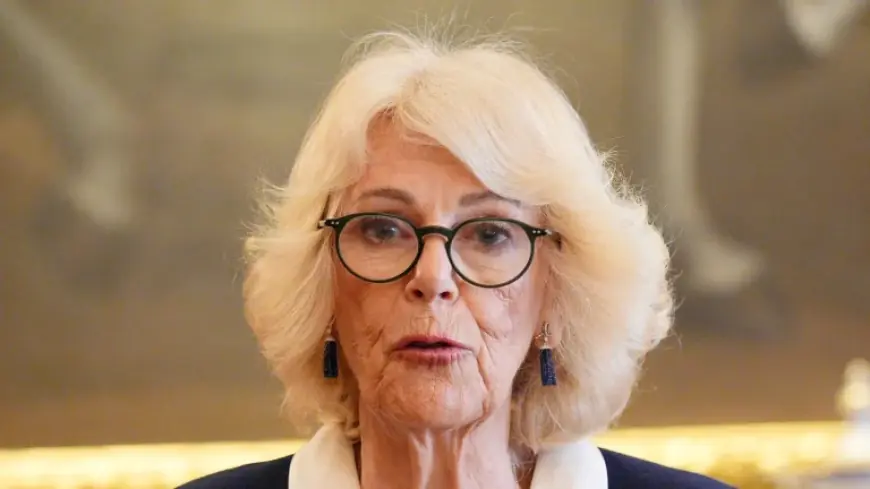
Queen Camilla used a speech at St James’s Palace to offer solidarity to survivors of sexual violence, while public readings emphasized symbols and possible references to Jeffrey Epstein and Andrew Mountbatten-Windsor. This comparison asks whether camilla’s explicit language of support or the symbolic gestures and external links better signal accountability and comfort to survivors.
Camilla at St James’s Palace: explicit solidarity and calls on culture
In a speech marking International Women’s Day at St James’s Palace the Queen said, “We stand with you and alongside you, today and every day, in solidarity, sorrow and sympathy. ” That explicit expression of support was paired with a broader critique: she warned that a “culture of silence” can “empower violence against women and girls” and singled out online spaces where boys and young men absorb values. The speech named survivors collectively and urged confronting misogyny now, an approach consistent with her long-standing campaigning, which has included visiting women’s refuges and speaking about her own assault as a teenager.
Camilla also made personal gestures tied to survivor stories: she had previously written a personal letter to French rape survivor Gisèle Pelicot and praised Pelicot’s impact, and in public remarks she referenced being inspired by Pelicot. Two years earlier she had shown suffragette stones from 1914, invoking historical protest as part of a continuity of support for women’s causes.
Gisèle Pelicot and the ‘Shame Must Change Sides’ badge: symbolic signals
The Queen wore a badge given by Gisèle Pelicot that read “Shame Must Change Sides, ” a visible symbol that some read as shifting blame toward perpetrators. Her meetings with Pelicot and others, including families affected by violence, reinforced that symbolic register. Guests at the reception included Dame Helen Mirren, Miriam Margolyes, Sandi Toksvig and Lady Cherie Blair, at an event organized by Women of the World, which campaigns for an “equal and inclusive future. ” Those elements—badge, survivor meetings, high-profile attendees—created visual and interpersonal cues separate from the speech text.
Where the speech used explicit language for survivors, the badge and personal encounters functioned as condensed messages that invited broader interpretation. Some observers linked those symbols to specific scandals and to wider revelations; the visible slogan amplified readings that went beyond the speech’s literal wording. For now, the symbolic content supplemented rather than replaced the verbal message.
Andrew Mountbatten-Windsor and Jeffrey Epstein references: divergent emphases
Two strands of public reading diverge over whether the speech directly addressed high-profile abuse links. One reading treated the remarks as a clear statement of support for survivors without naming individuals; that version notes the speech did not directly refer to Jeffrey Epstein or to Andrew Mountbatten-Windsor. The other reading treated the same words and symbols as a “thinly veiled” reference to the Epstein issue, pointing to the broader context of allegations and the release of the Epstein files, and to the fact that Andrew Mountbatten-Windsor’s titles had been removed as a result of his association with Epstein.
Applying the same criteria to both readings—directness, symbolic content, connection to named figures, and the extent of outreach to survivors—shows a trade-off. The speech delivered clear, verbal solidarity and named systemic problems; the symbolic signals and contextual links drew attention to particular controversies and to institutional consequences. Both strands cite the same events: the Queen’s meeting with Pelicot, her speech at St James’s Palace, and wider public discussion about Epstein and Andrew Mountbatten-Windsor. That parity makes the divergent interpretations equally grounded in confirmed details.
Analysis: The speech’s explicit wording provided an unambiguous expression of support for survivors, while the badge and contextual links expanded the possible meanings and connected the moment to specific scandals. The two modes operate on different registers—words aimed at survivors themselves, symbols aimed at public audiences and at reframing blame.
Finding: This comparison establishes that Queen Camilla’s verbal solidarity stands as a concrete, survivor-facing statement, whereas the symbolic gestures and accompanying public readings transformed the same appearance into a moment tied to the Epstein issue and to Andrew Mountbatten-Windsor. The next confirmed data point that will test this finding is the ongoing attention to the release of the Epstein files and related public discussion. If camilla maintains explicit survivor-facing language and continues visible meetings with survivors, the comparison suggests her public posture will remain anchored in direct solidarity rather than primarily in symbolic indictment.