Nba Games: Steve Kerr pushes 10 fewer, but revenue obstacles remain

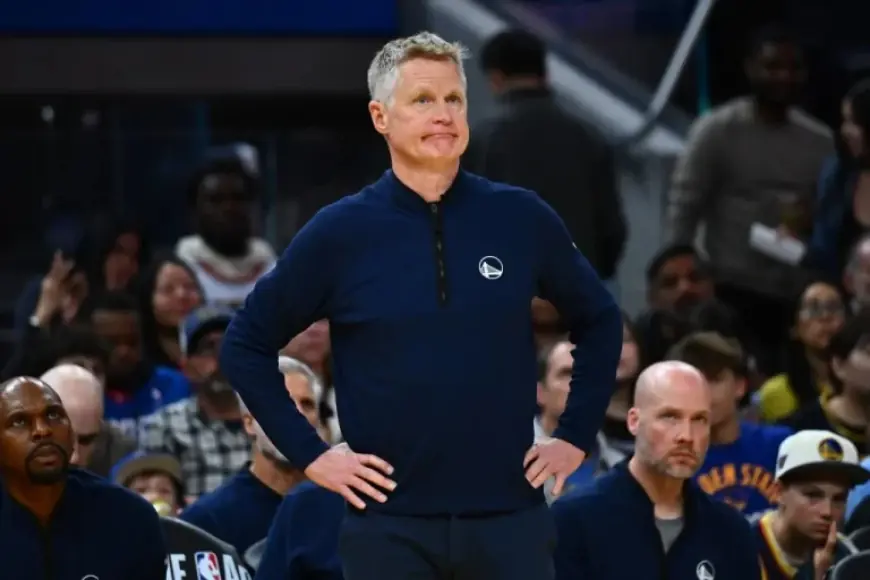
Steve Kerr has renewed his argument that the league should reduce nba games by cutting 10 contests from the regular-season schedule. The tension is that Kerr also describes why the idea is unlikely: the current structure is tied to revenue, and he frames agreement to take “a little less money” as a high bar. His comments land as Golden State manages a long injury list and strict availability limits.
Steve Kerr’s 10-game proposal and the workload he ties to injuries
Kerr, a former player turned coach, told reporters, “We need to play fewer games. We need to take 10 games off the schedule, ” adding that the modern game’s “pace and the space” would produce “a more competitive and healthier league” if the schedule were shorter. In a separate exchange before a game in Utah, he reiterated the same point and acknowledged pushback: “I know this will not be a popular opinion in the league office, but I will continue to say it. ”
The context around his remarks centers on the grind of an 82-game season and the physical demands created by frequent back-to-backs and cross-country travel. It also points to added competitive events beyond the standard slate, including an in-season tournament and Play-In games for teams ranked 7th through 10th, described as “another extra game or two. ” The context explicitly links this workload to a growing injury list across the league’s 30 teams, presenting Kerr’s proposal as a response to an environment where players carry significant wear and tear into the most intense parts of the year.
One set of specifics comes directly from Golden State’s situation. Kerr is in his 12th season coaching the Warriors and has been “dealing with a lot of injuries” on his roster, which the context says has made it difficult for the team to contend for a Play-In spot. The record in the context also describes the team entering a game against the Jazz with major absences and restrictions: Jimmy Butler out for the season with a torn ACL; Stephen Curry dealing with runner’s knee for over a month; Kristaps Porzingis on a strict minutes limit and unable to play in back-to-back games. Additional injuries and absences listed include Moses Moody, Will Richard, and De’Anthony Melton being held to 20 minutes as the team tries to manage his return to full strength following an ACL tear.
82 games, revenue, and Kerr’s case for fewer nba games
The contradiction in the record is not whether Kerr wants fewer games; he states it repeatedly. The gap is between his stated solution and his stated expectations for it. Kerr calls the schedule change “obvious” as a fix for load management pressures, yet he also frames it as something that “almost certainly never” happens. He spells out the reason in financial terms: “I get it’s revenue and you’d have to get everyone to agree to take a little less money and it’s a really hard thing to do. ”
That admission sits alongside his sharper, earlier note of skepticism. In late October, he responded to Michael Jordan’s criticism of load management by arguing that “the only solution is fewer games, ” before pausing and sarcastically adding, “Good luck. ” Taken together, Kerr’s comments document a consistent public stance paired with a built-in acknowledgement that the league’s economic structure and the need for broad agreement stand in the way of implementing it.
What remains unclear is how Kerr envisions overcoming that obstacle, because the context includes no proposal for replacing the revenue tied to the existing schedule, and it includes no response from league officials or team ownership. The context does not confirm any ongoing negotiations or formal review of reducing the schedule; it only documents that “several discussions” about the 82-game model have occurred in recent years.
Warriors injuries, rising pace numbers, and a broader pattern Kerr points to
Kerr and “other observers” in the context connect the injury trend to the modern style of play. The record cites increased pace, more ground covered because of the proliferation of the 3-point shot, and motion offenses. It also provides pace figures across seasons: an average of 90. 5 possessions per 48 minutes in 2005-06, 95. 8 in 2015-16, and 99. 3 this season, with the top teams “clearing triple digits. ” The context then interprets those numbers in physical terms: more possessions, hard cuts, and “miles run” over an 82-game season.
The broader league picture appears in two injury snapshots. One is the claim of “rising number of names on the injury list across all 30 teams, ” without totals. Another is a team example offered as a sign of an “injury epidemic”: the Chicago Bulls arriving in the Bay Area with 11 players on the injury list. The context also ties the schedule grind to postseason outcomes, describing “catastrophic injuries” to star players during the 2025 playoffs, naming Damian Lillard, Jayson Tatum, and Tyrese Haliburton as having Achilles tendon ruptures, and linking those injuries to dashed title hopes for the Milwaukee Bucks, Boston Celtics, and Indiana Pacers.
Yet the context also introduces a separate tension around incentives. Despite Golden State’s injuries, it states the ninth-seeded Warriors are “all but guaranteed” to make the play-in “regardless of how wretched the rest of the season goes. ” The context does not confirm whether that security changes how the team manages player health, but it documents that Kerr and the medical staff have managed lineups and rotations throughout the year in an effort to keep players healthy.
The record leaves a defined evidence threshold for resolving whether Kerr’s proposal is more than a recurring talking point: an actionable league decision to reduce the regular-season slate. If the league formally pursued cutting 10 games and addressed the revenue issue Kerr flags, it would establish that the economic hurdle he describes is negotiable rather than decisive.