Israel Iran War Latest: New strikes, tanker risks, and markets stabilizing after volatility

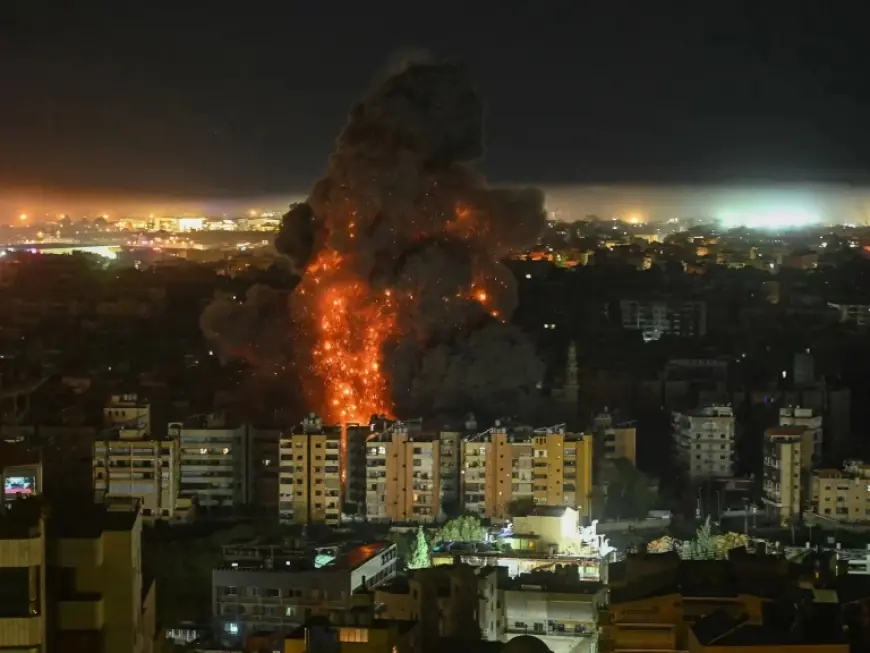
The israel iran war latest includes fresh Israeli missile strikes on Iran and Lebanon and a new U. S. military claim that it has “eliminated” Iranian mine-laying ships. Together, these developments point toward a conflict that is widening across targets and geographies, while economic signals show markets trying to stabilize after sharp swings and governments weigh responses tied to energy and shipping risk.
Israel Iran War Latest: Israel strikes Iran and Beirut as the UAE cites a “missile threat”
Israel launched more missiles at Iran and Lebanon, with the Israeli military saying it is targeting Hezbollah infrastructure in the south of Beirut. Explosions were described as rocking the southern suburbs of Lebanon’s capital after a new wave of strikes on Hezbollah targets.
In the region, the UAE said its air defence systems were responding to a “missile threat. ” The context does not specify the origin of the threat or the outcome, but the statement adds another data point that the operational footprint of the war is being felt beyond the immediate strike locations.
On the Iranian side, one element of the current state is internal pressure: Iran’s police chief said anyone thinking of protesting against the government would be dealt with “in the same way we deal with the enemy. ” Separately, Israel’s Prime Minister Benjamin Netanyahu recently addressed the “people of Iran” on X, urging them to “remove the Ayatollah regime and gain your freedom. ” The context does not resolve how those messages are landing inside Iran, but it does show the conflict being framed in political as well as military terms.
US Central Command and Senator Chris Murphy add pressure for clarity
In the United States, Central Command said U. S. forces have “eliminated” 16 Iranian mine-laying ships, a statement that followed President Donald Trump warning Iran not to “put out any mines” in the Strait of Hormuz. That sequence ties military action to a specific chokepoint concern, with mines presented as a live risk factor rather than a hypothetical one.
At the same time, a group of Democrats in the U. S. Senate is demanding public hearings on the country’s war against Iran after receiving a series of classified briefings from officials in the Trump administration. Lawmakers said the White House has not clearly explained why the U. S. entered the conflict, what its goals are, or how long it may last.
Senator Chris Murphy of Connecticut said Tuesday that a two-hour classified briefing “confirmed to me that the strategy is totally incoherent. ” He also argued that if the president sought congressional authorization for the war, “he wouldn’t get it. ” The context adds that concerns are being raised by members of Congress, including some Republicans, signaling that the debate is not confined to one party.
Tehran, the Strait of Hormuz, and markets reacting after oil’s Monday spike
Iran accused the U. S. and Israel of targeting civilians, saying more than 1, 300 have been killed across the country since the war began, and claimed nearly 10, 000 civilian sites have been hit. Iran’s representative to the UN accused the U. S. and Israel of deliberately attacking civilians. The context also describes fear inside Iran, including people staying home and mentions of toxic rain and damage to public amenities such as water desalination plants and oil depots, though it does not quantify that damage beyond the broad claims.
In Tehran, the context includes claims that an Israeli airstrike targeted a bank building in the Iranian capital, leaving one employee dead, and that powerful blasts were heard as Israeli forces bombed a residential district in the city centre. These details, presented alongside Iran’s sweeping allegations, underscore how the civilian harm narrative is becoming central to Iran’s positioning.
Yet, financial and logistics indicators show a different kind of signal: markets and shipping are trying to digest risk. During Wednesday morning trading in Asia, oil prices were described as largely flat after “huge volatility” in recent days. US-traded crude was priced at $83. 35 a barrel, while Brent was around $87. 88. Both were down after surging to almost $120 on Monday, but still well above pre-war levels (without a specific pre-war price in the context). Stock markets in Asia continued their recovery in early trade on Wednesday, adding to Tuesday’s gains, with South Korea’s Kospi index up 2. 5% and Japan’s Nikkei 225 up nearly 2%.
Shipping is also moving into the foreground. Vincent Clerc, the boss of Danish shipping giant Maersk, said increased shipping costs driven by the conflict in Iran will be passed on to consumers, citing “traditional contracting mechanisms” that pass fuel fluctuations to customers. That comment aligns with the Strait of Hormuz focus: as military actions and threats cluster around a major shipping route, the cost of moving goods becomes an immediate transmission channel from battlefield risk to household prices.
If U. S. and Israeli actions tied to mining risks continue… the Strait of Hormuz could remain a central point of escalation in public messaging and operational decisions, given the explicit warning about mines and the U. S. claim of eliminating 16 mine-laying ships. In that scenario, the economic picture suggested by the context is a combination of continued elevated oil prices relative to pre-war levels and continued cost pass-through in shipping contracts, even if day-to-day prices appear flatter than during Monday’s spike.
Should policymakers act on the International Energy Agency discussions… a release of oil reserves could become a near-term counterweight to price pressure. The context notes IEA members are discussing a plan to potentially release reserves, with no decision made. If a decision occurs, it would provide a concrete signal that governments are responding to energy-market stress alongside military developments.
The next confirmed milestone in the context is the pending decision point: IEA members are discussing a potential release of oil reserves, but have not decided. What the context does not resolve is whether the military trajectory around the Strait of Hormuz leads to additional maritime incidents or whether U. S. political demands for public hearings change the administration’s stated goals and timeline. For now, the israel iran war latest shows a conflict pulling in more theaters and economic levers at the same time.