Jac Caglianone and the new “unicorn” hunt in 2026 fantasy drafts

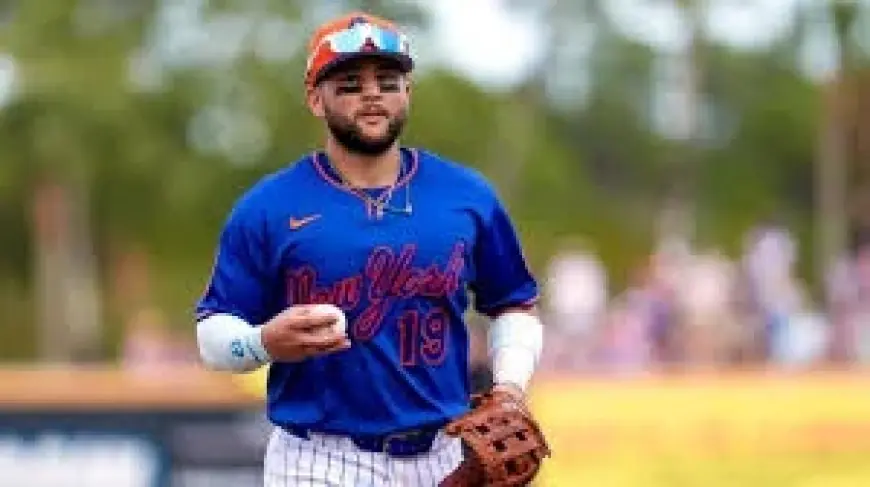
jac caglianone sits in the background of a bigger shift shaping early 2026 fantasy baseball draft prep: managers are being pushed away from rigid round-by-round scripts and toward a projection-based “map” that highlights value clumps, tier drops and category “unicorns” by position. The approach leans on ATC projections and an auction calculator to show where the player pool forms natural peaks and valleys, and where a single player can bend a category in a way peers at the same position cannot.
Rather than treating average draft position as the only guide, the framework stresses how each pick changes the board for everyone else in a typical league of roughly a dozen competitors. The pattern suggests the competitive edge in 2026 will come less from memorizing an order and more from recognizing when the market is overpaying for a name, while undervaluing a tier that offers near-equal projected returns.
ATC projections reshape 2026 tiers
The method centers on ATC, described as a projection system that creates a weighted average of other systems to smooth quirks and perform consistently well in evaluations. Those projections are then paired with an auction calculator that assigns dollar values based on league parameters and the chosen projection system, helping managers visualize not only player ranking but also where value “clumps” and “gaps” appear. One stated positional adjustment is $12. 4, with the note that it becomes $10. 2 in a setup with no MI/CI.
That combination produces concrete draft tension. Nick Kurtz is described as ascendant and often drafted just ahead of Vladimir Guerrero, yet ATC still gives Guerrero a $4 edge driven by a large difference in batting average. ATC and other systems also dial back Kurtz’s average from the. 290 he posted last year to the. 250s or. 260s, with the reasoning tied to the difficulty of sustaining a. 364 BABIP. The figures point to a key 2026 dynamic: market excitement can outrun projection math, and managers who understand why an assumption is being discounted can decide whether they want to pay for the upside anyway.
Pete Alonso is positioned as having similar power to Kurtz with a more pedestrian average, and projections label Alonso as the big ADP reach. The analysis, as presented, is not that Alonso lacks value, but that comparable value may be available later if Bryce Harper and Freddie Freeman “hold up. ” Alonso’s better health track record is noted as a counterweight, but one only partly captured in projections—an explicit reminder that projections and playing-time confidence do not always align perfectly.
Cal Raleigh changes catcher pricing
Catcher is singled out as the place where format matters most. In two-catcher leagues, the case is made for Cal Raleigh to be selected in Round 1 of 2026 drafts. That is a direct signal that scarcity and category impact at catcher can force aggressive decisions that would look extreme in one-catcher formats. The pattern suggests the “map” approach is meant to prevent managers from being surprised by scarcity premiums, while still staying flexible as opponents make their own pushes at thin positions.
The same position-by-position lens introduces “unicorns, ” defined as players who can provide an outsized impact in a particular category in a way that makes them unique to their positional peers, with one example: catchers who steal. The definition matters because it frames why certain players might deserve earlier picks than their raw dollar value implies, if their categorical advantage cannot be replaced later at the same position. For managers, that turns roster construction into a search for irreplaceable edges, not just the highest median projection.
First base tiers and value gaps
At first base, the board is presented as a steep descent from the top names into a broad middle where similar production appears in clusters. Rafael Devers, Matt Olson and Josh Naylor are grouped as near-equal value to Harper and Freeman, followed by what is described as a small step down to Vinnie Pasquantino and Yandy Diaz. That tiering is then extended with Michael Busch and Tyler Soderstrom presented as acceptable options if a manager still lacks a first baseman, with Ben Rice and Salvador Perez explicitly skipped in that same grouping on the premise they would be used at catcher instead.
One of the few highlighted “significant gaps” at the position is quantified: from Soderstrom at $12. 9 down to Alec Burleson at $9. 9 and Willson Contreras at $7. 8. A full season of playing time is cited as something that could nudge values up, especially for Contreras, whose projections are being influenced by time at catcher. The figures point to a practical draft lesson: tier drops are not only about talent; they can reflect role uncertainty and eligibility effects that distort valuation across positions.
The tactical recommendation that follows is to shop in the “solid second tier, ” with Olson and Pasquantino flagged as offering similar production to higher-profile names. A specific build is suggested: take one from the Olson/Naylor/Pasquantino group with Busch or Soderstrom as a backup. Sal Stewart is mentioned as a desired CI target—“he could be a beast”—with Spencer Torkelson and Jonathan Aranda framed as later value options if Stewart is taken. For now, what remains open is where jac caglianone ultimately lands on this kind of projection-driven map, and whether he profiles more as a tier anchor, a late value pocket, or one of the category “unicorns” that changes how managers allocate early-round risk.