Cooper Flagg becomes a measuring stick as Dillon Brooks escalates the debate

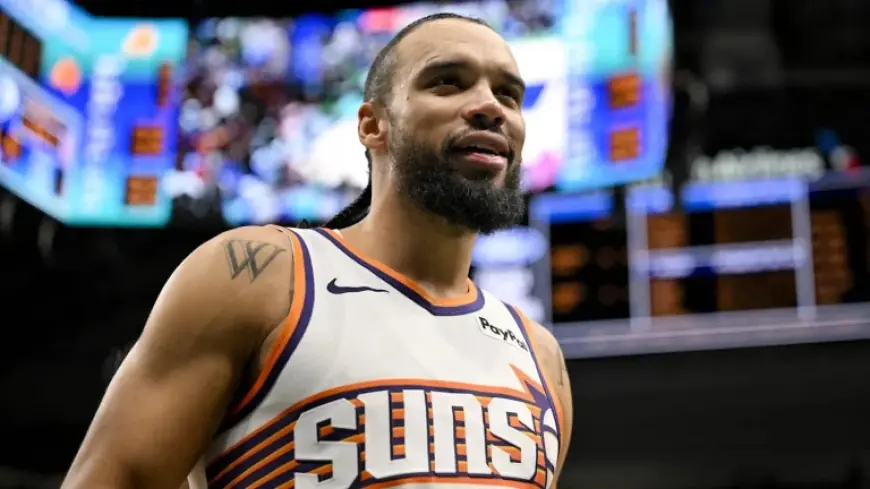
cooper flagg is now central to a very public argument about who is having the better year, after Phoenix Suns wing Dillon Brooks dismissed the idea that the Dallas Mavericks rookie has outperformed him. The exchange, amplified by Brooks’ own season to date and a parallel dispute involving Josh Giddey, signals a louder, more personalized style of player-to-player comparisons tied to standings, lists, and role-based claims.
Dillon Brooks, the Phoenix Suns, and the Cooper Flagg comparison
Dillon Brooks has put a clear number on his case: he is averaging a career-high 20. 9 points per game. In a podcast appearance on “Million Dollaz Worth of Game, ” Brooks was asked directly whether Dallas Mavericks star rookie Cooper Flagg was “having a better year. ” Brooks quickly denied it and pushed the comparison into hypothetical team impact.
“No, not a better year than me. Because if I was over there (in Dallas), we would’ve been in the playoff hunt. That’s what I do, ” Brooks said. The comment matters because it ties individual performance to a team outcome claim, rather than just box-score production. It also positions cooper flagg not only as a rookie being evaluated on his own terms, but as a benchmark for veterans to argue against.
The Suns’ current position is part of the backdrop Brooks is using. As of Tuesday morning, Phoenix was 37-27 and the No. 7 seed in the Western Conference, 1. 5 games behind the Denver Nuggets in sixth. The context also credits Devin Booker as a “big reason” for the surge, while pointing to Phoenix ranking second in the NBA in total steals. Brooks’ mentality is described as a key ingredient in the team’s defensive improvements.
Complex’s 2025-26 Top 50 list and Brooks’ Josh Giddey dispute
A second thread shows the same pattern: Brooks has also been vocal about a 2025-26 NBA Top 50 list from Complex, where he is ranked 47th. Josh Giddey is ranked 46th, and Brooks rejected the idea that Giddey is having a better season, declaring “hell no. ”
That dispute comes with a heavier statistical rebuttal in the context. Brooks is described as averaging 20. 9 points per game with 3. 7 rebounds and 1. 8 assists. Giddey’s Player Efficiency Rating is listed at 18. 7, while Brooks’ PER is described as 0. 3 below league average. The context also states Giddey has nine triple-doubles in 2025-26, while Brooks has none in his career.
Several comparative markers are laid out as evidence of the broader argument being fought through numbers: Giddey is said to be “crushing” Brooks on rebounds and assists, and Brooks is said to be taking four more shots with an inferior effective field-goal percentage. The context even frames Giddey’s season in league-wide terms, stating he is fourth in the NBA in assists, behind Nikola Jokic (10. 3), Cade Cunningham (9. 8), and Trae Young (8. 6), and ahead of Luka Doncic (8. 4) and James Harden (8. 1). Brooks is listed as 179th in assists per game.
Based on context data:
- Brooks: 20. 9 points per game; 3. 7 rebounds; 1. 8 assists; ranked 47th on the Complex list
- Giddey: PER 18. 7; nine triple-doubles in 2025-26; ranked 46th on the Complex list; fourth in NBA assists
- Brooks: PER 0. 3 below league average; career triple-doubles: none; ranked 179th in assists per game
Dallas Mavericks incentives, Phoenix’s defensive identity, and where the talk is heading
The Mavericks portion of the context hints at why Brooks’ comparison to cooper flagg quickly turns to team trajectory. Dallas is described as having been “a decent defensive team, ” but also as having “let that go recently, ” with the added claim that the team has “no desire to be winning games right now. ” The stated reason is draft control: 2026 is described as the last year Dallas has control over its first-round pick until 2031.
That detail creates a visible force shaping the conversation: when a team is framed as deprioritizing wins, individual evaluations can become less about immediate standings and more about optics, roles, and future positioning. Brooks’ own framing leans into the opposite idea, using Phoenix’s No. 7 seed position and steals ranking to argue that his impact travels beyond scoring.
If this player-led comparison culture continues, the next phase looks less like quiet debate and more like direct, public head-to-head claims tethered to specific reference points: the Complex ranking slots (46th vs. 47th), the Suns’ 37-27 record, and Dallas being framed as not trying to win. In that environment, cooper flagg can function as a recurring yardstick for veterans to measure themselves against, regardless of whether the comparison is strictly statistical or rooted in hypothetical team outcomes.
Should Dallas’ posture toward winning shift in a way that changes how its season is discussed, the same comments could be reinterpreted. Brooks’ argument rests on the idea that he would move the Mavericks into the playoff hunt; that logic draws strength from the context’s claim that Dallas currently lacks interest in winning. A different competitive posture would change what that hypothetical comparison means.
The next confirmed signal in the context is Brooks’ continuing public critique pattern: he has already challenged both Cooper Flagg in a podcast setting and Josh Giddey in relation to a Top 50 list. What the context does not resolve is how Cooper Flagg responds, or whether Dallas’ on-court direction changes in a way that tests Brooks’ “playoff hunt” claim. For now, the measurable pieces driving the trajectory are clear: Brooks’ 20. 9 points per game, Phoenix’s 37-27 record and steals profile, and the ranking-and-stat framework being used to argue about who is really having the better year.