Barry Keoghan vs. Conrad Khan: What the Duke Shelby Recast Signals

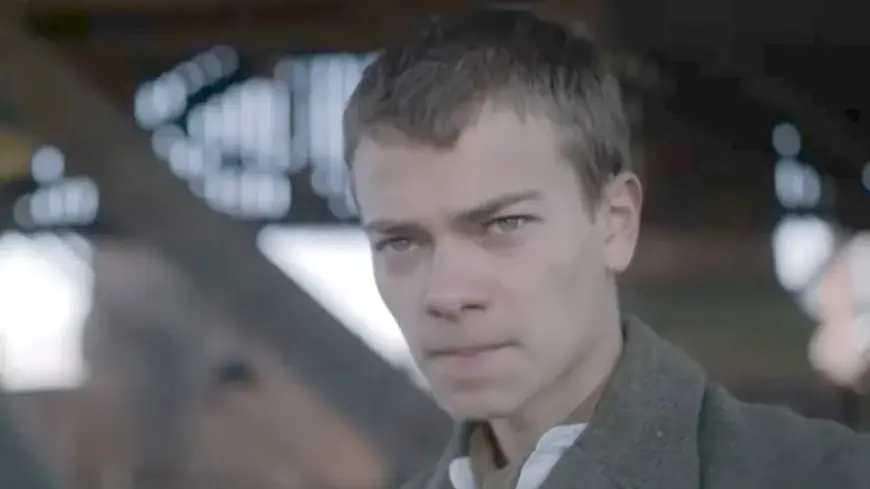
Peaky Blinders: The Immortal Man arrives in select cinemas with a notable change: Duke Shelby, introduced on television by Conrad Khan, is now portrayed by barry keoghan. The film’s leap to 1940s Birmingham, alongside Tommy Shelby’s return from retirement, raises one central question: how does replacing Khan with keoghan reshape Duke’s function in the story—and what does it tell viewers about the film’s focus versus the series?
Conrad Khan’s Season 6 Duke Shelby: Origin, Recruitment, Ascent
On television, Duke Shelby’s backstory anchored his emergence. He is the son of Tommy Shelby and Zelda, a Romani woman Tommy met in 1914 before leaving for World War I. Esme facilitated Tommy’s discovery of Duke’s existence, relaying that Zelda had died and introducing a young thief who wanted more from life. Tommy welcomed Duke, paid Esme with gold, and divided responsibilities: Duke would take on the “dark” operations, while Charles Shelby—Tommy’s son with Grace Shelby—would handle the “light” side. By 1934, after Tommy disappeared, Duke assumed control of the Peaky Blinders and pushed the organization back to the fierce brutality associated with 1919.
Barry Keoghan in The Immortal Man: A War-Time Duke in 1940s Birmingham
The Immortal Man advances the timeline to the Second World War, with Tommy Shelby—played by Cillian Murphy—pulled out of retirement in 1940s Birmingham. In this setting, barry keoghan takes over as Duke Shelby. The character’s earlier transformation of the gang by 1934 serves as context for a story now unfolding in wartime. Analysis: placing Duke in this later chapter invites a portrayal that reflects hardened stakes shaped by both the gang’s restored brutality and the pressures of a global conflict.
The Immortal Man vs. Season 6: Where the Duke Shelby Portrayals Diverge
Set side by side, the series and film frame Duke at different inflection points—first as a newly recognized heir learning the “dark” work, then as a figure operating in the long shadow of his 1934 power grab. That shift aligns with Tommy’s own trajectory from disappearance to an involuntary return to criminal life.
| Element | Season 6 (TV) | The Immortal Man (Film) |
|---|---|---|
| Actor as Duke Shelby | Conrad Khan | Barry Keoghan |
| Timeline focus | Events culminating by 1934 | 1940s Birmingham, during the Second World War |
| Duke’s status | Recruited for “dark” operations; later assumes control | Seen after the 1934 transformation that restored the gang’s brutality |
| Tommy Shelby’s situation | Disappears in 1934 | Pulled out of retirement |
| Narrative emphasis | Origin, integration, and ascent within the family enterprise | Wartime pressures and consequences of earlier power shifts |
Applied to the same criteria—timeline, character status, and Tommy’s position—the recast underscores a tonal pivot. With Conrad Khan, the focus was Duke’s origin and initiation under Tommy’s guidance. With Barry Keoghan, the frame moves to a later, harsher period, where Duke’s earlier choices have already forced Tommy back into the arena he tried to leave. Analysis: the new casting pairs a different on-screen dynamic with Cillian Murphy for a story concerned less with inheritance and more with fallout.
The comparison yields a clear finding: the Khan-to-keoghan handoff is less a reset than a repositioning. It signals that The Immortal Man is not revisiting Duke’s beginnings but building on the character’s established transformation by 1934 to push the stakes into the 1940s. As The Immortal Man plays in select cinemas, viewer response will test whether this later-stage portrayal of Duke—and the recast that delivers it—deepens the impact of Tommy Shelby’s reluctant return. If the film sustains its wartime focus, the comparison suggests the recast will read as a narrative fit rather than a cosmetic change.