Raiders Free Agent Signings: Linderbaum deal terms expose a negotiation gap

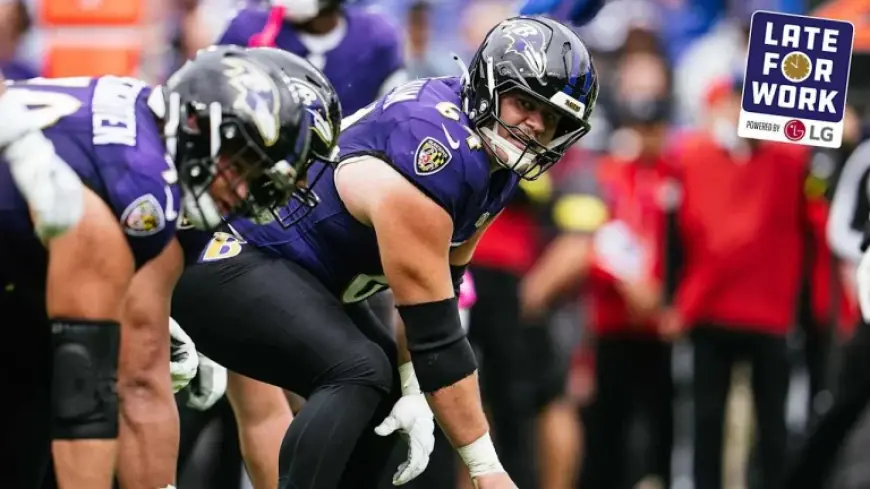
The Las Vegas Raiders moved quickly in the legal tampering window, with raiders free agent signings led by a three-year, $81 million agreement with center Tyler Linderbaum. The context also documents a competing Baltimore proposal that was larger in total value, yet still did not keep him. That contrast highlights a specific gap: the term structure appears to have mattered as much as, or more than, the headline dollar figure.
Tyler Linderbaum’s three-year, $81 million Raiders agreement
Linderbaum agreed to terms with the Raiders on a three-year, $81 million deal that includes $60 million guaranteed, a package described in the context as record-breaking for a center and as resetting the market. The agreement also made him the highest-paid interior offensive lineman in NFL history, as characterized in the material provided. Those facts establish the surface narrative behind the Raiders’ first-day spending: a cash-forward commitment to a premium position, struck immediately as the league’s legal tampering period began.
While the same context frames the Raiders as having “flexed their financial muscle, ” the details provided focus more narrowly on deal structure and relative standing. The Raiders entered the legal tampering period with a league-high $111. 91 million, then used that flexibility to “revamp their roster in different ways, ” including the Linderbaum contract. Confirmed facts in the record stop short of listing every Raiders move, but they do identify additional additions tied to the same spending push: linebacker Nakobe Dean and linebacker Quay Walker, plus a defensive line signing for Kwity Paye.
Dean’s terms are described as $36 million with $20 million guaranteed, and Walker’s as $40. 5 million over three years with $28 million guaranteed, with those figures attributed in the context to his agents. Paye is described as agreeing to a three-year, $48 million deal with $32 million guaranteed. Taken together, the confirmed record shows a consistent pattern: multi-year commitments with sizable guaranteed money, topped by the unusually short, unusually expensive Linderbaum structure.
Baltimore Ravens’ $88 million offer and the term they “would not match”
The tension emerges when Baltimore’s efforts to keep Linderbaum are placed beside the Raiders’ final terms. In the context, Ravens General Manager Eric DeCosta said at the NFL Scouting Combine two weeks earlier that Baltimore had made a “market-setting offer” to Linderbaum. Separately, the context specifies what that offer was said to be: four years for $88 million, or $22 million per year.
On total dollars, the Ravens’ figure is higher than the Raiders’ $81 million. Yet the player still chose Las Vegas. The context explains why the Ravens’ internal ceiling did not translate into a match: the three-year term in the Raiders’ agreement. In the material provided, that shorter term is described as something the Ravens “would not match, ” and it is portrayed as “just as problematic, if not more so” than the annual value.
That creates a documented contradiction in the surface narrative of free agency. The headline takeaway is frequently framed as money won the day. Still, the facts provided show Baltimore offering a larger total commitment, while refusing to mirror the element that made Las Vegas’s proposal distinct: three years at a higher annual pace, with a guaranteed component large enough to support the “record-breaking” label used in the context.
Legal tampering period timing and what it suggests about leverage
The timeline in the context tightens the focus on leverage and decision-making. The legal tampering period is described as beginning at noon, and Baltimore’s departures are anchored to that opening day. The Ravens’ free-agent losses began immediately: outside linebacker Dre’Mont Jones agreed to terms with New England just after the period began at noon, and safety Alohi Gilman agreed to a deal with Kansas City just before 11: 00 p. m. By then, the context states, Baltimore had lost seven of its free agents.
Linderbaum is identified as the “most significant departure, ” with the Raiders deal described as not merely resetting the center market but “obliterat[ing] it. ” Within the same body of information, Baltimore’s earlier “market-setting offer” is framed as strong, but ultimately constrained by a limit on the contract’s length. That juxtaposition creates a documented pattern: one side attempted to control risk through term, while the other side appears to have used a shorter term to increase annual value and immediate guarantee levels.
What remains unclear is when, during the negotiating window, the Ravens’ four-year, $88 million offer was communicated in relation to the Raiders’ three-year structure. The context does not confirm whether Baltimore had an opportunity to counter the specific three-year construction, beyond the statement that it would not match that term. The context also does not confirm whether other structures were proposed, or whether the Ravens’ “market-setting offer” evolved after the combine.
Even with those limits, the record supports a narrower investigative conclusion: the decisive variable documented here is contract length. The Ravens’ reported maximum offer would have paid Linderbaum over four years, while the Raiders’ agreement compressed a comparable overall scale of compensation into three years, producing a higher annual value.
The next evidentiary threshold is straightforward and context-bound: if the Ravens’ refusal to match the three-year term is confirmed as their final position, it would establish that contract structure, not just price, drove one of the legal tampering period’s defining moves. Until more deal-by-deal documentation appears, the available facts show raiders free agent signings delivering immediate roster change, while also exposing how a team can “make a strong push” and still lose a cornerstone player over term.