Jordan Elliott’s move to Tennessee reunites him with Robert Saleh

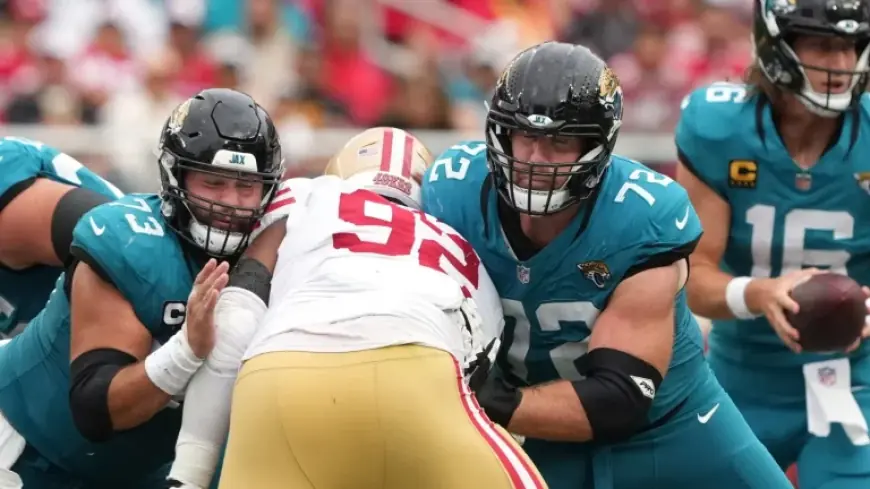
On Tuesday evening, jordan elliott became the latest defensive name attached to the Tennessee Titans’ free-agency work, agreeing to terms after two seasons with the San Francisco 49ers. The deal brings him to a team led by a coach who already knows his game: Titans head coach Robert Saleh, who coached Elliott in San Francisco during Elliott’s second season with the 49ers.
Jordan Elliott and a two-year deal that brings him back to Robert Saleh
The Titans are signing jordan elliott to a two-year, $8 million contract, with the agreement described as worth up to $8. 5 million. The deal also includes $500, 000 in incentives. For Elliott, the headline number matters, but so does the fit: he is reuniting with Robert Saleh in Tennessee after the two spent last season together with the 49ers, when Saleh served as San Francisco’s defensive coordinator.
Elliott’s path to this point has moved through three teams in a six-year NFL career. He entered the league as a third-round pick of the Cleveland Browns in 2020 and spent his first four seasons in Cleveland, appearing in 66 games. In 2024, he signed a two-year deal with the 49ers as a free agent. Now, he shifts again, joining the Titans during the NFL’s legal tampering period, even as Tennessee has “slowed down some” after earlier activity.
Robert Saleh’s scheme shift gives Elliott a chance to change roles
In San Francisco’s 3-4 scheme, Elliott lined up as a defensive end. The move to Tennessee comes with a different expectation. Under Saleh’s 4-3 scheme with the Titans, Elliott can move back to what is described as his natural defensive tackle position, a change that places his new contract within a clearer football purpose than a simple depth add.
That role change is grounded in production from his most recent season. In 2025, Elliott recorded 31 tackles, including eight solo, along with one pass defensed and four stuffs. Over 16 games last season, he totaled 31 tackles, two quarterback hits, and a pass defensed. Across his career, Elliott has appeared in 97 games, recording 148 tackles, five sacks, and five passes defensed.
The reunion with Saleh also offers continuity at a moment when teams often gamble on unfamiliar fits. Elliott is not an unknown to the coach setting the defensive plan, and that reality shapes how his signing reads: less like a trial run, more like a choice rooted in shared experience from their season together in San Francisco.
Tennessee’s defensive additions ripple toward the 2026 NFL Draft’s No. 4 pick
Elliott’s arrival lands inside a broader conversation about how Tennessee will approach the first round of the 2026 NFL Draft. The more defensive players the Titans add in free agency, the more some analysts and insiders will expect an offensive selection with the No. 4 pick. Yet the team’s needs do not point in only one direction. The Titans’ defense is still described as needing more attention than the offense, leaving open the possibility that Tennessee could still draft an edge rusher at No. 4.
That tension—adding defense now while keeping options open later—helps explain why a signing like Elliott’s carries weight beyond the depth chart. His deal is concrete, and the scheme fit is explicit. Still, it does not lock Tennessee into a single draft script, especially with a top-five selection that can pull a team toward immediate-impact choices.
For now, the clearest part of the Titans’ plan is the one that played out Tuesday evening: agreeing to terms with Elliott and bringing him into a defense run by Robert Saleh. It is a move that reconnects a coach and player who worked together in San Francisco, and it places Elliott back at defensive tackle in a 4-3 front. The next major marker sits ahead at the 2026 draft, where the Titans will make their No. 4 pick with a roster shaped, in part, by additions like this one.