NASA Van Allen Probe A Reentry: 1,300-Pound Satellite Plunges Back to Earth Eight Years Early

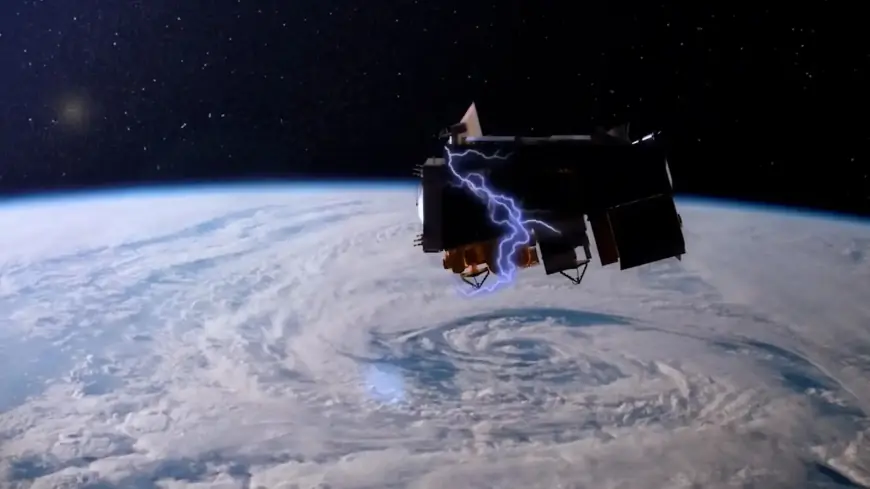
A NASA research satellite that helped rewrite our understanding of Earth's radiation belts came crashing back through the atmosphere Tuesday — years ahead of anyone's schedule, pulled down by a sun that simply refused to quiet down.
What Happened and When
The U.S. Space Force predicted Van Allen Probe A — weighing roughly 1,323 pounds — would reenter the atmosphere at approximately 7:45 p.m. ET on March 10, 2026, with a window of uncertainty spanning 24 hours in either direction. NASA had no ability to steer it. The reentry was fully uncontrolled.
NASA expected most of the spacecraft to burn up during the fiery descent, though the agency confirmed that some components were expected to survive reentry. Where those surviving fragments landed remains unconfirmed as of Wednesday morning. Experts put ocean impact as the statistically likely outcome, given water covers roughly 70% of Earth's surface.
NASA placed the risk of harm to any person on Earth at approximately 1 in 4,200 — low, the agency said, though higher than some previous high-profile reentries. For context, the 2018 reentry of a Chinese space station carried debris-strike odds estimated at less than one in a trillion.
Why It Came Down Eight Years Early
The timeline NASA originally drew up is the real story here. Mission specialists initially calculated that both Van Allen probes would remain in orbit until 2034. They were off by nearly a decade.
The current solar cycle has triggered intense space weather events, increasing atmospheric density at higher altitudes and generating more drag on the spacecraft than models originally accounted for — pulling Probe A out of orbit far faster than projected.
Marlon Sorge, a space debris expert at The Aerospace Corporation, noted that had the mission launched today, NASA might have designed it differently — perhaps engineering the vehicle to fully burn up on reentry, as many modern satellite operators now do. The Van Allen probes launched in 2012, before that standard took hold industry-wide. A 2024 incident remained fresh for debris analysts: a piece of trash jettisoned from the International Space Station unexpectedly survived reentry and pierced the roof of a home in Florida.
What the Mission Actually Accomplished
Originally called the Radiation Belt Storm Probes, the twin spacecraft launched August 30, 2012, into a highly elliptical orbit that swung them as far as 18,900 miles from Earth and as close as 384 miles. They were built for two years. They lasted seven.
The probes were the first spacecraft designed to spend significant time inside the Van Allen belts — enormous doughnut-shaped zones of high-energy charged particles trapped by Earth's magnetic field — and they broke all prior records for spacecraft longevity in that environment.
Among their major findings: the first confirmed observational data proving a third radiation belt can form during periods of intense solar activity. Their archived datasets continue to be mined by researchers studying how space weather disrupts satellites, GPS systems, power grids, and astronaut safety.
Probe B shut down in July 2019; Probe A followed in October of the same year, both having exhausted their fuel with nothing left to orient toward the sun.
The Debris Problem This Reentry Exposed
The Van Allen Probe A reentry is landing in a politically charged moment for space debris policy. Low Earth orbit has grown dramatically more crowded since 2012, and NASA's own rules now require U.S.-launched vehicles to reenter or be disposed of safely within 25 years of mission end.
Graveyard orbits — regions designated for abandoned satellites — carry their own risks, including the potential for in-orbit collisions that spray debris into active satellite lanes. In the case of these probes, using fuel to reach a graveyard orbit would have cut short the science they were gathering.
Van Allen Probe B is now also on a faster-than-expected decay path and is not projected to reenter before 2030.