Patrick Ricard vs. John Harbaugh: What the Giants’ new blueprint reveals

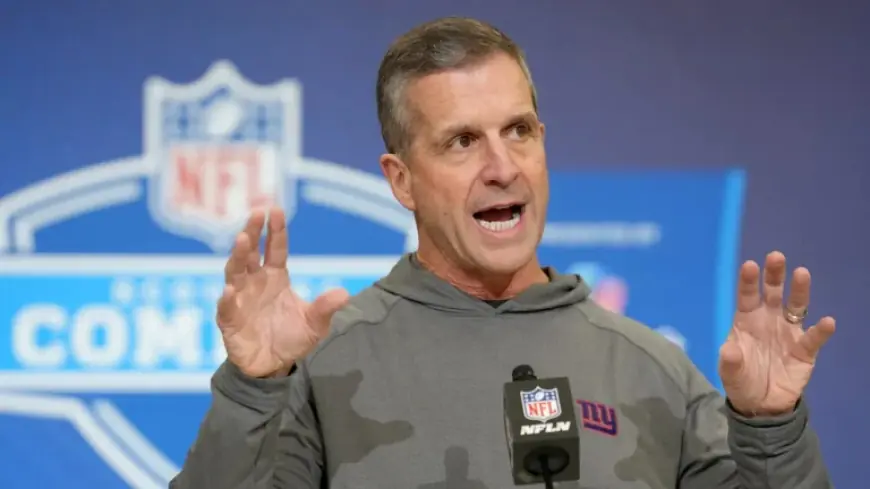
patrick ricard and John Harbaugh surface in the same conversation for different reasons: one as a familiar emblem fans associate with physical football, the other as the New York Giants’ new power center for offseason decisions. The comparison answers a practical question as the calendar turns toward free agency: are the Giants pursuing “old-school” identity first, or building a decision-making structure designed to win the offseason?
John Harbaugh and John Mara: a coach-driven Giants offseason
John Harbaugh arrives in New York with a mandate that extends far beyond game day. The Giants did not agree to pay Harbaugh $100 million only for “three hours on game days”; he was hired to help them win in the offseason, using institutional knowledge of the league to identify, pursue, and acquire talent. Within the organization, that means a structural change: co-owner and team president John Mara allowed the head coach to report directly to ownership rather than to the general manager, breaking a longstanding franchise tradition because Harbaugh was viewed as different.
The context also sets measurable credibility behind that bet. Harbaugh won at least 10 games in six of his last eight seasons as the Ravens’ coach, and he ranks among the NFL’s top 15 all time in regular-season victories and top 10 all time in postseason victories. In practical terms for the Giants, the story frames the target as steep: the team went 4-13 last year, and the club might need at least 10 victories to make the postseason in 2026. For now, the immediate test is resource allocation. Harbaugh will make the final call on how to apply the team’s restricted salary-cap space, determining which free agents to sign and which to let go.
That work is already tied to the league calendar. Front-office officials were expected to meet Sunday ahead of the legal tampering period beginning Monday at 12: 00 p. m. ET, and the official signing period beginning Wednesday at 4: 00 p. m. ET. General manager Joe Schoen and senior vice president of football operations and strategy Dawn Aponte are part of the preparation stage, with Aponte running point on contract negotiations, but the hierarchy is explicit: Harbaugh’s presence recasts surrounding executives as supporting actors in a coach-driven production.
Patrick Ricard and the “old-school Giants football” idea tied to Tom Coughlin
patrick ricard enters the picture differently: not through a confirmed contract pursuit in the context provided, but as a shorthand for the “old-school” physicality some coverage links to a nostalgia play. One thread casts the Giants as building a “time machine” back toward the peak Tom Coughlin era, pointing to teams that were predicated on stout defense, a tough run game, and a reliable quarterback—an identity lens rather than a front-office power lens.
In that framing, the roster conversation narrows to the run game. Harbaugh is described as not yet satisfied with the state of the run game despite a “strong two-headed backfield” of Cam Skattebo and Tyrone Tracy Jr. The same context claims the Giants finished fifth in rushing offense even though Skattebo’s season ended prematurely because of a “gruesome ankle injury. ” Still, the writing also signals a durability and role concern: it says there is no clarity on how Skattebo will respond to that injury, and it argues Tracy is best suited as a situational back rather than carrying a backfield alone.
That identity-first view of the offseason also attaches to named possibilities and draft talk. It cites “rumblings at the combine” that the Giants could be key players in the running back market, naming Kenneth Walker III, Travis Etienne, and Notre Dame running back Jeremiyah Love as potential options. It also references a rumor that the Giants are seriously considering drafting Love with their fifth overall pick. In other words, the “old-school” argument focuses less on who holds authority and more on a visible, physical style—exactly the kind of association that makes a name like patrick ricard resonate as a symbol, even when no direct transaction is confirmed in the context.
John Harbaugh’s authority vs. Tom Coughlin-era echoes: what the contrast clarifies
Set side by side, the two threads describe different levers for change. The Harbaugh-offseason story is about governance and decision rights: Harbaugh will make the final call on a restricted salary-cap plan, and the team’s internal structure now routes the head coach directly to ownership. The “old-school” story is about offensive identity: a run-heavier approach, possible attention to the running back market, and a willingness to revisit a Coughlin-era template built on defense and physicality.
The cleanest comparison is that one approach is confirmed process, while the other is suggested philosophy. Harbaugh’s expanded authority is presented as an implemented change with specific near-term milestones: Monday at 12: 00 p. m. ET for legal tampering and Wednesday at 4: 00 p. m. ET for the signing period. The run-game narrative, by contrast, is built around rumblings, parallels, and speculative pathways such as free-agent targets and using the fifth overall pick on a running back. Both could end up pointing in the same direction, but they do not carry the same level of confirmation in the provided material.
| Comparison point | Coach-driven offseason (John Harbaugh) | Old-school identity push (Coughlin-era parallels) |
|---|---|---|
| Main mechanism | Harbaugh makes final calls on roster spending and targets | Run-heavier, more physical offensive philosophy |
| Decision structure | Head coach reports directly to ownership | Not framed as a structural change |
| Key constraints | Restricted salary-cap space, little margin for error | Backfield uncertainty after Skattebo ankle injury; Tracy role limits |
| Near-term timeline | Legal tampering Monday 12: 00 p. m. ET; signing Wednesday 4: 00 p. m. ET | No specific transaction timeline confirmed |
| Named roster touchpoints | Jermaine Eluemunor, Wan’Dale Robinson, Cor’Dale Flott | Kenneth Walker III, Travis Etienne, Jeremiyah Love; fifth overall pick rumor |
Finding (analysis): the comparison suggests the Giants’ clearest “difference-maker” right now is not a specific old-school personnel archetype like patrick ricard, but the formal shift that places John Harbaugh at the center of offseason choices and accountability. The next confirmed test of that finding arrives with the free-agency calendar: Monday at 12: 00 p. m. ET and Wednesday at 4: 00 p. m. ET. If Harbaugh maintains final authority over how restricted cap space is deployed, the comparison suggests the Giants’ offseason will be defined more by decision structure than by any single stylistic callback.