Stone Forsythe vs. Tyler Lockett: what the Raiders’ likely exits reveal

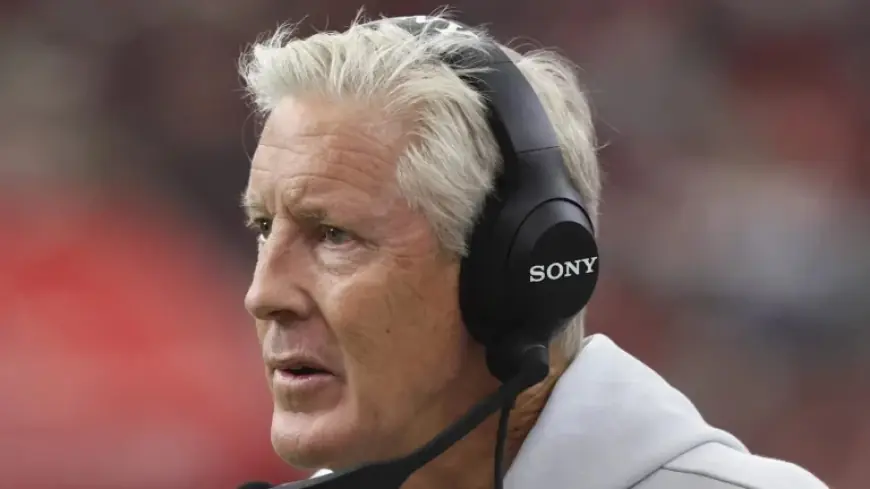
stone forsythe and Tyler Lockett are both described as “as good as gone” from the Las Vegas Raiders by Monday, as the team turns the page from the Pete Carroll era under new head coach Klint Kubiak. The comparison matters because it shows whether the Raiders’ reset is mainly about fixing on-field performance problems, or about severing ties to a specific roster-building pipeline tied to Carroll.
Stone Forsythe and the left tackle problem after Kolton Miller
Stone Forysthe is framed as a clear on-field disappointment once he stepped in for Kolton Miller at left tackle. Over the ensuing 13 games, the offensive line is described as falling further apart, and Forsythe is labeled “undoubtedly, the worst starting offensive tackle in the league. ” The context ties that harsh evaluation to production and discipline, not just narrative: in 13 games, Forsythe was penalized five times and gave up 11 sacks, five quarterback hits, and 24 hurries, totaling 40 pressures. His run-blocking grade is also described as below-average, even as Carroll claimed Forsythe was playing his best football.
That combination—high pressure allowed, multiple sacks surrendered, and a below-average run-blocking assessment—positions Forsythe as a roster spot the Raiders can upgrade quickly. The text also lists reasons the team can move on: Las Vegas is “getting Miller back, ” still has DJ Glaze and Charles Grant, plus “a practice squad sleeper in Dalton Wagner, ” and is expected to add another offensive tackle this offseason. In other words, the pathway away from Stone Forsythe is presented as both performance-driven and supported by alternatives already in the building.
Tyler Lockett and the broader Pete Carroll roster imprint
Tyler Lockett is paired with Forsythe as another of Carroll’s “more disastrous additions” that fans can feel confident will be gone by Monday. Yet the context offers a different kind of evidence for Lockett than it does for Forsythe. Instead of listing game-by-game pressures or penalties, Lockett’s inclusion is used to illustrate how strongly Carroll influenced the Raiders’ roster last season, described through “droves of his former Seattle Seahawks” arriving in Las Vegas.
That matters because it casts Lockett less as a single-position fix and more as an emblem of a prior approach to roster construction: importing familiar faces connected to Carroll. The text’s main claim about Lockett is not statistical; it is directional—he represents part of an inherited footprint the Raiders now want to erase as the legal tampering period of free agency begins early next week. In the same sweep, the context mentions the team “cleaning house with most of the coaching staff” and releasing veteran quarterback Geno Smith, reinforcing the idea that the organization is targeting both personnel and identity shifts at once.
Stone Forsythe vs. Tyler Lockett: a performance cut compared with an identity cut
Placed side by side, Stone Forysthe and Tyler Lockett are presented as similar outcomes—both likely departures—but for meaningfully different reasons. Forsythe’s case is anchored in specific, quantifiable breakdowns at left tackle across 13 games, plus an explicit claim that the line deteriorated with him in the role. Lockett’s case, as written, is anchored in symbolism: the lingering “stink” of the Carroll era, and the pattern of ex-Seahawks arriving in Las Vegas.
| Comparison point | Stone Forysthe | Tyler Lockett |
|---|---|---|
| How likely exit is framed | “As good as gone” by Monday | “As good as gone” by Monday |
| Main rationale emphasized | On-field performance at left tackle over 13 games | Association with Carroll’s roster influence and ex-Seahawks influx |
| Specific evidence cited | Five penalties; 11 sacks; five QB hits; 24 hurries; 40 pressures; below-average run-blocking | No comparable statistics provided in the text |
| Replacement pathway mentioned | Kolton Miller returning; DJ Glaze; Charles Grant; Dalton Wagner; expected tackle addition | No replacement plan described in the text |
Analysis: The divergence suggests the Raiders’ reset is operating on two tracks. One track is corrective and technical—fixing a position that produced pressures, sacks, and penalties. The other is cultural and directional—reducing the visible imprint of a prior regime’s personnel preferences. Even though both players are grouped as “disastrous additions, ” only Stone Forsythe is backed in the context by a detailed performance indictment, which makes his departure read like a targeted football decision rather than just a symbolic break.
The immediate test of that finding arrives with the legal tampering period beginning early next week, a milestone the text points to as the start of “plenty more work” for the Raiders. If stone forsythe remains on track to be out by Monday while Las Vegas also moves on from Tyler Lockett, the comparison suggests the Raiders are not choosing between a performance overhaul and an identity shift—they are attempting to execute both at the same time.