Raptors Vs Rockets: Poeltl’s status and the glass battle shape the matchup

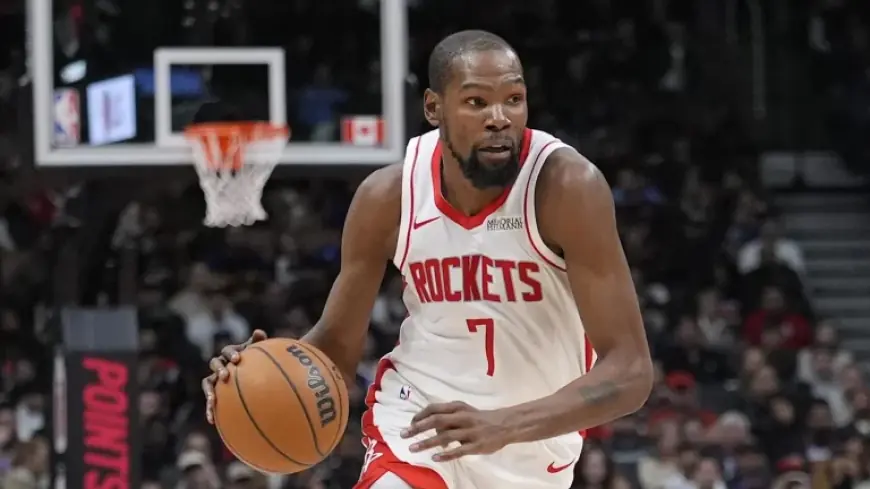
raptors vs rockets tips off Tuesday at 8: 00 pm ET at the Toyota Center in Houston, with Toronto’s frontcourt situation under scrutiny as Jakob Poeltl (illness) is listed as questionable on the most recent injury report. The matchup also puts a bright light on one repeatable separator: Houston’s league-leading work on the glass, an area where Toronto has struggled to generate — and to prevent — second chances.
Houston Rockets’ rebounding rates
Houston enters the night still searching for steadier results at the start of March, sitting 2-2 over its last four games, with an additional loss since Feb. 28 that would shift that run to 2-3. In a crowded Western Conference, the need to keep stacking wins has placed extra value on the parts of the Rockets’ profile that travel from game to game, and rebounding has been the clearest constant.
Houston is first in offensive rebounding rate this season at 39. 2% and has remained on top in March at 37. 6%. The figures point to a possession-creation identity: when shots do not fall, the Rockets can still extend possessions and stabilize scoring through second-chance opportunities. That becomes more relevant against a Toronto team described as lacking an offensive spark across its last six games, a stretch in which the Raptors are 2-4.
The Rockets’ rebound production has also required adjustment. Steven Adams’ season-ending injury has been cited as a hindrance to second-chance opportunities, yet March has still “been kind” to Houston in that department. With Adams out, Alperen Şengün, Clint Capela and Jabari Smith Jr. have been more active in the paint, helping keep what was described as a lackluster offense afloat. The pattern suggests Houston can maintain its edge on the glass even when its frontcourt rotation changes, which raises the baseline pressure on Toronto to finish defensive possessions cleanly.
Toronto Raptors’ frontcourt questions
Toronto’s injury picture adds a second layer to the rebounding storyline. The most recent injury report listed Poeltl as questionable due to illness, while Collin Murray-Boyles (thumb) and Trayce Jackson-Davis (finger) are out. That combination leaves Toronto potentially undermanned in the areas most directly tied to Houston’s strengths: defensive rebounding and rim protection.
Numbers in the context underline why that matters. Toronto ranks 16th in offensive rebounding rate for the season, but sits 27th in March. The figures point to two problems at once: fewer self-generated second chances on one end, and, as described, struggles controlling the glass on the defensive end. If Poeltl is limited or unavailable, Toronto’s path to countering Houston’s “height-infused lineups” narrows, because the margin for error grows when a team can’t reliably clear missed shots.
Toronto’s broader results add urgency. The Raptors are trying to finish in the top six of the Eastern Conference, and the context frames this as a “much-needed win” for both teams. That makes the Poeltl designation more than a routine update; it shapes how Toronto can pursue a win against a team that can tilt the possession battle. For Toronto, the clearest practical task is to avoid giving Houston extra trips, because every additional possession increases the likelihood Houston’s rebounding advantage shows up on the scoreboard.
raptors vs rockets: defense, pace, and the margin
Beyond the glass, the matchup sets two defenses against each other. Houston is eighth in defensive rating, while Toronto is sixth in defensive rating, with the Raptors also described as having a solid starting lineup but lacking depth and rim protection. Houston is also ranked sixth in the NBA in net rating, a summary measure used in the context to classify it as a “good team, ” and one that has posed problems for Toronto. Against teams currently in the Top 10 of net rating, Toronto is 6-17 straight up and 8-15 against the spread.
Those splits help explain why the contest has been framed as a difficult matchup for Toronto even with high-end defense. The figures point to a ceiling question: Toronto can defend well enough to stay competitive, but has struggled to translate that into wins against the league’s strongest overall teams. In this specific game, Houston’s advantage on the glass is positioned as the mechanism that could turn a close contest into separation late, especially if Toronto’s frontcourt depth is tested.
Style also matters. Both teams are described as being in the bottom third in pace, a detail that shapes how runs develop and how quickly deficits can be erased. A slower game amplifies single-possession swings — and offensive rebounds create exactly that type of swing without requiring a stop. The pattern suggests the team that wins the rebounding battle may also dictate the game’s emotional rhythm: fewer empty trips, fewer transition chances for the opponent, and more half-court possessions where defense and size can compound.
Tuesday’s meeting is also the second between the teams this season. The previous matchup came on Oct. 29, when Houston won 139-121. Toronto’s recent history against Houston has also been unfavorable, with the Raptors not having beaten the Rockets since the 2023-24 season. Those prior outcomes do not determine what happens next, but they reinforce what the current indicators already highlight: for Toronto to flip the script in raptors vs rockets, it likely needs a cleaner game on the glass than its March rebounding rank would predict.
The next concrete update sits with Toronto’s injury designations, particularly whether Jakob Poeltl (illness) is upgraded from questionable before the 8: 00 pm ET tip. If Poeltl plays and Toronto holds its ground on defensive rebounds, the data suggests the game’s margin shifts toward half-court execution rather than extra possessions created by Houston.