Scarpetta brings Patricia Cornwell’s forensics hero to TV at last

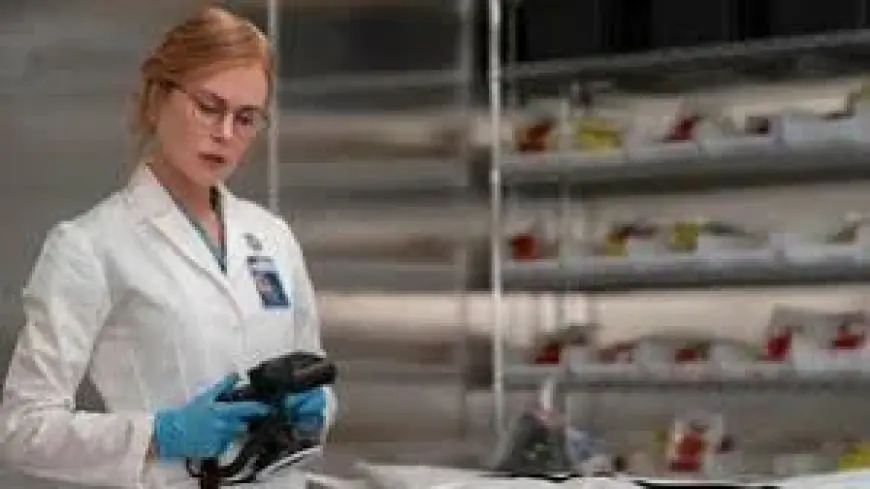
scarpetta has reached the screen with Nicole Kidman and Jamie Lee Curtis bringing Patricia Cornwell’s popular book series to television after decades of attempts in Hollywood. The project’s arrival, paired with early reactions framing it as an immediately bingeable detective show, signals how heavily the series leans on recognizable talent and a well-established crime-thriller template to make its case.
Nicole Kidman and Jamie Lee Curtis
Kidman and Curtis appeared together at the premiere of Prime Video’s “Scarpetta” at Regal Union Square in New York on Tuesday, March 3, 2026. The adaptation itself is described as the result of persistent effort: Cornwell’s books had drawn interest for years, yet the move to the screen only now materialized. The pattern suggests the series is positioned as a long-awaited translation of a known property, with its two top-billed stars serving as both creative anchors and a signal of intent to make the material feel event-level rather than niche.
Curtis also addresses whether she will truly eventually leave Hollywood, even if fans do not want her to. That personal coda sits alongside the show’s launch as a reminder that the series’ visibility rests not only on the fiction’s mechanics but also on the public narratives around the people bringing it to life.
Scarpetta’s Kay Scarpetta timeline split
In the series, Kidman plays Kay Scarpetta, Virginia’s Chief Medical Examiner and a “legendary forensics expert. ” The adaptation draws directly from Cornwell’s novels—specifically the first book, 1990’s Post-Mortem, and the 25th, 2021’s Autopsy—and builds its storytelling around two intertwined timelines. Kidman’s Scarpetta occupies the present-day thread, while Rosy McEwen portrays Scarpetta in the past. The figures point to an approach that uses the brand’s long publishing arc to justify a structure meant to generate forward drive while also filling in character history, rather than treating the story as a single-case procedural.
That two-track design is not without friction. The series’ biggest names largely populate only one timeline, creating what is described as a degree of imbalance. Yet the structure is also credited with bringing depth to showrunner Liz Sarnoff’s characterizations, because it ties the protagonists’ personal lives to the crimes they are solving. In practical terms, the split becomes a way to keep the show moving while reserving space for motive, history, and relationships that can complicate what might otherwise be a straightforward weekly hunt.
Liz Sarnoff’s eight-episode case engine
Over eight episodes, Scarpetta returns from a lengthy sabbatical to run the Virginia office where she first “cut her teeth, ” a professional reset that immediately creates workplace resistance from long-time adversary Elvin Reddy (Lenny Clarke) and his right-hand woman Maggie Cutbush (Stephanie Faracy), who is also Scarpetta’s secretary. The initial case begins with a woman found beside train tracks—described as nude, hogtied, and missing hands—in a manner echoing a decades-earlier string of slayings Scarpetta once worked with partner Pete Marino. The pattern suggests the series is less interested in isolated mysteries than in reactivated histories, using old cases to raise the emotional and reputational stakes of new evidence.
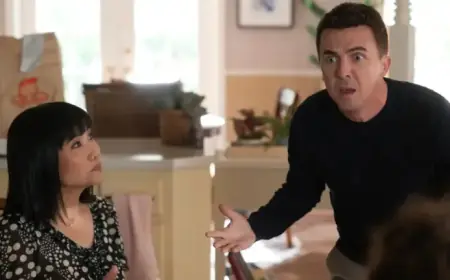
Marino is played by Bobby Cannavale and, in a twist, also by Cannavale’s son Jacob, a casting choice that keeps the character’s “colorful, politically incorrect personality” consistent across eras. In the older investigation, Marino believed the killer was Matt Peterson (Anson Mount), the husband of one victim, and the key clue was a glittery substance found on bodies and at the crime scene. In the present, Scarpetta focuses on a crushed penny on train tracks as a possible signature, before attention shifts once police identify the victim and find the kettlebell used to crush her skull—covered in fingerprints of someone Scarpetta and Marino know well. The sequence of clues points to a show designed to reward attention to physical detail, using forensic breadcrumbs to pivot suspicion and keep momentum tight across episodes.
The interpersonal web is deliberately crowded. Scarpetta is married to FBI profiler Benton Wesley (Simon Baker), and their home becomes volatile with the presence of Scarpetta’s sister Dorothy (Curtis), a successful children’s novelist and “lifelong wild child” whose latest husband is Marino. Dorothy’s daughter Lucy (Ariana DeBose), a tech prodigy Scarpetta largely raised, is mourning the death of her wife Janet (Janet Montgomery) and continues to converse with her an AI replica. That element adds a contemporary twist to the domestic storyline, and the pattern suggests the show aims to broaden its hook beyond serial-killer pursuit by tying grief and technology directly into day-to-day character conflict.
One immediate open question is how the series’ dual timelines will balance star power against narrative necessity over the full eight-episode run, given the noted imbalance between eras. If the momentum attributed to the parallel structure holds, the data suggests Scarpetta’s binge appeal will depend on whether its forensic puzzles and domestic clashes continue to reinforce each other rather than compete for attention.