Big Ten Tournament bracket expansion in 2026 puts Michigan’s No. 1 seed under a new kind of pressure

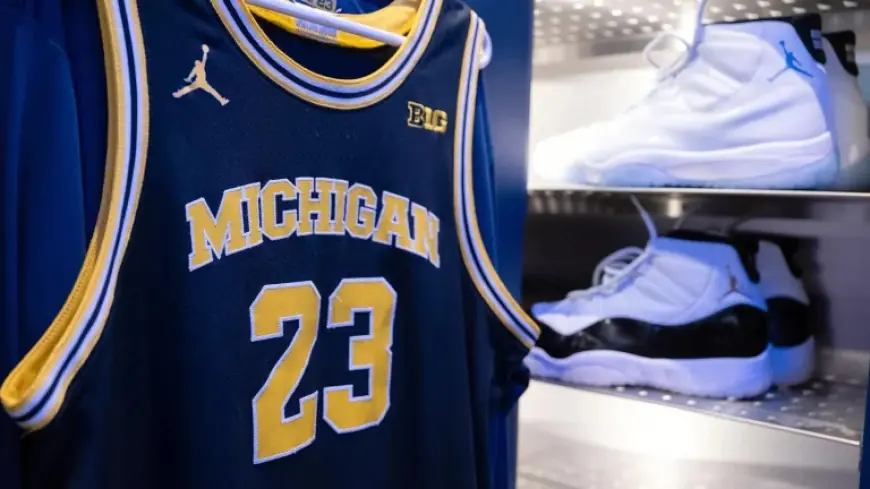
The big ten tournament is changing its shape in 2026, and Michigan is positioned at the center of the shift. With the conference postseason field expanding to include all 18 teams and adding an extra day on Tuesday, the top seed now comes with a first-ever triple bye for the Wolverines—an advantage that also creates a longer wait before their first game. Michigan, fresh off its 16th Big Ten regular-season title, will enter the bracket as the No. 1 seed and advance directly to the quarterfinals.
Michigan’s No. 1 seed, triple bye, and a quarterfinal start time
Michigan earned its third No. 1 seed for the 2026 edition of the conference postseason and secured a triple bye after finishing among the top four in the league. The tournament is scheduled Tuesday through Sunday (March 10–15) at the United Center in Chicago, and the new, expanded format includes an extra day on Tuesday (March 10).
With the triple bye, Michigan will open play in the quarterfinals on Friday (March 13) with an 11 a. m. CT tipoff, listed as Noon ET. The game will air on Big Ten Network.
In its bracket pod, Michigan could face one of four potential opponents in its first game: No. 8 seed Ohio State, No. 9 seed Iowa, No. 16 seed Oregon, or No. 17 seed Maryland. That range underscores the breadth created when an 18-team bracket pushes more paths into the top seed’s opening round.
Why the 18-team Big Ten Tournament format matters now
The 2026 postseason expands to include all 18 Big Ten teams, a structural change that alters both the calendar and the competitive rhythm. The immediate, concrete result is a Tuesday start and the possibility for top seeds to be more insulated from early-round variance through deeper byes. Michigan’s triple bye is described as the program’s first-ever, a marker of how bracket design can materially change the rewards for elite regular-season performance.
Michigan arrives as the league champion by a wide margin: it won the 2026 Big Ten title by four games with a 19-1 conference record. The Wolverines enter postseason play at 29-2 overall, with their season described as one of the most dominant in program history. The team’s statistical profile inside the context provided is extreme: 24 wins by double figures, including 13 by 20 or more, 10 by 30 or more, a Big Ten-record seven victories by 40 or more points, plus one win by 50 or more points.
Still, the expanded big ten tournament format creates a subtle tension for the top seed: the reward is a delayed entry into the event, potentially shifting emphasis from early momentum to late precision. Those dynamics are intrinsic to a bracket where one team waits while the field plays through multiple elimination rounds.
What lies beneath the headline: dominance, history, and the stakes of waiting
Michigan’s regular season included multiple historical signposts. The Wolverines won their final 15 Big Ten games to set program and conference records with 19 league victories, surpassing their previous 16-win seasons in 1984-85 and 1976-77. The context also highlights a notable road achievement: Michigan’s 10-0 Big Ten road record made the Wolverines the second team in conference history—and the first in 50 years—to finish league road play unbeaten, joining Indiana’s 9-0 mark during its perfect 1975-76 season.
Those accomplishments form the factual case for Michigan’s bracket position, but the postseason lens adds another layer. The Wolverines are set up to defend their 2025 title, and their recent tournament history contains both success and disappointment as a top seed. In 2014, Michigan was the top seed but lost to third-seeded Michigan State in the championship game. In 2021, Michigan again earned the top seed but lost in the semifinals at Lucas Oil Stadium, falling 68-67 to fifth-seed Ohio State after missing a last-second game-winning attempt.
In other words, the No. 1 seed is not a guarantee—yet the 2026 format enhancement is clearly designed to increase the premium on finishing at the top. The question becomes less about whether Michigan has earned the advantage (the record says it has), and more about how that advantage translates when the big ten tournament demands immediate sharpness after an extended wait.
Michigan’s recent trajectory under head coach Dusty May is defined in the context by sustained winning. In May’s first two seasons, Michigan has back-to-back 27-plus win seasons and a 56-12 overall record. After a runner-up Big Ten finish in 2025, the Wolverines captured the regular-season title in 2026 and own a 33-7 league record over the last two years. Last year in Indianapolis, May’s first season ended with a tournament title as the No. 3 seed, with Michigan winning three games in three days and defeating fifth-seeded Wisconsin 59-53 in the championship. That run offers a contrast to 2026: last year required rapid repetition; this year begins with rest and expectation.
Bracket snapshot and the field chasing Michigan
The 2026 Big Ten Tournament seeding places Michigan at No. 1, followed by Nebraska at No. 2, Michigan State at No. 3, and Illinois at No. 4—each of those three teams listed at 15-5 in conference play. Wisconsin is seeded fifth at 14-6, with UCLA and Purdue both seeded at 13-7 (sixth and seventh). Ohio State is the No. 8 seed at 12-8, while Iowa is ninth at 10-10.
The bottom portion of the field includes Oregon (No. 16 at 5-15), Maryland (No. 17 at 4-16), and Penn State (No. 18 at 3-17). With all 18 teams included, the bracket is constructed to bring every program into the same postseason pathway, even as the top seed’s triple bye creates a visibly different entry point.
Looking ahead to the Big Ten Tournament quarterfinals: advantage or added strain?
The expanded, all-in format is the headline change, but Michigan’s position reveals the deeper storyline: a historically dominant regular season now funnels into a single-elimination environment where the first game arrives at Noon ET on Friday. The bracket pod possibilities—Ohio State, Iowa, Oregon, or Maryland—frame the opening matchup as dependent on early-round outcomes that unfold while Michigan waits.
That is the paradox embedded in the 2026 big ten tournament: the league’s best team is rewarded with distance from the initial chaos, yet must prove it can convert that distance into immediate execution when the quarterfinals begin. If the tournament’s new architecture is meant to elevate the value of the regular season, the Wolverines are the clearest test case—can the triple-bye era turn domination into inevitability, or simply raise the cost of a single off night?