Talksport Live: Jamie O’Hara Storms Out — 3 Questions That Leave Tottenham in Crisis

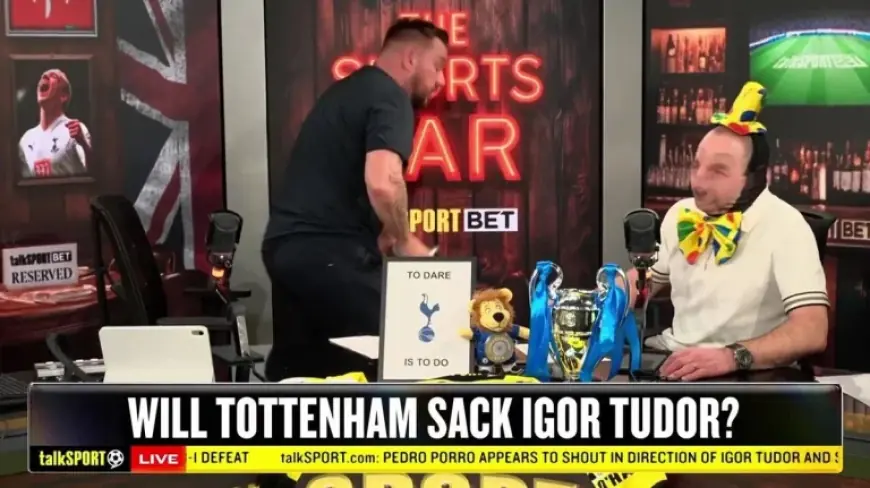
talksport live became the flashpoint for a raw, public collapse of restraint when Jamie O’Hara abandoned a studio discussion after a sustained verbal exchange over Tottenham’s 3-1 defeat to Crystal Palace. The incident fused on-field collapse, manager scrutiny and personal recrimination into one combustible moment — and it has left stakeholders, viewers and former players asking whether the club’s problems are tactical, structural or cultural.
Why this matters now
Tottenham’s 3-1 loss to Crystal Palace intensified an alarming run of form: a fifth consecutive defeat compounded by a string of managerial and personnel questions. The result left the club in 16th, one point clear of 18th-placed West Ham and with Nottingham Forest occupying 17th, amplifying anxieties about relegation. Ismaila Sarr scored twice and Jorgen Strand Larsen added the other goal, while a penalty and a red card altered the match dynamics. The team’s slide and the timing of a heated studio exit combine to make the broadcast episode more than a media kerfuffle — it is a symptom of on-field crisis.
What happened in the studio — Talksport Live fallout
The studio confrontation began as a debate over Igor Tudor’s short tenure as caretaker boss. Jamie O’Hara, identified in the discussion as a former Tottenham Hotspur midfielder, said the manager “has got to go” after three consecutive defeats since Tudor’s appointment. The exchange escalated when Jason Cundy, identified as a former Chelsea defender and co-presenter, countered that Tudor deserved time on the training ground and pointed to “encouraging signs. ” O’Hara rejected that view, calling the club, the players and the recruitment “a joke, ” and walked out after calling his co-presenter “an idiot. ” That sequence — an assertive demand for immediate managerial change, a defensive insistence on patience, and a dramatic on-air exit — crystallised the emotional stakes surrounding the club’s performance.
Deep analysis: causes, implications and ripple effects
The studio clash mirrors three interconnected pressures identified in the coverage of the match. First, sharp tactical and personnel failures on the pitch: defensive errors and a conceded penalty left the team vulnerable, while match events — including a sending-off for a denial of a clear goalscoring opportunity — reshaped the game’s flow. Second, the managerial handover has not produced the anticipated uplift; Igor Tudor has lost his first three matches in charge, and that absence of a “new manager bounce” is central to O’Hara’s critique. Third, recruitment and player performance drew blistering criticism on air, with specific players labelled as unsuitable for the top division. The immediate implication is a deepening legitimacy crisis for both the interim manager and the club’s decision-makers. Longer-term, public fractures between prominent former players and club defenders could deepen fan unease and complicate any effort to stabilise confidence ahead of upcoming fixtures.
Expert perspectives and on-air quotes
Jamie O’Hara, former Tottenham Hotspur midfielder, delivered the most forceful assessment on the broadcast: “The manager’s got to go. He’s got to go. Get rid of him. He’s lost three games on the bounce… Everything about the football club is an absolute disgrace. Honestly, I’m hurting, I’m actually hurting. It hurts. ” His comments were matched by specific judgments about player quality and recruitment choices.
Jason Cundy, former Chelsea defender and co-presenter, responded with a contrasting view rooted in procedural patience: “He’s had three games, give him time on the training ground, ” and argued he had “seen signs. Encouraging signs. ” The collision of those positions — an insistence on immediate accountability versus a call for time to implement change — frames the broader debate around pragmatic short-term remedies and strategic continuity.
Regional and club-level consequences
The public rupture on air amplifies pressure on club leadership and the caretaker manager. With the team precariously positioned in the table and morale apparently fragile, media confrontations like this risk becoming part of the narrative that surrounds the club in domestic competition. Fan departures during the match and the stark language used by a prominent former player increase the reputational cost of poor results. Internally, such episodes can accelerate calls for board-level decisions or shape the environment in which players and staff attempt recovery.
As the club seeks answers on the training ground and in the transfer market, the televised exit underscores a simple fact: accountability debates are now being settled in both dressing rooms and studios. Will pragmatic patience or immediate accountability prevail? The talk continues — in stadiums, at the training ground and on the air — with the final act still unwritten as stakeholders weigh their next move on and off the pitch, and the legacy of this televised confrontation continues to unfold on talksport live.