U.S. Bombs School; Trump’s Response Escalates Tensions

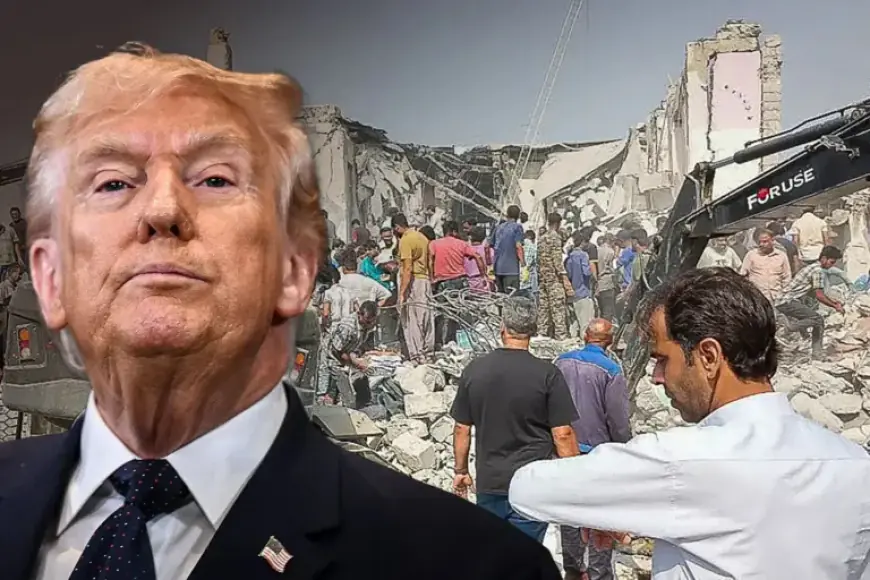
Recent events have escalated tensions between the United States and Iran, particularly following a tragic incident involving a missile attack on a school. The strike, which reportedly resulted in the deaths of at least 175 individuals, predominantly grade-school children, has drawn international condemnation and sparked numerous questions regarding accountability and strategy.
U.S. Missile Attack on School
A Tomahawk cruise missile struck a girls’ school in Iran, leading to catastrophic consequences. Despite video evidence attributing the attack to the U.S., President Donald Trump has made claims suggesting otherwise. He referred to Tomahawk missiles as “generic” and implied that Iranians may have launched the assault themselves—a statement contradicted by military experts.
Historical Context of Accountability
Accountability in military actions is not unprecedented. Historical instances illustrate how prior administrations acknowledged mistakes:
- In the Afghan War, the U.S. offered condolences and monetary compensation to families of civilian casualties.
- During the 1999 bombing of the Chinese Embassy in Belgrade, President Bill Clinton formally apologized to China for the incident.
In light of these precedents, the current administration’s reluctance to accept responsibility deepens mistrust, complicating prospects for peace.
Trump’s Mixed Messages
Trump’s communications regarding the conflict have created significant confusion. At one moment, he declared the war to be near completion, while later statements suggested the need for continued military involvement. His conflicting remarks have led to volatility in oil prices and stock market fluctuations.
Policy Uncertainty
Defense Secretary Pete Hegseth’s comments have added to the uncertainty. Hegseth’s assertion that the conflict is “only just beginning” contrasts sharply with Trump’s optimistic outlook. This lack of coherent strategy raises concerns among analysts and military officials alike.
Implications for U.S.-Iran Relations
The lack of a clear policy may hinder America’s ability to foster stable relations with Iran. Trump’s public statements reflect not only a disorganized approach but also an absence of a defined long-term vision for the region.
Regime Change vs. Stability
Trump’s administration appears to be leaning towards regime change while simultaneously discussing non-interventionist goals. His recent remarks suggest that military action may focus on disabling Iran’s military capabilities without committing to nation-building efforts, diverging from strategies employed by previous administrations.
The Global Perspective
As the conflict continues, the world’s focus on U.S. actions regarding Iran intensifies. The perception of the U.S. as a belligerent force complicates diplomatic relations and portrays the administration as lacking a coherent foreign policy. This chaotic dynamic has major implications for current and future engagements in the region.
To effectively manage this conflict and its repercussions, it is essential for the U.S. to establish a clear strategy that prioritizes accountability and diplomatic dialogue. Without this clarity, missteps may lead to further violence and instability.