Ucl Fixtures Expose a Rare Bracket Split — Which Path Produces the 2026 Champion?

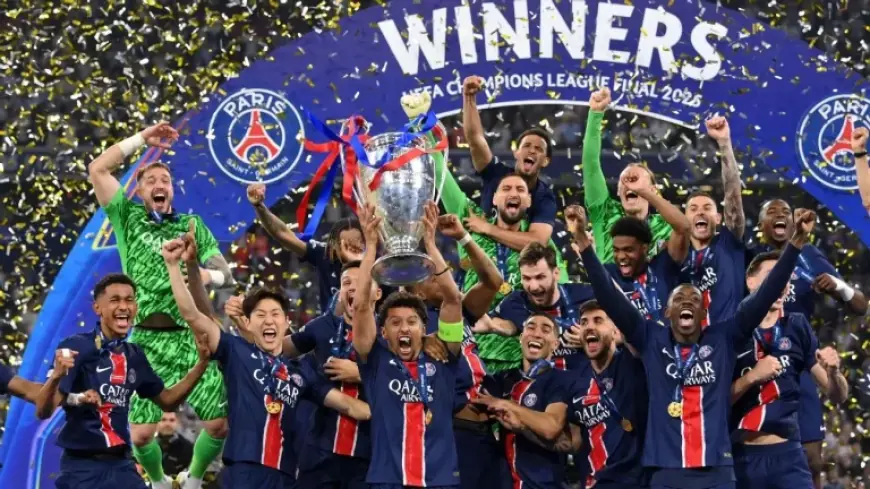
The current debate over ucl fixtures is less about individual matches and more about an unusual structural reality: one half of the bracket concentrates past winners while the other offers a genuine opening for a new champion. That split — and the analytical thresholds used to rate contenders — reframes predictive models for the remaining teams.
Ucl Fixtures: Silver Path Dominance vs Blue Path Opportunity
The bracket division now widely described as a “Silver Path” and a contrasting side creates a sharp analytical fault line. Six teams that have claimed the last 10 Champions League titles — Real Madrid, Liverpool, Bayern Munich, Chelsea, Manchester City and Paris Saint-Germain — occupy the majority of the top half. Those six clubs have combined to win 31 Champions League titles and finished runners-up 15 times. At most, only one of those Silver Path sides can reach the final this season.
On the flip side, the grouping labelled the Blue Path carries a markedly different pedigree: its eight teams have a combined five European Cup victories and nine additional second-place finishes, and aside from Barcelona no club on that side holds a Champions League trophy. The distribution amplifies the possibility of another first-time winner following last season’s breakthrough, and it makes the analysis of ucl fixtures this year uniquely consequential: bracket placement now materially alters a team’s route to the final.
Why This Matters Now: Thresholds, Eliminations and Adjusted Goals
One reason the split is decisive is the application of performance thresholds grounded in recent winners’ profiles. The piece of applied methodology at the center of these projections is a blended metric called “adjusted goals, ” a composite of 70% expected goals (xG) and 30% actual goals. That measure creates a floor for what historically phased winners produce across a season. For context, a Chelsea side that won despite a lower domestic finish averaged 1. 61 adjusted goals per game — a benchmark used to filter contenders.
Using that performance floor, several clubs were removed from the shortlist of plausible winners. Atlético Madrid, Atalanta, Newcastle and Tottenham fell beneath the adjusted-goals threshold; Sporting Lisbon, Galatasaray and Bodo/Glimt were also excluded based on comparative league-phase data and a historical pattern that disfavors teams outside the biggest five leagues reaching the final. Those eliminations reshape how observers read ucl fixtures: match-ups that once looked even now tilt heavily based on which side of the bracket contenders landed.
Deep Analysis: Defense, Chance Creation and Live-Game Variance
Beyond goals scored, defensive efficiency has mattered in recent tournaments. Historically, champions have posted adjusted goals-allowed figures under 0. 85; the winners listed as exemplars include dominant defensive campaigns. At the same time, live match variance underscores how quickly a narrative can shift. Recent last-16 action provided stark examples: an emphatic win in Madrid and a defensive stalemate in England highlighted both the suddenness of momentum swings and the fragility of single-leg narratives. Those moments influence how teams approach upcoming ucl fixtures, where tactical conservatism can be as decisive as attacking creativity.
All data, unless otherwise noted, comes from Opta and Stats Perform. That sourcing underpins both the adjusted-goals construct and the decision to exclude clubs whose league-phase metrics fail to meet historical precedent for champions. The data-driven filter narrows plausible winners to a concise group: Arsenal, Bayern Munich, Barcelona, Manchester City, Liverpool, PSG, Real Madrid, Chelsea and Bayer Leverkusen — the set that remains after applying the performance thresholds.
Expert Perspectives and the Live Evidence
Match narration from recent knockouts supplies immediate color: a dominant multi-goal performance in Madrid and a balanced encounter in Newcastle are not mere anecdotes but indicators of form and squad readiness under pressure. Player contributions named in those fixtures — including standout saves and multi-goal attacks — serve as micro-evidence when paired with season-long metrics. The combined effect of season data from Opta and Stats Perform and the in-game signals from knockout fixtures refines projections on who among the remaining sides most closely resembles recent winners.
Which makes reading ucl fixtures now a two-layered task: measure season-long adjusted performance against historical champion thresholds, then weigh immediate match-level signals that can upend expectations.
Conclusion
The bracket split has turned what might have been a straightforward predictive exercise into a conditional one: who you play matters as much as how well you played to get there. Given that, what will decide the championship — the historical pedigree stacked in one half or the open opportunity in the other — and how will teams adapt their approaches to the remaining ucl fixtures?