Spurs: Relegation Threat and European Glory in One Season

One club, two headlines. From being seconds away from beating Paris Saint-Germain in the Uefa Super Cup to a collapse that leaves spurs staring at the Championship, this season reframes what fans believed possible.
How did Spurs fall from near-European peak to relegation danger?
Verified facts: Tottenham were seconds from winning the Uefa Super Cup against Paris Saint-Germain last August. The club is the ninth-richest in the world and trades on a public identity encapsulated by the motto “To dare is to do. ” Despite those markers of stature, the team has suffered a prolonged downturn in the domestic league. Tottenham lost 3-1 at home to Crystal Palace in a match that featured Micky van de Ven’s red card and three Palace goals within 19 first-half minutes. That defeat extended a winless run to 11 league games and a five-game Premier League losing streak not seen by the club in 22 years. The squad sits one point above the relegation zone, and a trip to Anfield to face Liverpool is scheduled on March 15. Opta’s statistical relegation probability for the club reached a season high of 16 percent; the same model placed the club’s pre-season relegation probability at 13 percent.
Analysis: These facts present a stark contrast between European form and domestic collapse. Advancement into late stages of continental competition has coexisted with a sequence of league failures, suggesting the club’s problems are not isolated to a single competition.
Who is responsible and what has been tried?
Verified facts: Thomas Frank was relieved of his duties with the club positioned 16th. Igor Tudor was appointed as interim manager in his place. Tudor has described the team’s chief problems as an inability to run, to score and to defend. A prominent club observer, Jon Harvey, a producer on Have I Got News For You and a lifelong season-ticket holder, proposed a novelty plan of using a different guest manager for each remaining fixture as a response to the managerial malaise. The club has also produced moments of high performance in European competition during the same period.
Analysis: Management change has been a clear lever. The move from Frank to Tudor has not produced the required domestic uplift. Tudor’s public diagnosis of the squad—limited stamina, goal drought and defensive lapses—aligns with on-field results such as the rapid concession of goals early in matches and red cards that shift momentum irreversibly. Proposals for unconventional managerial responses reflect a fanbase and observer community reaching for remedies beyond traditional appointment cycles.
What does this season mean and what should happen next?
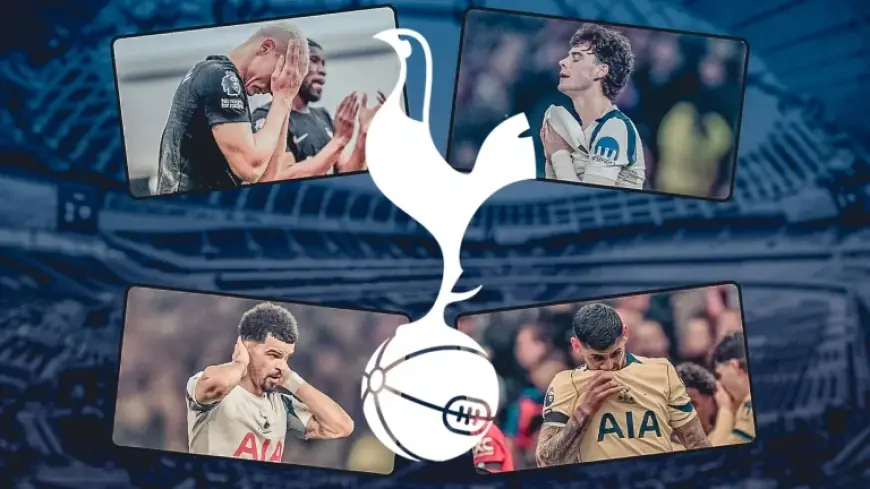
Verified facts: The club has lost 15 points from winning positions this season. Despite European progress, domestic results have deteriorated enough to expose the club to a realistic relegation risk. Visual coverage of recent matches captured distraught supporters, and high-profile moments—such as the abbreviated scoreboard that read TOT-CRY—have become emblematic of the season’s tone.
Analysis: The coexistence of continental success and domestic collapse is not merely ironic; it is diagnostic. Repeated losses from winning positions and disciplinary lapses point to a problem of leadership and collective mentality as much as tactics. The interplay of squad fitness, match discipline and managerial stability must be addressed together. Tactical tweaks alone are unlikely to reverse the slide if red cards and late collapses continue to decide results.
Accountability and next steps: The club’s hierarchy should publish a clear, evidence-based plan addressing the three problems identified by its interim manager: running, scoring and defending. That plan should include transparent targets for recovery in the Premier League table, a timeline for personnel decisions, and metrics—such as points recovered from losing positions and disciplinary records—by which progress will be judged. Independent statistical findings, like Opta’s relegation probability, should be acknowledged openly to align public expectation with the club’s remedial strategy.
Verified fact: In one of the season’s most paradoxical lines, the team that was seconds from continental silverware now faces the prospect of relegation.
Informed analysis: Without clear leadership, measurable remedies and visible accountability, the club risks turning this season’s extremes into a lasting competitive setback. Fans and stakeholders deserve transparency that distinguishes verified performance data from interpretation and speculation.
Final note: The central public question remains the same—what is not being told about the nexus of leadership, discipline and fitness that has left spurs in this contradictory position—and it demands an evidence-led response from the club’s decision makers.