Gone Cast — David Morrissey and Eve Myles Anchor a Six-Part Whodunnit That Upends Expectations

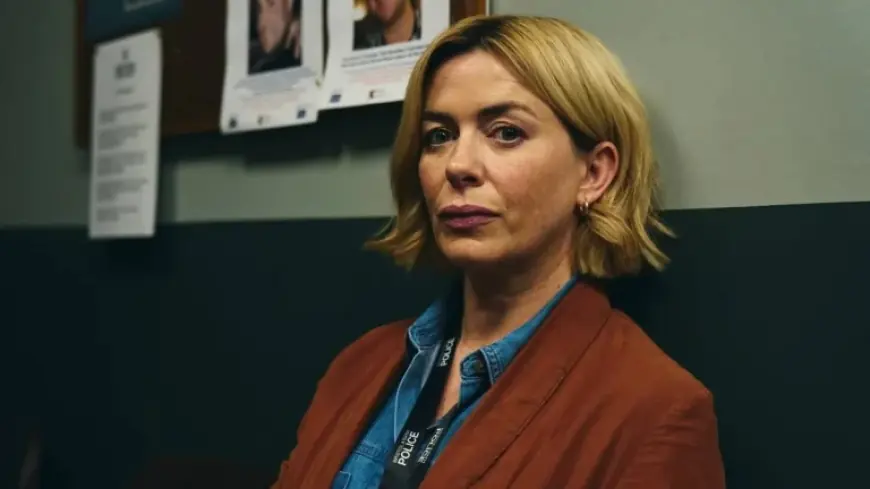
The gone cast at the centre of the six-part drama arrives as an invitation to be unsettled: David Morrissey plays a headteacher whose wife Sarah has disappeared, and Eve Myles is the watchful detective who doubts his composure. That terse premise, however, is only the front door. From a rigid rugby pitch to an unnerving domestic silence, the show trades conventional whodunnit mechanics for a series of existential frictions that keep viewers off-balance.
Background & context: setting, structure and primary players
Gone is presented as a six-part crime drama created by George Kay and built around a tightly observed community in Bristol. The central gone cast includes David Morrissey as Michael Polly, the immaculately presented headmaster whose wife Sarah disappears; Emma Appleton as his daughter Alana; and Eve Myles as DS Annie Cassidy, the detective who reads the scene differently. Other named performers in the ensemble include Jennifer Macbeth, Arthur Hughes, Nicholas Nunn, Elliot Cowan, Billy Barratt, Rupert Evans, Jodie McNee, Oscar Batterham, Clare Higgins and Claire Goose. The narrative begins at a school rugby match and soon hinges on the contrast between the headmaster’s steely calm and a mounting sense of wrongness when Sarah is found missing for more than 24 hours.
Gone Cast — Character performance and what the drama is really about
At face value the plot is a disappearance; beneath it are recurring themes identified in the series itself: the nature of guilt and co-dependence, the burden of professional expectation and the banality of evil cropping up in ordinary places. The gone cast is asked to live inside those tensions. Morrissey’s Michael is described as fastidiously controlled—prewar haircut, pressed waistcoat, a man apparently sealed against emotion—yet that unreadability becomes the central dramatic engine. He tells Annie he has 160 pupils about to sit exams and that their future cannot be derailed by his wife’s absence, a line that fractures domestic expectation and civic responsibility.
DS Annie Cassidy, as played by Eve Myles, operates as both investigator and moral thermometer. Her observations—sharp, dry-witted—invite the audience to interrogate Michael’s composure. The production leans into discomfort: a rugby pitch of straining boys, a domestic clock ticking through an anguished night, and moments of comic dread that verge on grotesque. Even odd, vividly detailed flourishes are present in the series’ descriptive texture and are permitted to complicate the central mystery rather than resolve it immediately.
Deeper analysis: why casting choices intensify the mystery
The gone cast’s strength lies in calibrated restraint. Morrissey’s ability to suggest interior threat through minimal physical cues is central to the show’s strategy of letting suspicion grow by accretion rather than exposition. Likewise, casting Myles as the rule-bending detective provides a counterpoint: where Michael naively insists on continuity and order, Annie represents disruption and interrogation. Clare Higgins’ quieter role as a colleague offers another tonal register that undercuts easy judgments about motive and culpability.
Creative choices extend beyond performance into tone. The series repeatedly subverts genre expectations—what begins as a conventional missing-person case becomes a canvas for exploring how institutions, family and reputation can conceal or manufacture menace. This is not a procedural that prioritises neat answers; instead, the gone cast is arranged to keep moral certainties wobbling until the final layers are unpeeled.
Expert perspective
Eve Myles, actor and a member of the series cast, framed her attraction to the material around discomfort and challenge: “If I get scared about something, I know it’s absolutely for me and that it’s the next thing I should do. If I read something or get involved in something and feel comfortable, then I’ve already done it, so it’s time to move on. There are issues in this particular piece that I felt I wanted to give voice to. The tone and vision Richard Laxton created was intoxicating. Everything came together like a chemistry set, hopefully we’ve created a story people really invest in. ” That reflection highlights how casting and creative direction were treated as inseparable in shaping the drama’s uneasy chemistry.
What this means beyond the screen
Beyond the immediate mystery, Gone deploys its gone cast to interrogate social roles—teachers, detectives, family members—and the expectations tied to them. The show’s insistence on slowly revealing the emotional ledger behind perfunctory behaviour invites viewers to consider how institutional duties can become mechanisms for concealment. The drama’s measured refusal to hand over quick moral clarity positions it as a study of atmosphere as much as a whodunnit.
Where the series once might have offered predictable beats, the creative team uses performance, casting and tonal restraint to sustain doubt. For audiences, that means engagement with uncomfortable questions rather than tidy resolution: who protects reputations at the cost of truth, and what happens when a community’s civility masks a darker patience?
As the gone cast moves through its six episodes, the series asks whether control is an act of preservation or a seal over something worse. What will the gone cast reveal about the cost of that control in the remaining episodes?