Utah Vs Cincinnati: In Kansas City, a struggling Utah hunts for one last spark

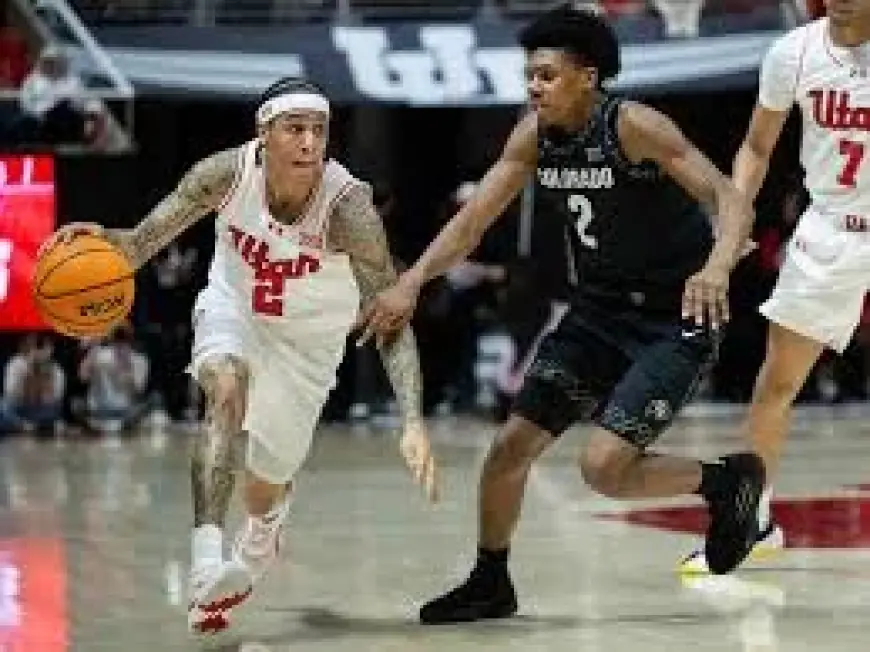
KANSAS CITY — At 1: 00 p. m. ET on Tuesday, utah vs cincinnati becomes more than a bracket line at the Big 12 tournament’s T-Mobile Center. For Utah, it arrives with the weight of a rocky finish to Alex Jensen’s first season as head coach, a five-game losing streak, and the lingering sting of a game that felt won three weeks ago—until it wasn’t.
What is at stake in Utah Vs Cincinnati in Kansas City?
Utah enters the first round as the No. 16 seed at 10-21, facing No. 9 seed Cincinnati at 17-14. Expectations are described as low for Utah going into Kansas City, and the numbers around the matchup underline that mood: Analytics gives Utah a 19. 1% chance of victory.
Still, Jensen has framed the moment as a test of competitive identity. After recent games he described as “embarrassing, selfish and disappointing, ” he pointed back to a simpler standard—start well, sustain effort, and keep fighting. “It’s an opportunity and it’s hard because there’s no excuse to come out and start the games the way we have, ” Jensen said. “We’ve done it before and those have been our best games of the year, I think, is when we’ve come out and started well and sustained it for five or 10 minutes and kept fighting instead of getting down. ”
How did Utah’s season turn rocky heading into the Big 12 tournament?
The slide into Kansas City has been blunt. Utah’s last stretch includes a five-game losing streak, and two of the least competitive efforts of the season came in losses to Colorado and Baylor. In both games, Utah allowed more than 50 points in the first half.
The Baylor loss was particularly stark: a 101-76 defeat in which Baylor hit 21 of its first 25 shots and led by as many as 26 in the first half before taking a 53-33 halftime lead. Baylor also converted 10 Utah turnovers into 22 points in the first half; by the end of the game, it was 31 points off 16 Utah turnovers. Baylor shot 61. 5% for the game and “dominated most statistical categories. ” It was also the first time Utah allowed more than 100 points this season.
That result locked in a difficult benchmark: Utah finished Big 12 play with two conference wins, described as the worst Big 12 conference finish of the past five seasons, and the fewest league wins since Iowa State went 0-18 in conference play in the 2020-21 season.
What happened the last time utah vs cincinnati met, and why does it matter now?
The teams met once in the regular season, three weeks ago, in a game Utah nearly turned into a defining road win. Utah erased a nine-point first-half deficit and played one of its better defensive games of the season, taking a 65-60 lead with under two minutes remaining.
Then the ending flipped. Cincinnati scored the final nine points, and Utah left without the win it had been chasing in Big 12 play.
Jensen’s postgame message centered less on tactics than on roles and collective purpose. “I thought we played hard, and it’s a shame, because I told them all along, we’re good enough to win these games and they’ve done a better job, ” Jensen said after that loss. “You got to forget yourself and figure out how you fit into the team and do that job, and we’ll be fine. ”
In Kansas City, those two minutes now hang over the rematch as a reminder of how narrow the margins can get—and how quickly they can disappear.
What kind of Cincinnati team is Utah facing in the first round?
Cincinnati arrives as the No. 9 seed and, as Jensen noted, a team that has experienced “its share of ups and downs” this season. The broader picture includes a 73-63 loss to TCU to end the regular season.
In the run-up to the tournament, one published betting preview characterized Cincinnati’s offense as capable of scoring in bursts and pointed to metrics and recent form that suggest the Bearcats could take advantage in the matchup. That same preview also highlighted specific Cincinnati players—center Moustapha Thiam and Jalen Celestine—while arguing for a bounce-back performance and improved shooting compared with the earlier meeting. Those observations reflect one way the game is being framed: Cincinnati’s ability to create efficient offense against a Utah team that has recently struggled badly on the defensive end.
But for Utah, the most immediate lesson is simpler than any projection: the earlier meeting proved they can build a lead late. The question now is whether they can finish it.
What are teams and coaches doing in response as the tournament begins?
Utah’s response, at least publicly, has been rooted in accountability and urgency. Jensen has not softened his language about recent performances, and he has emphasized controllables—starting games with purpose, sustaining effort, and maintaining fight when momentum turns. The quotes he has offered are aimed at sharpening the team’s internal standards rather than redefining goals.
On the Cincinnati side, the available context underscores preparation for a first-round game as a higher seed against an opponent struggling to stop teams early and often. The tournament setup itself is the response: a single game in a neutral arena that forces both teams into clarity—either the season extends, or it stops.
For Utah, that clarity is personal as well as competitive. This is the end of Jensen’s first season at the helm, and Kansas City becomes the stage where effort, composure, and togetherness are put under a bright, immediate light.
By the time the lights settle at T-Mobile Center and the ball goes up at 1: 00 p. m. ET, the numbers will still be the numbers, and the recent losses will still be recent. But the only thing Utah can actually touch is the next possession, the next start, the next response to adversity. Three weeks ago, utah vs cincinnati turned on the final nine points. On Tuesday, Utah gets another chance to find out what it has left to fight for—before Kansas City turns the page without them.