Bunnings Granny Flats trigger Tasmanian rule shift and a backyard rethink

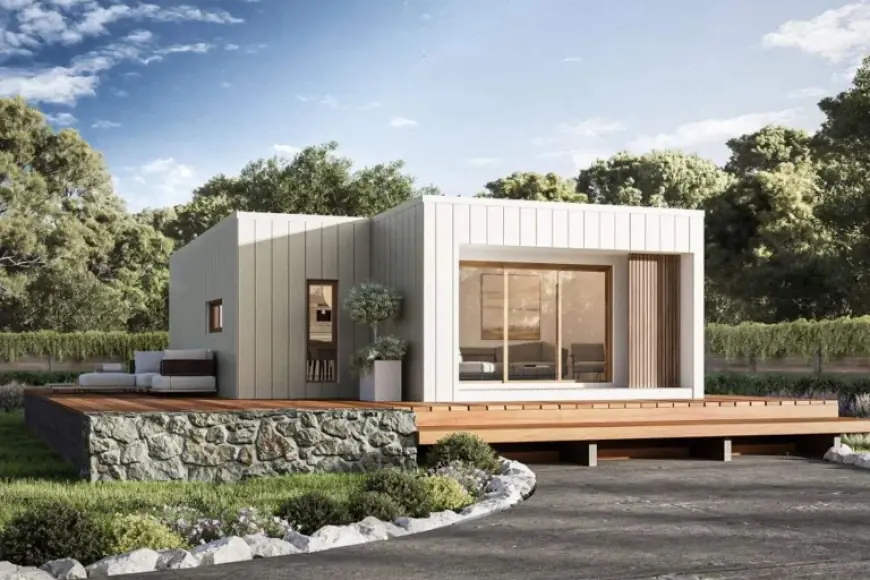
On a quiet suburban street in Hobart, a narrow block that once held a shed now presents a finished, compact dwelling tucked behind a garden. The product that made the build possible is shorthand across conversations: bunnings granny flats — flatpack backyard pods on display, under current size limits but reshaping what homeowners imagine fitting behind their house.
How are Bunnings Granny Flats reshaping backyard housing?
The arrival of commercially sold backyard pods has coincided with a planning change that will lift the allowable floor space for secondary dwellings from 60 square metres to 90 square metres. Housing and Planning Minister Kerry Vincent said the change aims to increase the supply of one- and two-bedroom homes by making two-bedroom layouts feasible where the previous limit usually allowed only a single bedroom when a bathroom and kitchenette were included.
Bunnings has begun selling backyard ‘pod’ houses priced in the context at roughly $26, 100 for a smaller model and $42, 900 for a larger option. Those off-the-shelf units are well under existing limits in the state but have helped normalise the idea of using existing land for additional, self-contained accommodation.
Why is Tasmania changing its granny flat rules?
Policy change is being driven by an acute squeeze in rental supply. One count put the state’s vacancy rate at 0. 3% this year, while another measurement recorded 0. 72% in January. Rents have risen 43% since 2020, and over 5, 300 people are on the social housing waiting list. Minister Kerry Vincent framed the amendment as a practical, low-cost step: “We need to be coming at housing from all angles, ” she said, adding that expanding the size will create more diverse housing stock and give residents greater options.
Vincent described small, self-contained dwellings on existing blocks as “low-hanging fruit” in the push to increase medium-density housing. The planning tweak is one of several moves the government has signalled to relieve pressure on supply, alongside changes aimed at short-stay accommodation and adjustments to first-home buyer incentives noted in the broader context.
What does this mean for renters, owners and the market?
For homeowners, the change opens new choices: larger secondary dwellings make two-bedroom builds viable, increasing the appeal of putting a self-contained unit on the same block as the main house. James Fitzgerald, a property industry expert, argued that high-profile product ranges have helped normalise backyard density and that such off-the-shelf products can appeal to owners seeking extra habitable space or rental income. He wrote that as affordability worsens, owners will look at existing land and ask how to make it work harder, with granny-flat setups already renting in many markets at around $400–$500 per week.
For renters, more supply of one- and two-bedroom units could ease pressure at the margins, although experts note that planning tweaks alone are not a full solution to a tight market. The shift may particularly affect households seeking accessible, lower-cost private rental options in areas where available stock has been scarce.
Who is acting and what are the next steps?
The government is preparing amendments to the planning scheme to increase the allowable size of secondary dwellings from 60 to 90 square metres. Vincent emphasised the planning system’s role in delivering more homes: “By making considered tweaks just like this, we can continue to improve outcomes. ” Market actors — manufacturers and retailers of backyard pods — have already put products into the market that fit within the old limits, and planned rule changes will allow more varied designs to be built without complex approvals.
Industry commentary in the public discussion has urged that relaxing size limits be paired with clear guidance on utility connections, parking and shared access, given that secondary dwellings must remain on the same block and share services with the main house under existing definitions.
Back on that Hobart street, the small backyard dwelling stands like a test case: a compact living room window glows at dusk, a bicycle leans against a fence. The visible change — a tidy, usable two-room home where once there was only lawn and a tool shed — now sits within a new planning horizon. Whether expanded rules and modular products such as bunnings granny flats will move the housing needle enough to ease rents and waiting lists remains to be measured, but for the homeowner who built and for the renter who moves in, the backyard has already become new square metres of possibility.