Supreme Court Justices Debate Trump Emergency Case Handling

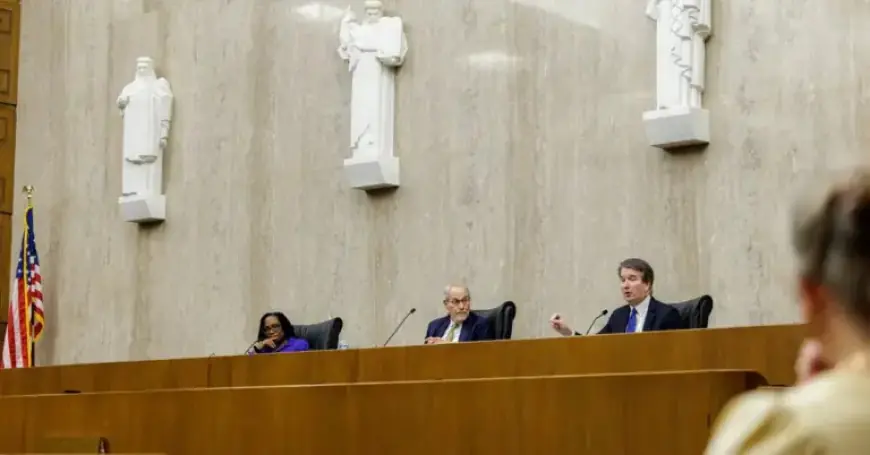
On a recent evening, two Supreme Court Justices engaged in a critical debate concerning the court’s handling of emergency requests from the Trump administration. This rare public exchange took place during an annual lecture series at a federal courthouse in Washington, D.C. Justices Ketanji Brown Jackson, representing the liberal perspective, and Brett M. Kavanaugh, of the conservative supermajority, shared their contrasting views on the issue.
Supreme Court Justices Debate Emergency Case Handling
The discussion revolved around the surge of emergency applications brought forth by President Trump’s second term. These requests aimed at advancing various policies, ranging from immigration reforms to the dismissal of independent agency leaders. The conservative majority of the court has often permitted these initiatives to proceed, even amid ongoing lower court evaluations.
Insights from the Justices
- Justice Kavanaugh asserted that the increasing number of emergency requests correlates with congressional gridlock. He noted that this legislative impasse has led presidents to resort to executive orders, which are then subjected to judicial challenges.
- Kavanaugh highlighted that such emergency requests are not unique to the Trump administration, as they have also increased during President Biden’s term.
- He pointed to a specific emergency appeal related to the abortion drug mifepristone, emphasizing that the Biden administration’s goal was to maintain access, rather than implement new policy.
Justice Jackson’s Counterarguments
Justice Jackson responded sharply to Kavanaugh’s points. She argued that the court’s current approach under the Trump administration deviates from its previous use of emergency orders, which were primarily intended to preserve the status quo. Instead, she contended, the court appears to be endorsing new policies without thorough examination.
Jackson expressed concern that by accepting these emergency applications, the court undermines the traditional judicial process. She labeled this trend as creating “a warped proceeding” and described it as a “real unfortunate problem” for both the court and the country.
Concerns Over the Emergency Docket
Both justices acknowledged the problematic nature of the emergency docket, often referred to as the “shadow docket.” This method allows for rapid decisions without full argumentation or extensive briefings, sometimes within mere days or weeks. Typically, the outcomes reveal limited reasoning and lack clear vote counts.
Justice Kavanaugh shared Jackson’s concerns about the expedited pace of these cases but expressed that the court is obligated to respond to every application. “None of us enjoys this,” he remarked, highlighting the discontent among justices regarding the quick decisions required by the emergency docket.
This poignant exchange between Jackson and Kavanaugh serves as a significant indicator of the internal debate within the Supreme Court regarding its role in handling emergency requests, especially those stemming from presidential actions.