Utah Basketball enters Big 12 tournament as a heavy underdog—yet one late-game collapse still haunts this matchup

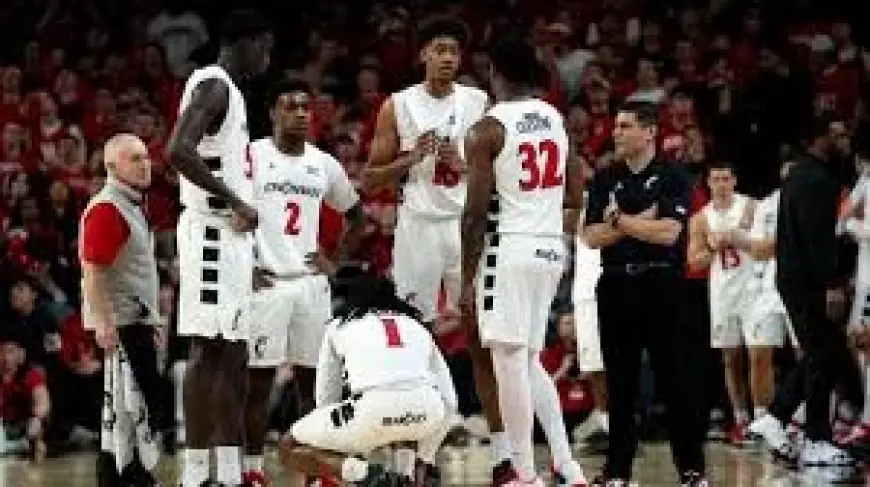
utah basketball arrives in Kansas City with expectations already stripped down to their most basic form: show fight, show structure, and avoid the early-game spirals that have defined a rocky finish to Alex Jensen’s first season. The No. 16 seed Utes (10-21, 2-16) open the Big 12 tournament against No. 9 seed Cincinnati (17-14) at 2: 00 pm ET, and analytics give Utah a slim path forward. Still, the teams’ lone meeting offered a reminder that the gap can narrow—until it suddenly doesn’t.
Utah Basketball vs. Cincinnati: what’s at stake at 2: 00 pm ET in Kansas City
The immediate stakes are simple: survive the first round at T-Mobile Center. But for Utah, the deeper question is what kind of performance can credibly close a season that has tilted from difficult to damaging. Utah enters on a five-game losing streak, with two of its least competitive outings coming last week against Colorado and Baylor. In both games, the Utes surrendered more than 50 first-half points, a pattern that has left them chasing games before halftime rather than managing them.
That context makes Tuesday’s matchup more than just a bracket line. Utah is the No. 16 seed for a reason, and the numbers attached to this game underline that reality: Analytics gives Utah a 19. 1% chance of victory. The Utes are also framed externally as a heavy underdog, and Cincinnati’s season is described as having “its share of ups and downs, ” a reminder that volatility cuts both ways in postseason settings.
Why the end of Jensen’s first season turned “rocky”—and how the Baylor loss exposed the margins
The most telling snapshot of Utah’s current vulnerability came in the 101-76 loss to Baylor last Saturday, when Baylor hit 21 of its first 25 shots and led by as many as 26 points in the first half. Utah trailed 53-33 at the break after a half defined by turnovers and immediate punishment: Baylor converted 10 Utah turnovers into 22 points in the first half, and by the end of the game it was 31 points off 16 turnovers.
Those are not just ugly possessions; they are structural failures that shape how a team plays everything else. When a defense is conceding efficient looks early and an offense is fueling the opponent through giveaways, the tactical playbook shrinks. You stop being able to test lineups, control tempo, or lean into half-court discipline. The game becomes triage.
From a results standpoint, the Baylor loss also cemented a historic low point: it ensured Utah had the worst Big 12 conference finish of the past five seasons, and the Utes’ two conference wins are the fewest since Iowa State went 0-18 in league play in the 2020-21 season. These are facts, not interpretations. The analysis is what they suggest: when the floor drops that far, postseason becomes less about chasing a dream run and more about proving that a basic competitive baseline still exists.
The Cincinnati game Utah let go: a two-minute lesson Utah Basketball cannot ignore
Three weeks ago, Utah had a chance to claim a Big 12 win that slipped away in the game’s final moments. Utah overcame a nine-point first-half deficit and produced one of its better defensive efforts of the season. The Utes led 65-60 with under two minutes remaining—precisely the kind of late-game scenario that can become a foundation point for a struggling team.
Then came the part that lingers. Cincinnati scored the final nine points, flipping a Utah lead into a loss and leaving the Utes with another “almost” that did not count in the standings. That sequence matters now because it clarifies what Utah must solve on Tuesday: not just effort, but closure. Getting to a lead is one skill. Protecting it—especially in the final two minutes—is another.
Jensen’s own words after that loss pointed to a theme he has continued to press. “You got to forget yourself and figure out how you fit into the team and do that job, and we’ll be fine, ” he said. The quote is instructive because it’s not about strategy diagrams; it’s about role acceptance under stress. And stress is exactly what postseason brings.
Jensen’s message: “embarrassing, ” “selfish, ” “disappointing”—and a final chance to show “fire”
In the lead-up to the tournament, Jensen described recent efforts with blunt language—“embarrassing, selfish and disappointing”—while still framing the game as an opportunity. His emphasis has been on how Utah starts games, and why those openings have become decisive. “It’s an opportunity and it’s hard because there’s no excuse to come out and start the games the way we have, ” Jensen said. He added that Utah’s best stretches this year have come when the group started well and sustained that edge “for five or 10 minutes” while continuing to fight rather than “getting down. ”
That insistence on early competitiveness aligns with what the recent losses show: Utah has been falling behind fast, especially in games where it concedes more than 50 points in the first half. When that happens, the margin for error vanishes, and the opponent’s confidence rises. Jensen’s stated expectation is clear: “I expect more from the group and I hope they expect more from themselves. ”
For utah basketball, that becomes the story to watch in Kansas City. Not whether the Utes are favored—they are not. Not whether their path is easy—it is not. But whether they can deliver a first half that keeps the game within a controllable range, avoiding the turnovers and defensive breakdowns that turned recent games into uphill climbs.
With analytics projecting a steep challenge and a prior meeting that turned on one late-game swing, Tuesday offers a narrow but vivid test: can utah basketball turn “opportunity” into execution when the last two minutes arrive again?