Pokemon Pokopia Game: A Ditto’s Quiet Work to Rebuild a Lost Town

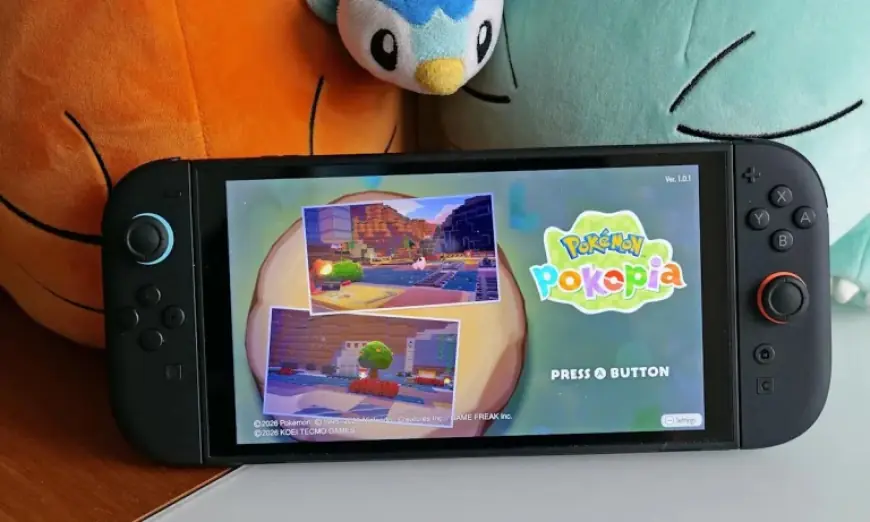
Under a sky streaked with pixelated clouds, a shapeshifting Ditto kneels in a patch of cracked earth and packs soil around a sapling. That small, tactile action — digging, placing, arranging — is the first of many where Pokemon Pokopia Game asks players to repair a place that people once loved and then left behind.
What is Pokemon Pokopia Game?
Pokemon Pokopia Game is a spin-off built for the Nintendo Switch 2 that casts players as a Ditto awakening in a half-demolished, block-based world. Working alongside other Pokémon, the player restores habitats, reconstructs paths and homes, and slowly brings a deserted town back to life. The game blends town-building, life-sim comforts and creative construction: the environment is made of blocks that can be destroyed and rearranged to shape landscapes and solve traversal problems.
How does the game feel to play?
The pace is unhurried and designed to reward patience. Players learn new talents from returning Pokémon — watering grass, digging up weeds, punching rocks — and these skills expand what the player can remake. The work is described as soothing and methodical; it mixes decorating and socializing with busywork drawn from other block-based and life-sim titles. As new zones open, the project grows: the world becomes vast and unexpectedly complex, with promises of hundreds of Pokémon to catalog and many hours of content.
Why are reviewers highlighting charm and community?
Two core strengths rise from the coverage: character and systems. The Pokémon themselves bring warmth — their personalities emerge in small interactions, from a brooding Charizard to a regal Vespiquen and an especially genial Tangrowth, who guides players through daily tasks. Townsfolk express thanks and occasionally give presents, turning routine repairs into moments of connection. Mechanically, the block-based construction invites creative problem solving similar to Minecraft and Dragon Quest Builders, while the habitat design and creature management evoke Animal Crossing and Stardew Valley.
What tensions and limits do players notice?
Even admirers flag a few deliberate slow points. A real-time building system lets Pokémon continue work while the player is away, but larger projects can require a full in-game day to complete, which some find slows momentum. The balance between crafting, exploring and waiting shapes the rhythm: for players who relish long-form, 50-plus-hour engagement, the patience may be part of the appeal; for those chasing a faster pace, the wait can feel like a brake on progress.
Who made the game and what flavors does it borrow?
Development credits include Game Freak and Omega Force working with Nintendo, and co-development influence from Bandai Namco appears in the game’s builders-style DNA. Influence from varied titles is explicit in the design: block-based construction, life-sim decorating and creature-driven systems are all threaded together to produce a game that deliberately steps away from traditional series battle-and-catch rhythms.
The result is a title that uses familiar Pokémon assets — cuteness, nostalgic associations and a broad creature roster — while offering an experience that critics find refreshingly different. The fusion of community-building, exploration and construction creates a cozy, wholesome life sim that rewards careful attention.
Back where the scene began, the Ditto finishes packing soil around the sapling. A small group of Pokémon gathers nearby, chatting in ways the player can almost understand. The sapling stands as a quiet promise: repair is incremental, the town will not be whole overnight, but with steady hands and patient play a place that once was abandoned can slowly become communal again.