Jaquan Brisker and the Bears’ Safety Gamble: 3 Signals Pointing to a Kevin Byard III Return

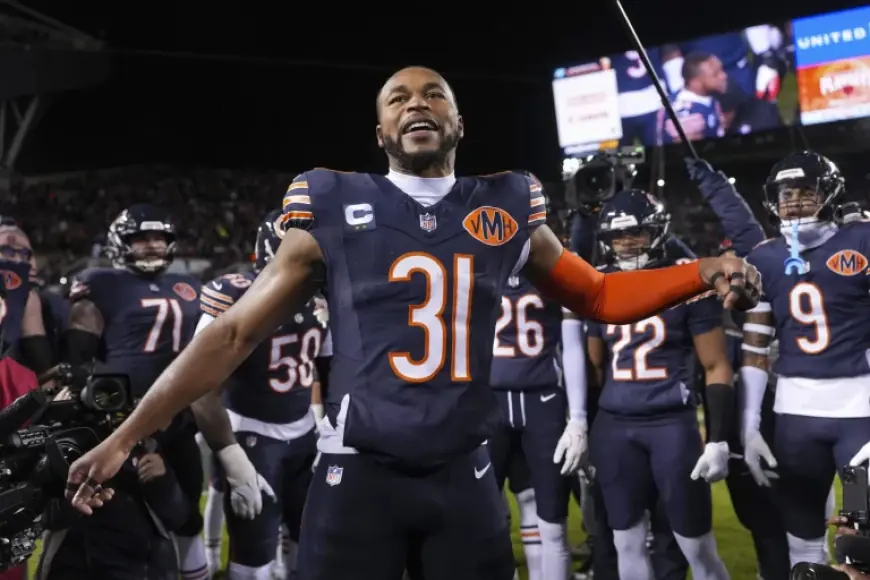
With free agency approaching, the Chicago Bears’ safety picture is sharpening around one veteran name—and that clarity may carry long-term consequences for jaquan brisker. A “70-30” expectation that Kevin Byard III returns has moved the conversation from whether Chicago can keep a top performer to how the roster could be structured if a rookie safety is added alongside him. The key tension is no longer just cap math; it’s the timeline of the secondary and what the front office is willing to commit to beyond the next season.
Kevin Byard III’s return odds rise as free agency nears
A report attributed to ’s David Kaplan framed the likelihood of Kevin Byard III returning to Chicago as “70-30, ” adding that both sides are working toward a deal described as fair. That update lands at a moment when teams are preparing for the legal tampering window to open Monday, a period when clubs can speak to free agents from other teams but can continue negotiating with their own players beforehand.
There has also been recent framing that Byard’s market “picked up, ” shifting the offseason assumption that he would simply re-sign. One view circulating around his market included a potential price point north of $10 million, a number that would naturally pressure any team’s decision-making at safety. Another factor floated in the discussion is the strong showing of the safety class at the NFL Combine, which could push teams to reconsider how much to spend on veteran safeties in free agency.
Separately, FOX Sports’ Greg Auman predicted the Bears would re-sign Byard, describing him as the 48th-ranked free agent on his list. In Auman’s assessment, Byard set the tone for a defense built on takeaways, making a shorter-term deal a reasonable outcome even as roster continuity becomes harder to maintain.
What the Byard decision could mean for jaquan brisker
The most consequential part of the developing story is not merely whether Byard returns—it’s what kind of safety room Chicago is preparing to build if he does. Kaplan suggested a potential approach in which the Bears pair Byard with a rookie safety, a construction that would shape snap distribution and long-term planning at the position.
That’s where jaquan brisker enters the conversation in a more pointed way. Kaplan’s comment extended beyond 2025 roster mechanics, implying that a Byard-rookie pairing “would mean” jaquan brisker could be elsewhere in 2026. The implication is a roadmap: retain the veteran stabilizer, draft the succession plan, and potentially accept a future departure rather than making multiple expensive commitments in the same position group.
It’s important to separate fact from inference here. The confirmed datapoints are the reported “70-30” expectation of a Byard return and the suggestion of a rookie pairing. The roster outcome for jaquan brisker in 2026 remains speculative within that framework, but the logic is coherent: teams often allocate resources to preserve a defense’s identity while controlling costs, and a veteran-plus-rookie model is one of the clearest ways to do it.
Chicago’s cap context adds another layer. The Bears are cited as having a little more than $26. 5 million in cap space this season, which provides room to make a Byard deal workable in the near term. But cap space in isolation doesn’t answer the roster-building question; it simply enables options. The strategic choice is whether the Bears want to keep their secondary “intact, ” as Auman put it, or whether they are already preparing for a reshuffle that would eventually place jaquan brisker on the outside of the long-term plan.
The numbers behind the leverage—and the roster philosophy
Byard’s production, as described in the available reporting, is the kind that can reset negotiations. He played all 17 games and posted 93 total tackles (61 solo, 32 assisted), four tackles for loss, eight pass deflections, and an NFL-leading seven interceptions. Auman’s write-up also described him as earning his third Pro Bowl and third first-team All-Pro honor, and noted a prior season in which he led the league in interceptions.
Those details matter because they explain why a “simple” re-signing can quickly become complicated. A player with league-leading takeaway production can invite outside interest, which in turn forces a team to decide whether to meet a rising price or pivot to the draft. If the Combine safety class is viewed as strong, that may reduce urgency to overspend in free agency at the position—but it can also increase a team’s confidence in pairing a veteran with a rookie and moving forward.
The deal history mentioned in the reporting also frames expectations. Byard previously went to Chicago on a two-year, $15 million deal. The same discussion suggested he might get “a bit less” now due to age, but still remain valuable enough that a one-year arrangement could make sense for both sides. If that is the direction negotiations take, it would align with a roster philosophy focused on short-term competitiveness while keeping longer-term flexibility—precisely the environment in which future questions about jaquan brisker become more than idle talk.
As the Bears move toward Monday’s opening of talks with external free agents, the Byard decision looks less like a standalone contract and more like a test of identity: prioritize continuity and takeaways now, or start retooling the safety room immediately. If Chicago lands on a veteran-plus-rookie blueprint, the next big question is straightforward but unresolved—where does that leave jaquan brisker when 2026 planning turns into 2026 decisions?