Justin Fields and the Browns’ QB Fix: A Solution That Could Deepen the Problem

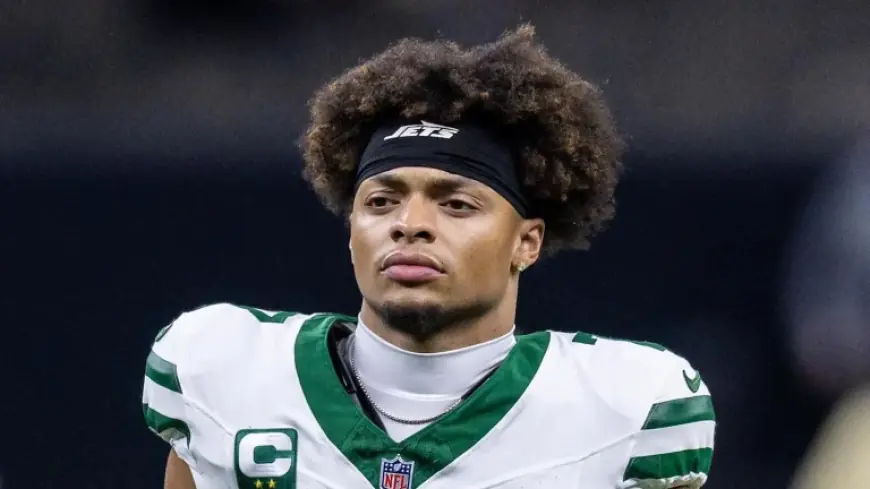
As free agency opens this week, the Cleveland Browns’ quarterback dilemma has produced a jarring idea: adding justin fields to a room already described as crowded and uncertain, a move framed by some as affordable competition and by others as a symbol of how dire the situation has become.
Why is Justin Fields being discussed for Cleveland now?
Cleveland’s current quarterback room is depicted as an acute problem heading into the new league year: a “broken and untradeable” Deshaun Watson alongside Shedeur Sanders and Dillon Gabriel, with last season’s rookie output characterized as among the worst quarterback play by rookies in the past 25 years. The same framing suggests the Browns’ options are limited: the draft is one route, free agency another, and neither path is presented as rich with obvious answers.
Within that setting, a projection that places justin fields in Cleveland lands as both a practical suggestion and an insult, depending on the lens. The rationale offered for the fit centers on price and traits: Fields “won’t cost much, ” and his mobility is positioned as a weapon that head coach Todd Monken could maximize. The argument also leans on familiarity and local appeal, noting Fields’ popularity in Ohio because of his time as a Buckeye.
But the same discussion contains the counterweight: Fields is described as struggling late in the season, including a portrayal that he “seemed scared to throw the ball” and had trouble working through progressions. That combination—low cost, athletic upside, and recent passing concerns—defines the tension behind the idea.
What does the Browns’ quarterback room look like in this moment?
The Browns are presented as entering the new league year with a cluster of unsettled options rather than a clear starter. Watson is characterized as unavailable to move and physically compromised. Sanders is described as showing flashes but being highly inconsistent, with a stat line cited of seven touchdowns and 10 interceptions, and a ranking of 41st of 42 eligible quarterbacks in EPA per attempt. Gabriel is described with seven touchdowns and two interceptions, but with a ranking of 40th in EPA per attempt and an off-target throw percentage of 13. 5 percent that ranked 35th, accompanied by a blunt assessment that he does not look like a starting-caliber quarterback.
That baseline matters because the suggested approach—adding another quarterback (or two)—risks turning a problem of quality into a problem of quantity. The proposal is framed as a “free-for-all, ” a competition model that stacks players in the room rather than resolving the central question of who can reliably execute the offense.
The draft is floated as a longer-term mechanism Cleveland once eyed for 2026, including the idea that the Browns could have two first-round selections. Yet even that path is portrayed as uncertain, with the class characterized as carrying issues across the board, despite a note that Carson Beck could be worth monitoring because Monken is familiar with him from their time together at Georgia.
If not justin fields, what other direction is emerging in free agency?
Another veteran name introduced into the Browns’ orbit is Kyler Murray, after the Arizona Cardinals announced they would release him at the start of the league year. The Browns are included among teams that could be interested in a bridge quarterback, with the caveat that everything depends on how Monken views Sanders, Watson, and Gabriel. If Monken believes a starter is already on the roster, external options become irrelevant; if not, Murray and others become plausible.
The Murray case is presented with a clearer schematic argument than the Fields case: Cleveland’s offensive line is described as struggling, and Murray’s mobility and deep ball are framed as assets. The financial angle is also emphasized: Murray could be an inexpensive signing because the Cardinals would remain responsible for a significant portion of guaranteed money.
Yet the Murray scenario is not painted as a clean fix either. Concerns are noted about durability following a foot injury in 2025 and a torn ACL in 2023, and it is stated that his tenure in Arizona had ups and downs and that success in Cleveland would be far from guaranteed. Even if Murray is available, the Browns’ room is still described as “very crowded, ” raising the prospect that Cleveland may choose to focus on players already on the roster instead of adding another variable.
What’s the contradiction underneath these proposals?
Verified fact from the provided context: Cleveland is described as facing an especially acute quarterback problem, with a current room consisting of Watson, Sanders, and Gabriel, while free agency and the draft are both portrayed as offering imperfect answers. A specific projection places Fields in Cleveland, justified by cost and mobility, while also acknowledging severe late-season struggles as a passer.
Informed analysis based on those stated facts: The contradiction is that Cleveland’s quarterback issue is framed as a shortage of reliable performance, but the proposed remedies risk becoming exercises in accumulation rather than resolution. Adding justin fields is presented not as a proven upgrade, but as a low-cost bet that could intensify uncertainty—particularly if the room already contains multiple players described as inconsistent or not starting-caliber. The same pattern appears in the Murray discussion: the upside is clear in theory, but the durability concerns and lack of guarantees underscore how thin the margin for error is.
In that light, the headline question isn’t simply which name Cleveland might add. It’s whether the Browns can avoid repeating a cycle where the next move is defensible on paper—cheap, mobile, familiar—while still failing to provide the stability the roster needs.
What should fans and decision-makers demand next?
Verified fact from the provided context: Multiple teams are described as searching for quarterback help, and Cleveland is positioned as one of several franchises picking through an increasingly “depressing” list of potential options. Cleveland’s decision-making is also framed as dependent on Todd Monken’s evaluation of the quarterbacks already in-house.
Accountability-centered analysis grounded in the context: The Browns’ immediate obligation is clarity: a transparent internal evaluation standard that explains why any addition is necessary and what, specifically, that player is expected to do better than the current options. If the approach is “competition, ” it should still come with defined criteria for winning the job and a plan that avoids turning the season into a rotating audition.
In a quarterback market depicted as unforgiving and uncertain, the Browns can’t afford moves that merely create the appearance of action. If Cleveland chooses to add justin fields, the decision will be judged less on the novelty of the name and more on whether it meaningfully improves a room already characterized as one of the league’s most unstable.