Doubs Free Agency Update: 3 Teams Watching as the Market Finally Wakes Up

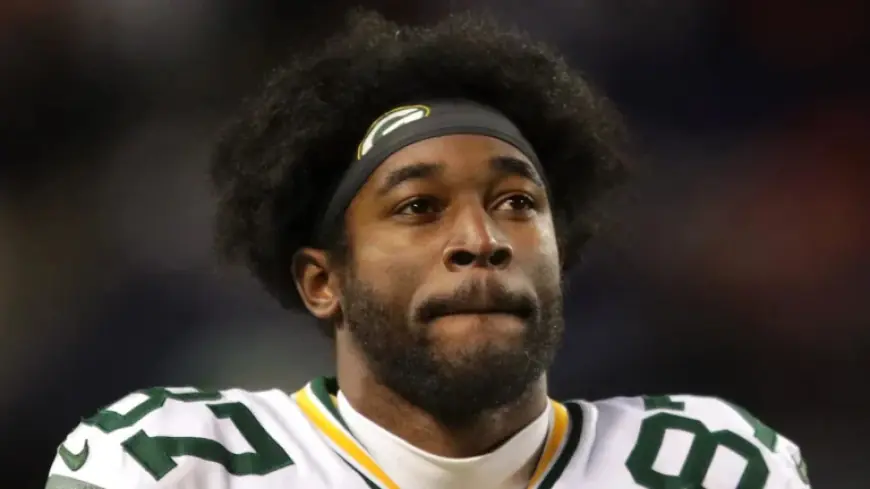
At 7: 00 am ET, one of the clearest signals of urgency in this wide receiver market wasn’t a contract announcement—it was a blunt public nudge from a former NFL quarterback. Romeo doubs, quiet through the earliest phase of the legal tampering period, is now framed as arguably the best receiver still available after spending his career to date with the Green Bay Packers. The gap between the muted opening and the suddenly louder interest is the story: it hints at leverage, timing, and a bidding lane that could form fast.
Why doubs is suddenly the name teams are circling
Early in the legal tampering period, there “wasn’t much noise” around Romeo doubs. But by Tuesday morning ET, the tone shifted as analyst Dan Orlovsky—identified as a former NFL quarterback—posted on X before 7 a. m., “Someone needs to sign Doubs today early. ” That kind of push matters because it frames doubs as a player whose value is being recognized publicly even as the market waits for the first mover.
The underlying context is straightforward: doubs is on the market, and negotiations with Green Bay did not result in a new deal. Jeremy Fowler of wrote that doubs plans to hit the market, adding that he’ll have several suitors and is viewed by some evaluators as the best all-around receiver in the group. Those two ideas together—no return to Green Bay expected, plus a perceived “best all-around” label—create the conditions for a sharper, more competitive courtship than the first day’s quiet would suggest.
Doubs, the Patriots, and the supply problem at wide receiver
One of the clearest team fits to emerge is New England. Mark Daniels, identified as being with Mass Live, stated the Patriots “checked in on and shown interest” in Romeo doubs, while noting it remains unclear if a deal will get done. The timing of that interest is amplified by the Patriots’ own roster reality described in the context: the team has a wide receiver problem and had not addressed it in the early hours of free agency.
The same context also notes multiple receivers “came off the board, ” including Mike Evans, Alec Pierce, and Jalen Nailor, and that nothing new had materialized on a “dream trade” for A. J. Brown. That shrinking supply is a crucial backdrop. When alternatives disappear quickly, the remaining options can gain negotiating power—not necessarily because they changed, but because the market did.
Production-wise, the context provides a measured profile. doubs has posted three 600-yard seasons and is coming off a career-high 724-yard campaign. In 2025, he caught 55 passes on 85 targets for 724 yards and six touchdowns. The numbers are presented as not “eye-opening, ” but they are paired with an important qualifier: he was working within a crowded Packers receiver room that included Christian Watson, Jayden Reed, Dontayvion Wicks, and Matthew Golden. The implication is that raw totals may not fully reflect utility, especially for teams that can offer a clearer target hierarchy.
In New England, the context suggests exactly that. As currently constructed, doubs would project as a top option because the Patriots have “promising but unproven” players after cutting ties with Stefon Diggs. That creates a direct path to role clarity—one of the strongest non-financial selling points in free agency.
The bidding tension: projections, cap constraints, and who can move first
Money is the hinge point, and even within the provided context, the valuation picture is not singular. Spotrac projects a four-year, $48 million deal. At the same time, the same context floats skepticism that the number lands there, suggesting he “could be closer to a $15 million annual average. ” Another view inside the context pegs him nearer a $12 million projection rather than the $15–20 million range. The common thread is less the precise figure and more the spread: the market is still discovering the price.
Miami illustrates how that spread interacts with team constraints. The context frames doubs as “the perfect complement” to Jaylen Waddle, while also stating “it isn’t going to happen, ” tying the improbability to Miami’s cap situation. The Dolphins would need to get “creative” with signing bonus money and guarantees that extend into next season to make a move. This is the ripple effect of cap stress: it can remove a logical football fit from the realistic bidder pool, narrowing competition and potentially reshaping negotiations elsewhere.
There are also teams identified as monitoring the market closely. Fowler’s note lists the Patriots, Commanders, and Titans as “closely watching” doubs, along with the 49ers. But the same context adds that the 49ers “probably are out” after signing Mike Evans. That matters because it clarifies something often obscured in free agency chatter: not every interested team remains interested once a single high-profile signing changes its depth chart calculus.
Expert perspectives: what the public signals actually mean
Dan Orlovsky, analyst and former NFL quarterback, offered the most direct framing: “Someone needs to sign Doubs today early. ” It’s not a contract detail, but it is a public evaluation—an endorsement that positions doubs as a player teams should not allow to linger.
Jeremy Fowler of supplied the most concrete market snapshot: doubs plans to hit the market after talks with Green Bay did not produce a new deal; multiple teams are watching; and “some evaluators” consider him the best all-around receiver in the group. That language, even without naming the evaluators, is consequential because it describes a reputation that can shape how teams prioritize their remaining board.
Mark Daniels of Mass Live adds the specific point of contact: New England has checked in. In free agency, that “checked in” phrasing can mean anything from exploratory to aggressive, but in a market where other receivers have already signed, even exploratory contact can become actionable quickly if a team feels the supply tightening.
What happens next—and what to watch today
The key inflection is timing. doubs entered Tuesday with the label of being among the best receivers still available, while at least one high-visibility voice pushed for an early signing. The facts in the context also point to role opportunity: he has never had to be a true No. 1 receiver in Green Bay, yet was often described as Jordan Love’s most reliable target over recent seasons. Teams needing a clear top option or a dependable complementary piece have reason to see him as plug-and-play.
In practical terms, watch for two forces to collide: teams with acute need (New England is explicitly framed that way) and teams with the cap flexibility to move without complex structuring (Miami is framed as the opposite). If a bidder with flexibility steps in decisively, doubs could move from “quiet” to signed quickly. If not, the market could continue to test whether the $48 million projection, the $15 million average possibility, or the $12 million expectation is the true clearing price.
For now, the most revealing fact may be the simplest: multiple teams are watching, Green Bay is not expected to be the landing spot, and the market has finally begun to treat doubs like a primary remaining piece rather than an afterthought. The question is whether the next decision is driven by football fit—or by which front office is willing to set the price first for doubs.