A’shawn Robinson release: 3 cap-and-roster signals behind Carolina’s defensive line reset

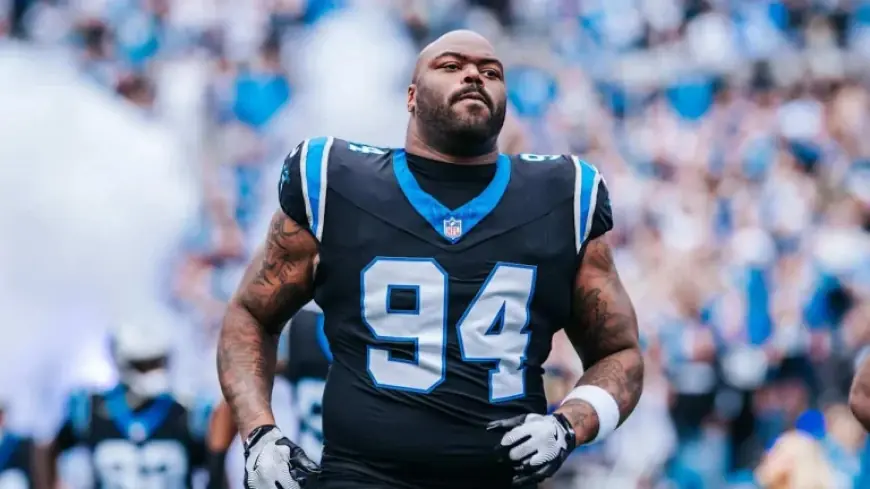
The Panthers’ decision to move on from a’shawn robinson is being framed as more than a routine veteran cut: it is a deliberate attempt to get younger on the defensive line while creating cap room on Tuesday. The transaction ends a two-season run in Carolina that included 32 starts, 145 tackles, and 8. 0 sacks, and it comes as the club points to improved depth up front with the return of Derrick Brown and multiple new additions.
Why the Panthers moved now: cap room, deadlines, and a crowded interior
Carolina announced Tuesday that it released veteran defensive tackle A’Shawn Robinson, who had one year remaining on his contract. The move creates “a little more than $10 million” in cap space for the coming season while leaving “a little over $2 million” in dead money, and it also saves $10. 5 million against the cap for the 2026 season. The timing matters: the club has until 4: 00 pm ET Wednesday to get under the cap.
In the team’s own explanation, the football logic runs alongside the financial logic. The Panthers described the move as a way to get younger on the defensive line and create cap room, while also emphasizing that the front is deeper than it has been “in some time. ” That depth is tied to Derrick Brown’s return, plus free agent acquisitions Tershawn Wharton and Bobby Brown III, and the addition of fifth-round rookie Cam Jackson.
In pure roster terms, Robinson’s exit clarifies the interior rotation. Derrick Brown, Tershawn Wharton, Bobby Brown, and Cam Jackson remain on hand at defensive tackle, creating a more defined group after a season in which injuries reshaped responsibilities.
A’shawn Robinson’s on-field value vs. the economics of the position
Robinson’s production in Carolina was substantial. Over the past two seasons he started 32 games, and across 33 games played he totaled 145 tackles, eight sacks, a forced fumble, and a fumble recovery. He also recorded three tackles in the playoffs last season. Those numbers underline why the decision is not simply about performance.
The clearest performance inflection point came in 2024, when Derrick Brown was injured and missed 16 games. Robinson “carried a lot of weight” in that stretch, responding with a career-high 80 tackles and 5. 5 sacks. In other words, his most impactful usage coincided with a temporary emergency at the position—an important distinction when a team evaluates the cost of veteran snaps versus the opportunity to reallocate resources.
Analysis: Carolina’s current depth reduces the likelihood that Robinson’s 2024 workload would be repeated under normal circumstances. With Brown returning and the team adding both Wharton and Bobby Brown III, the pathway to high-volume snaps narrows, making the cap savings more compelling. This is the roster-building tension embedded in the move: a proven, high-usage veteran becomes harder to justify financially when the role shifts from necessity to optionality.
There is also a transactional cost. Cutting a veteran means the team “gets nothing” in return, a reality that can sting when the player is viewed as one of the stronger interior defensive line options on a market described as depleted. The same set of dynamics also explains why a trade did not materialize: when the league expects a release, front offices can wait to pursue a player without surrendering assets.
Ripple effects: what it signals for roster priorities and the league market
Carolina’s cap decision sits alongside other roster investments. The team’s need to create space became more pronounced after signing Devin Lloyd and Jaelan Phillips, with Phillips at $30 million per year and Lloyd at $15 million. Those figures “dwarf” the cap space the Panthers came in with, creating pressure for consequential moves rather than incremental ones.
Analysis: the release functions like a budget transfer. The Panthers are effectively converting a veteran interior defensive line contract into flexibility that supports other defender acquisitions, even if it introduces a new question on the depth chart. The team is betting it can cover the loss with the returning Derrick Brown and the added bodies—Wharton, Bobby Brown III, and Cam Jackson—while using the freed room to sustain broader roster construction.
For Robinson, the outcome is straightforward: he immediately becomes part of the interior defensive line free-agent pool after a two-season stint in Carolina and a 10-season career that has included time with the Lions, Rams, and Giants. If the market is as thin as described, a’shawn robinson enters it with recent production and a demonstrated ability to absorb starter-level volume when injuries strike.
The broader league effect is more subtle. When recognizable veterans are released for cap structure reasons rather than purely on-field decline, it reinforces a trend: teams will increasingly accept the pain of losing a good player if the money can be redeployed into multiple needs or into top-of-market contracts elsewhere. That reality also reduces trade leverage; other teams can simply wait out the cut process, knowing the player may be available without compensation.
As Carolina turns the page, the decision leaves a final, open-ended assessment. The Panthers believe they are deeper up front than they have been in some time, and the cap math is clear, but the season will test whether that depth can replicate the stabilizing presence Robinson provided when Derrick Brown was unavailable.
Looking ahead, the core question is less about what a’shawn robinson was, and more about what Carolina’s defensive tackle rotation becomes now that the club has chosen youth, depth, and cap flexibility over veteran certainty.