Pacheco and the Chiefs’ urgent running back pivot as free agency opens

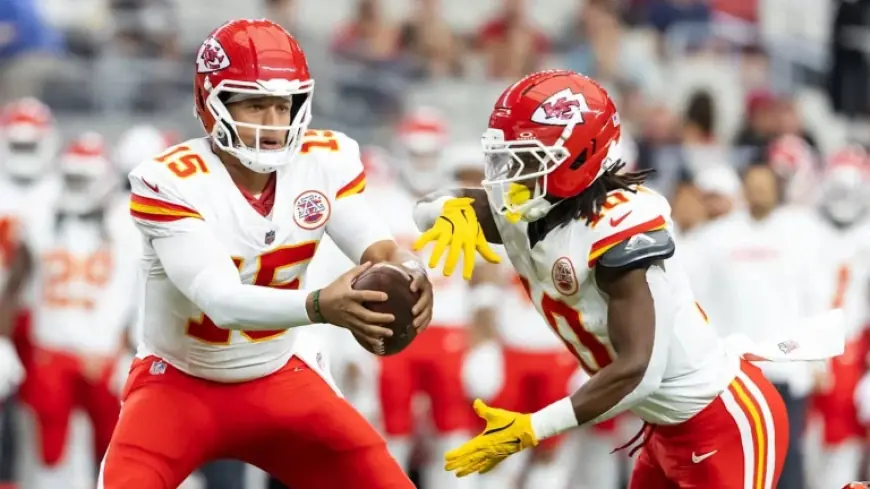
pacheco sits at the center of a growing Kansas City Chiefs roster question as the legal tampering window opens at 12 p. m. ET on Monday: spend aggressively now on a difference-making running back, or risk getting boxed into a thinner, pricier market.
What happens when the running back market tightens before 12 p. m. ET?
The Chiefs’ need to revamp the running back position has been framed as one of the most pressing offseason priorities. One thread running through the current moment is that the market may not cooperate with Kansas City’s timing or budget. Jeremy Fowler, ’s Senior National NFL Writer, shared what he is hearing around the league about how the running back market could shake out, including that teams are trying to manipulate the market in their favor.
That matters because Kansas City is being linked to a price range for a backfield addition. Jonathan Jones, identified as a CBS NFL Insider, said earlier last week that the Chiefs are interested in signing a running back in the “8 million per year area. ” The same overall dynamic described by Fowler suggests that figure could be more aspiration than guarantee once negotiations accelerate.
Fowler also laid out which teams are interested in Kenneth Walker III and Travis Etienne Jr., two players Kansas City could inquire about when the legal tampering window opens. The issue for the Chiefs is not simply access to the conversation, but the cost and the leverage held by competitors that can turn a straightforward signing into a bidding environment.
What if division competition forces Kansas City into a bidding war?
One pressure point highlighted in the latest free-agent framing is the AFC West itself. The Denver Broncos were described as having around $24 million to spend this offseason, and head coach Sean Payton has said running back is a focal point heading into next season. With Bo Nix entering the third year of his rookie deal and not many other holes to address, Denver could be ultra-aggressive.
That matters to Kansas City because the same set of circumstances can raise the price on players the Chiefs might view as clean fits. Etienne, in particular, was characterized as an ideal fit in the Chiefs’ offense, but the competition within the division to sign him could cause the 27-year-old’s price tag to rise sharply. If Denver pushes, Kansas City’s decision becomes less about “should we add a running back?” and more about “how high can we responsibly go before we change the plan?”
The roster-building challenge is compounded by the stated desire to address running back before the draft. If premium targets become too expensive, the Chiefs could be pushed toward second-tier options such as Rico Dowdle or Tyler Allgeier—described as formidable players, but not necessarily the monumental addition the backfield has been framed as needing.
What happens when the Chiefs weigh a veteran add against a high-cost draft swing?
Kansas City’s decision tree is being pulled in two directions: immediate veteran help in free agency, or a major investment in a rookie. Brett Veach acknowledged at the NFL Combine that getting more explosive at running back is a major priority this offseason, and the idea of waiting until the draft to solve the problem was framed as potentially too big of a gamble.
At the same time, the draft path comes with its own constraints. Jeremiyah Love was described as a potential perfect solution, yet there is uncertainty about whether he would still be available at pick No. 9. The possibility of trading up into the top five was mentioned, but that raises the cost even further in picks and commitment.
Free agency provides an alternative, and at least one recently released veteran has been floated as a fit. Emory Hunt of CBS Sports argued the Chiefs could make a run at Aaron Jones, the 31-year-old running back recently released by the Minnesota Vikings, pointing to his vision as a trait that can remain effective even as a player ages. Jones’ career production was also cited: 7, 626 rushing yards and 52 touchdowns. Ed Easton Jr., identified as part of ’s Chiefs Wire, also called Jones an “ideal” addition, citing his 2024 season line with Minnesota: 132 carries for 548 yards and three touchdowns in 12 games.
These evaluations tie back to Kansas City’s 2025 problem statement: the running game lacked explosive plays all season due to injuries, and big plays were rare at the position. Kareem Hunt and Isiah Pacheco led the team in rushing, but each finished under 1, 000 yards.
For the Chiefs, that places pacheco within a broader roster calculus. The question is less about any single player’s value in isolation and more about what kind of backfield mix best supports an offense that has been described as becoming too predictable.
What if the urgency is driven by protecting Mahomes during recovery?
The push to upgrade the backfield is not just about balance. It has also been framed as a way to reduce the burden on Patrick Mahomes. The Chiefs were described as needing to give him a “real threat in the backfield that defenses have to account for, ” with the added context that Mahomes is expected to be recovering from major knee surgery and the passing game’s production has dropped off.
In that view, a credible running threat becomes a practical tool for risk management—both for the quarterback’s recovery workload and for the offense’s overall efficiency. That helps explain why the team’s leadership has placed emphasis on “explosive” traits at the position and why a pre-draft solution has been presented as preferable, even if it becomes expensive.
Still, the Chiefs’ path is not clean. If premium options create a bidding war, the front office may be forced to choose between paying a premium, pivoting to the second tier, or pushing more of the solution into the draft—each with different opportunity costs and levels of uncertainty.
What comes next for Kansas City as decisions accelerate?
With the legal tampering window opening at 12 p. m. ET on Monday, the Chiefs’ running back plan is moving from concept to execution. The market dynamics described by Fowler, the suggested budget zone mentioned by Jones, the division spending capacity described for Denver, and Veach’s stated priority for explosiveness all point to a narrow corridor where Kansas City needs both conviction and flexibility.
The most immediate indicator will be whether the Chiefs push early for a top option, or whether they wait and risk a smaller set of outcomes. If the price climbs on targets viewed as ideal fits, the Chiefs may have to decide how much they are willing to pay to avoid settling for a lesser addition. The underlying theme remains the same: in a year when the rushing attack was described as pedestrian, the backfield is no longer a spot for half-measures, and pacheco is part of the urgency shaping the Chiefs’ next move.