Arizona State Basketball reveals a telling starting five ahead of Baylor in a season-defining Big 12 opener

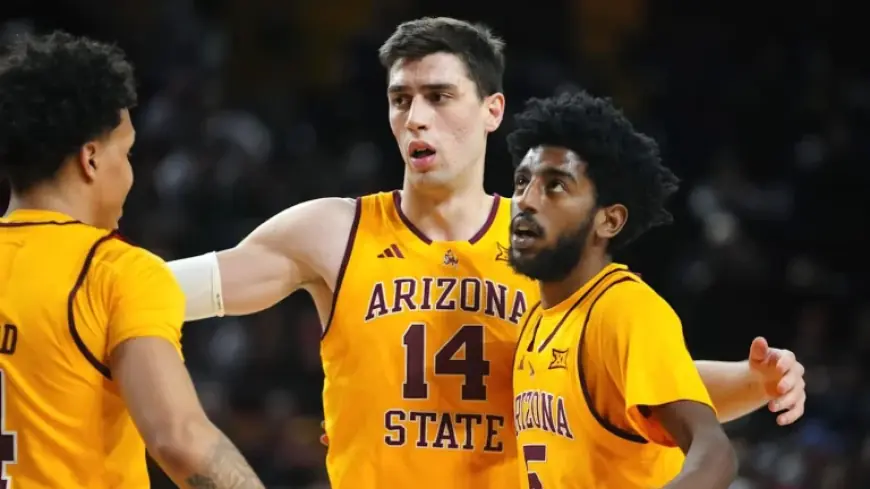
Arizona State basketball stepped into Tuesday morning with its season hanging in the balance, and the clearest signal of urgency arrived before the opening tip: head coach Bobby Hurley’s chosen starting lineup for the Big 12 tournament opener against Baylor in Kansas City, Missouri. With both teams entering at 16-15 overall, the stakes are explicit, but the subtext is sharper—individual motivation, recent offensive turbulence, and the need to withstand Baylor’s scoring punch all converge into one decision about who starts and why.
Why this opener matters right now
The setting is round one of the Big 12 tournament, and the matchup is framed as what could be Arizona State’s final stand of the 2025-26 season. The Sun Devils arrive at 16-15 (7-11 Big 12) after an 86-65 loss to Iowa State on Saturday that featured a “disappointing final 15 minutes of action. ” Baylor is also 16-15 (6-12 Big 12), but its regular-season finish was emphatic: a 101-75 win over Utah.
Beyond form, there is also a recent precedent. Baylor previously beat Arizona State 73-68 in Waco on February 21, turning Tuesday into a direct opportunity for a quick postseason response. The context supplied around this game also points to a broader possibility: the matchup is described as potentially featuring “two teams that have the ability to make a surprise run during this week. ” That possibility adds weight to every rotation choice, beginning with the first five on the floor.
Arizona State Basketball starting lineup: the hidden messages in Hurley’s choices
Starting lineups are often treated as routine, yet in a one-and-done environment they function more like a thesis statement. The available context highlights several specific pressures embedded in the Sun Devils’ group, beginning with the backcourt.
Odum’s edge: The star point guard enters with “a little extra motivation, ” having been “snubbed from any consideration” for the All-Big 12 team. The tangible production described is significant: Odum ranked top 15 in scoring and top three in assists per game in the regular season. The implication is not merely that Odum can score and distribute, but that the offense is expected to flow through him under pressure. In a tournament opener that could decide whether the season continues, Arizona State basketball is leaning into a player whose personal grievance and statistical profile align with the demands of a high-stakes game.
Meeusen’s two-way necessity: Meeusen is described as enduring “a rough stretch on the offensive side of the ball, ” yet still “one of the best defenders on the perimeter in the Big 12 in a quiet manner. ” That dual description matters: it signals that the staff values defensive stability even when shooting comes and goes. The context makes the matchup logic explicit—Meeusen will be “vital, ” particularly “as a shooter and defensive playmaker against Baylor’s potent scoring attack. ” In other words, the lineup choice prioritizes someone who can influence possessions on both ends, and who might swing the game not only with points, but with stops, deflections, and timely shot-making.
Grbovic and Trouet: cohesion, shooting moments, and rebounding leverage: Grbovic’s recent offensive struggles are acknowledged, but the forward “connects well with the rest of this unit” and has “had a tendency to make big shots this season. ” That combination—fit plus timely shot history—suggests a preference for continuity and situational trust over recent scoring form. Trouet, meanwhile, is described as “one of the most unheralded players” on the roster and “crucial to giving the team a chance to win the rebounding battle. ” The message is straightforward: Arizona State basketball sees the rebounding margin as a swing factor, and the starting group is designed to address it from the first possession.
Diop’s unfinished line—and what it still signals: The context notes that Diop was “snubbed from All-Big 12 honors much like Odum was, ” and that the freshman center ranks inside the top 25 nationally, though the specific category is cut off in the supplied text. What can be stated confidently is limited: Diop is a freshman center, he was also left out of All-Big 12 recognition, and he carries a national top-25 marker in at least one area. Even without the missing detail, the larger point is clear—multiple starters enter the game carrying perceived slights, a psychological ingredient that can sharpen focus in elimination settings.
The Baylor rematch: offense, rebounding, and the thin margin between ending and advancing
This game is not presented as a mismatch. Both teams share the same overall record, and each has shown extremes in its recent results—Arizona State’s lopsided loss to Iowa State, Baylor’s lopsided win over Utah. The earlier head-to-head, a five-point Baylor win, reinforces that this is a thin-margin matchup where a few sequences can decide the outcome.
From the Arizona State side, the lineup descriptions point to three practical priorities:
- Playmaking under stress through Odum, whose regular-season ranks in scoring and assists per game indicate a high-usage role.
- Perimeter containment through Meeusen to counter what is labeled Baylor’s “potent scoring attack. ”
- Rebounding competitiveness through Trouet, framed as crucial to winning the rebounding battle.
None of those guarantees points on the board. But they do suggest that Arizona State basketball is treating this as a possession game—manage Baylor’s scoring, limit second chances, and trust that a cohesive unit can generate enough offense even with certain players identified as being in rough shooting stretches.
What to watch at Tuesday morning tip
The context does not provide a scheduled tip time in ET, but it emphasizes that the matchup takes place Tuesday morning, elevating the urgency and immediacy of preparation. What is concretely on the table is the narrative structure of the day: a team coming off a poor closing stretch in its last game, facing an opponent that finished the regular season with a burst, meeting again after a recent five-point loss, and doing so with a starting lineup featuring multiple players carrying All-Big 12 snubs and recent offensive questions.
That combination creates a narrow question with large consequences: can Arizona State basketball translate motivation and defensive intent into a complete 40-minute performance, or will Baylor’s scoring and the pressure of elimination expose the same late-game issues that surfaced in the loss to Iowa State?
In Kansas City, the first answer will be visible immediately—right there in the starting five.