Itv’s Gone after its tense debut — why the headmaster mystery hooks viewers now

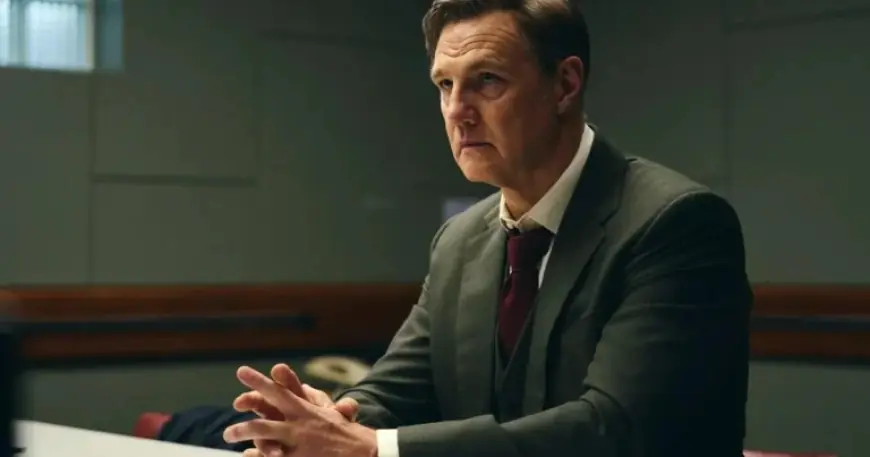
itv’s six-part psychological thriller Gone made a tense debut, introducing a quietly unnerving central performance and a production anchored in Bristol locations that together mark a clear inflection point for how the series will sustain attention.
What Happens When Itv’s Gone trades procedural beats for character unease?
Gone positions itself less as a conventional whodunit and more as a study of control stripped away. David Morrissey plays Michael Polly, a private school headmaster whose wife, Sarah, disappears from their cottage; his emotional reserve and the resulting suspicion form the story’s core. Eve Myles plays DS Annie Cassidy, whose empathy and persistence complicate the usual suspect–investigator dynamic. Clare Higgins appears as Carol, a character who frames Michael as the type used to having things his own way. The writer George Kay and director Richard Laxton shape scenes that lean into discomfort: the creative approach encouraged actors to explore the characters’ unequal chemistry rather than smooth it over.
Production choices reinforce tone. Much of the series was filmed in Bristol, with interior sets built at Bottle Yard Studios and exterior work across Queens Square and Clifton. A real Catholic independent school near Bath, Downside School, stands in for the series’ school setting. Other local sites — including a hotel repurposed as a police press room and a property on Richmond Hill Avenue — give the drama a lived-in, regionally specific texture. Those locations, paired with tight direction, make the world feel claustrophobic even when the camera steps outside.
What If the debut’s tension translates into broader audience momentum (trend analysis)?
The debut’s blend of psychological nuance and procedural scaffolding creates multiple avenues for momentum. On one hand, Morrissey’s inscrutable headmaster anchors curiosity: small, deliberate gestures and silences invite viewers to rewatch and dissect. On the other, the interplay with Annie Cassidy—her rule-bending determination against his cool control—generates relational tension that can sustain interest beyond plot reveals. Eve Myles describes Annie as someone who won’t leave until she uncovers the truth; Morrissey has framed Michael as a man whose lack of emotional intelligence drives his need to regain control. Those character commitments give the series texture that can convert first-night intrigue into week-to-week conversation.
Scheduling places new episodes in a concentrated window: episodes air at 9: 00 pm ET every Sunday and Monday, a cadence that encourages bingeing across consecutive nights. The Bristol-based production design and the use of a real school campus during holiday periods provide production credibility that supports repeat viewing and social discussion about locations and character behaviour.
What Should Viewers, Creators and Local Stakeholders Expect next?
Expect the series to lean into its strengths: close character work, confined settings that amplify unease, and a slow unspooling of motive and history rather than rapid plot exposition. For viewers, that means paying attention to small gestures and to the friction between Michael Polly and Annie Cassidy. For the creative team, maintaining the balance between ambiguity and payoff will determine whether initial acclaim deepens or dissipates. Local stakeholders in Bristol and at the school used for filming can anticipate renewed attention to the locations featured on screen.
Uncertainty remains inherent: the show’s success depends on how revelations reshape sympathy and suspicion, and whether the final episodes reward the patience the debut demands. That said, the combination of Morrissey’s closed-off lead, Myles’s insistently empathetic investigator, and production choices rooted in Bristol establishes a distinctive tone that makes itv a series worth following as the six-part story unfolds.