Microsoft 365 Copilot Cowork Gets Work Done — But Raises New Oversight Questions

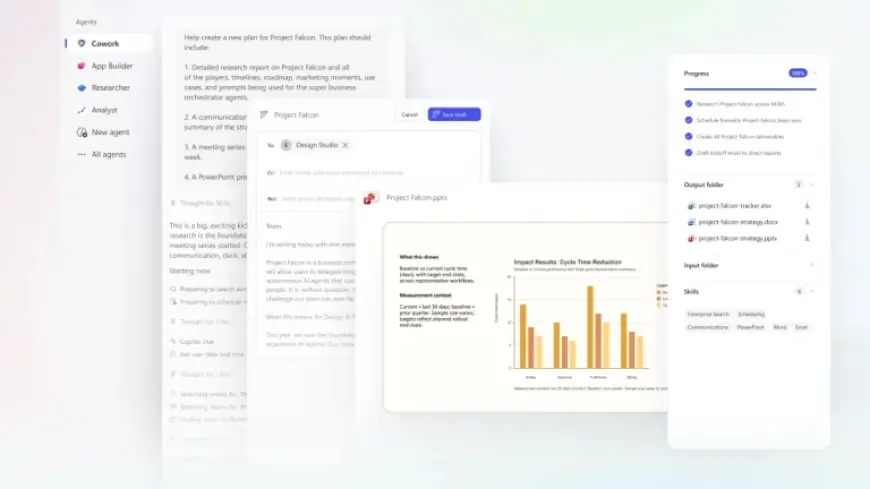
In meetings that start crowded and afternoons swallowed by prep, Copilot Cowork can keep a dozen tasks in flight while a user focuses on higher-value work — a shift inside microsoft 365 that moves the product from answering questions to executing on them.
What is not being told? What should the public know?
Verified facts: Product documentation describes Copilot Cowork as a feature that “turns intent into a plan” and continues execution in the background with checkpoints that allow users to confirm progress, make changes, or pause execution. The same documentation lists Outlook, Teams, Excel and other microsoft 365 assets as signal sources Cowork draws on when grounding work in emails, meetings, messages, files and data. Work IQ is named as the mechanism that supplies the cross-application signals.
Analysis: The central question is operational and oversight-oriented: when a system is authorized to act on a user’s behalf across calendar, email and files, which decisions remain human and which are delegated to automated execution? The documentation emphasizes control—recommendations visible for approval and checkpoints—but it also outlines scenarios where Cowork can accept or decline meetings, reschedule items, add focus blocks and produce deliverables without step-by-step initiation. That blend of autonomy and optional human confirmation creates a tension between efficiency gains and the need for explicit guardrails.
How does microsoft 365 Cowork turn intent into action?
Verified facts: Cowork is described as converting a user request into a background plan that can act across workflows. Examples in the documentation include calendar triage—reviewing schedules, flagging conflicts and proposing accept/decline/reschedule actions—preparing for customer meetings by pulling inputs from email and files, scheduling prep time, and producing briefing documents, supporting analysis and decks. For deeper research tasks, Cowork is said to gather earnings reports, Securities and Exchange Commission (SEC) filings, analyst commentary and relevant news with an emphasis on primary financial data.
Analysis: These capabilities indicate a move from content generation to coordinated task orchestration. The engineering architecture implied by Work IQ and cross-application signals suggests Cowork can synthesize discrete data sources and trigger actions that traverse multiple microsoft 365 applications. That capability is operationally valuable: it compresses multi-step human workflows into a continuous plan. The necessary counterweight is transparency about what inputs the plan used, which actions it proposed, and the audit trail that records approvals and reversals.
Who benefits, who is implicated, and what accountability is missing?
Verified facts: The documentation frames Cowork as easing routine work—cleaning a packed calendar, producing client-ready decks, or compiling primary financial materials—while keeping users able to review and approve actions before they are applied. It also describes automated check-ins when clarification is needed and saving outputs in the microsoft 365 environment for team refinement.
Analysis: Beneficiaries are framed as individual knowledge workers and teams that reclaim time from repetitive tasks. Implicated parties include people whose calendars, files and communications become inputs for automated actions; teams relying on synthesized deliverables; and compliance functions that must reconcile automated research with regulatory obligations tied to SEC filings and financial reporting. The documentation’s emphasis on control and checkpoints addresses some concerns, but it leaves open operational questions: how granular is the approval surface; what defaults govern automated acceptances; where are audit trails stored and who can access them?
Accountability call: Verified facts from the product brief show capability and control mechanisms, and analysis highlights the gaps that remain when execution moves from suggestion to action. Companies deploying Cowork should require clear policy settings, visible audit logs, and role-based approval thresholds tied to documented compliance needs—especially where SEC filings and primary financial data are part of the workflow. Product operators should publish institutional documentation of retention, access and rollback procedures so teams can assess risk before delegating execution.
Final note: The move from answers to action inside microsoft 365 is real and immediate; the public interest is best served when the technical capability is matched by clear, auditable oversight and workplace policy aligned to it.