Jose Manuel Restrepo Picked as Abelardo de la Espriella’s Running Mate in a Late-Clock Move

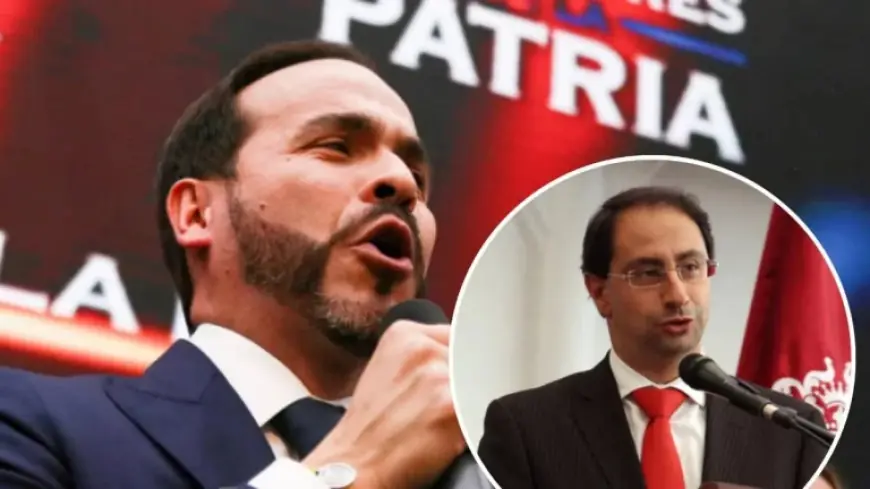
With the deadline for registering vice-presidential tickets set to expire Friday, March 13, presidential candidate Abelardo de la Espriella used his social media accounts Tuesday to unveil his running mate: jose manuel restrepo, described as an economist and former minister. The announcement lands at a moment when campaign decisions are increasingly judged not only for ideology, but also for what they signal about discipline, competence, and the coalition a candidate hopes to build under time pressure.
Deadline pressure and a message built around “expert” governance
De la Espriella’s announcement explicitly linked the choice to a broader governing narrative. In his message, he argued that Colombia needs “strong and decisive” leadership capable of building consensus amid differences, and he paired that with a promise of a government that is “clean, ” “expert, ” and “academic. ” Within that framing, jose manuel restrepo is presented less as a conventional political broker and more as a credentialed figure meant to reinforce a claim of rigor and probity.
There is also a clear timing calculus embedded in the rollout. With registration deadlines looming, the value of a vice-presidential pick shifts: it becomes simultaneously a compliance requirement and a defining signal of what a campaign prioritizes under constraint. De la Espriella’s language—stressing a “pulcro” and “impoluto” government—reads as an attempt to turn an administrative milestone into a reputational statement about standards and selection criteria.
What the pairing is designed to communicate—beyond the name itself
On its face, the move is straightforward: a candidate announces a running mate on a major social platform. Yet the deeper takeaway is how the ticket is being branded. De la Espriella framed his project as being formed “without friendships or political calculations, ” a line that aims to pre-empt the familiar critique that vice-presidential selections are transactional. In that narrative architecture, jose manuel restrepo becomes a symbol meant to carry the campaign’s anti-favoritism claim.
That branding choice has two immediate implications. First, it raises the evidentiary bar for the campaign’s own messaging: once “no amiguismos” is a central selling point, future personnel moves and alliances will be read through that lens. Second, the emphasis on expertise and academic grounding invites scrutiny of how a ticket intends to translate credentials into governance capacity—particularly in a polarized environment where “consensus-building” can be both an aspiration and a vulnerability.
It also narrows the interpretive frame for voters. Rather than asking whether the running mate expands geographic reach or party machinery, de la Espriella is encouraging the public to ask whether this duo represents a clean, expert-led alternative. That is a deliberate bet: that the electorate will reward signals of institutional seriousness at least as much as the usual electoral math.
Jose Manuel Restrepo and the challenge of making ‘consensus’ concrete
The candidate’s statement pairs two promises that can be difficult to reconcile in practice: “strong and decisive” leadership, and building consensus amid differences. The selection of jose manuel restrepo is positioned as a bridge between them—someone whose profile can reinforce decisiveness through competence while also projecting the sobriety required for cross-cutting agreement.
Still, the announcement itself offers only broad principles, not a program or policy blueprint. That leaves the political meaning of the ticket mostly in the realm of signals: about character, standards, and a claimed refusal to trade appointments for support. For voters, the open question becomes how those signals would translate into decisions once faced with the compromises that governance routinely demands.
For the campaign, the next test is narrative consistency. A promise of an “expert, academic” government invites a higher expectation of clarity—both on the criteria used to select officials and on how consensus-building would be pursued without reverting to the very “calculations” the campaign rejects.
What to watch between now and the March 13 cutoff
With the vice-presidential registration deadline approaching on Friday, March 13, the selection now shifts into a procedural phase where the campaign’s immediate priority is ensuring the ticket is formally and successfully registered. Politically, the window also becomes a stress test: the campaign must keep the focus on its message of clean expertise while navigating the reality that opponents and observers will interpret the pick through their own lenses.
De la Espriella’s framing is unambiguous: the ticket is meant to signal a government built on expertise and integrity, not personal ties. Whether that promise resonates depends on how convincingly it is maintained in subsequent campaign decisions—and whether the campaign can turn a values-driven announcement into a set of concrete, verifiable commitments. As the March 13 deadline nears, the selection of jose manuel restrepo is now the centerpiece of a simple but demanding question: can a campaign win on the promise of being “expert” and “impeccable” without relying on the political trade-offs it dismisses?