Storm Prediction Center focus turns to Alabama as Wednesday night storms come into view

storm prediction center is a key reference point as Central and South Alabama move through a warm, wet stretch that stays active into Wednesday, then pivots toward a more significant storm threat Wednesday night into Thursday morning.
What Happens When Wednesday night storms arrive after a quieter Tuesday?
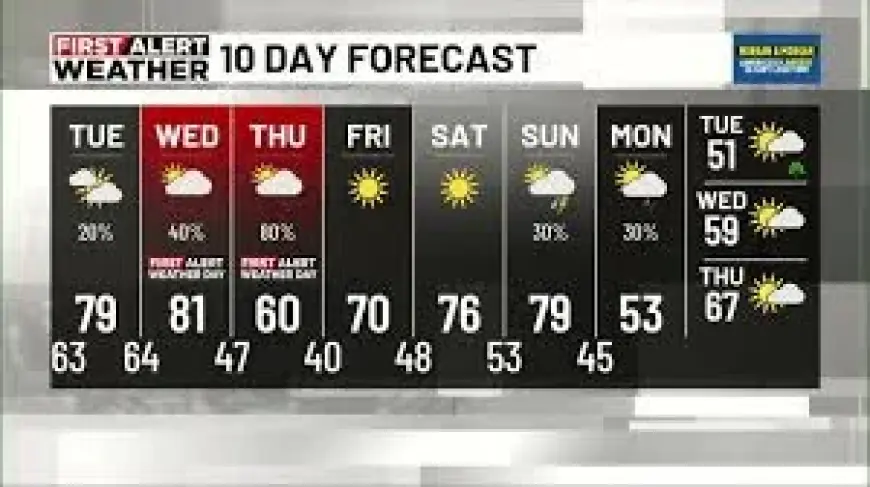
After scattered storms and pockets of locally heavy rain, the immediate trend points to calmer weather on Tuesday. Forecast details call for mostly cloudy skies with only a small chance for isolated showers, and temperatures remaining warm. That relative break is short-lived.
By Wednesday, the pattern is described as dry, warm, and muggy early in the day, with conditions shifting later as heavier rain and storms approach late Wednesday night. One forecast update notes recent model runs have backed off considerably on instability, described as an encouraging trend. Even with that signal, the same outlook continues to flag the risk window from late Wednesday night through Thursday morning for heavier rain, strong straight-line wind gusts, and hail.
Elsewhere across the region, the midweek system is framed as the most significant weather threat of the week. A line of storms is expected to develop and move across Central and South Alabama, bringing heavy rain, frequent lightning, strong winds, and the potential for a few tornadoes. The tornado risk is characterized as low, but not zero.
What If the strongest round becomes the week’s main hazard?
Both forecast tracks describe multiple rounds of storms, but they converge on the same key timing: Wednesday night into Thursday. In one outlook, the storm system moves in during the afternoon and evening, with storms organizing into a line that crosses the region. In another, the emphasis stays on late Wednesday night through Thursday morning for the highest confidence in stronger impacts, then some clearing later Thursday.
The main hazards highlighted for this midweek round are consistent across the outlooks: strong winds, hail, and heavy rain. One forecast also identifies frequent lightning and leaves room for a limited tornado risk. The guidance also underscores that the broader pattern remains unsettled, meaning the midweek threat is embedded inside a wider run of changing conditions rather than a single isolated event.
For readers tracking how that translates into practical risk, the most stable signal is the sequence: quieter Tuesday, a warmer and more humid setup early Wednesday, then storms late Wednesday night into Thursday morning, followed by improvement later Thursday.
What Happens Next after the cold front and the late-week cool-down?
After the system passes, forecasts point to a noticeable change in air mass. A strong cold front is expected to move through Wednesday night into Thursday morning, bringing a temporary shift in the pattern. Thursday begins with a chance of early showers before gradual improvement, alongside cooler daytime temperatures. One outlook emphasizes a “sharp cool-down, ” with lows dropping into the upper 30s and lower 40s by Friday morning. Another outlook similarly describes Thursday as cooler than Wednesday and notes clearing Friday with sunnier conditions.
Beyond that, the pattern remains active. One forecast highlights signs of another surge of even colder air around St. Patrick’s Day, with the possibility of another round of heavier rain and storms Sunday night into Monday, followed by the potential for freezing temperatures. Another forecast describes a quieter stretch next week with mostly sunny skies and seasonable temperatures, framing it as cooler but typical for this point in the season after an active period.
In the near term, the operational takeaway is timing and alert readiness: a calmer Tuesday creates a window for preparation, while the most impactful period centers on Wednesday night into Thursday morning. storm prediction center remains a phrase many readers will seek out as they monitor how the threat evolves alongside changing model signals, including the noted reduction in instability while wind and hail risks stay in focus.